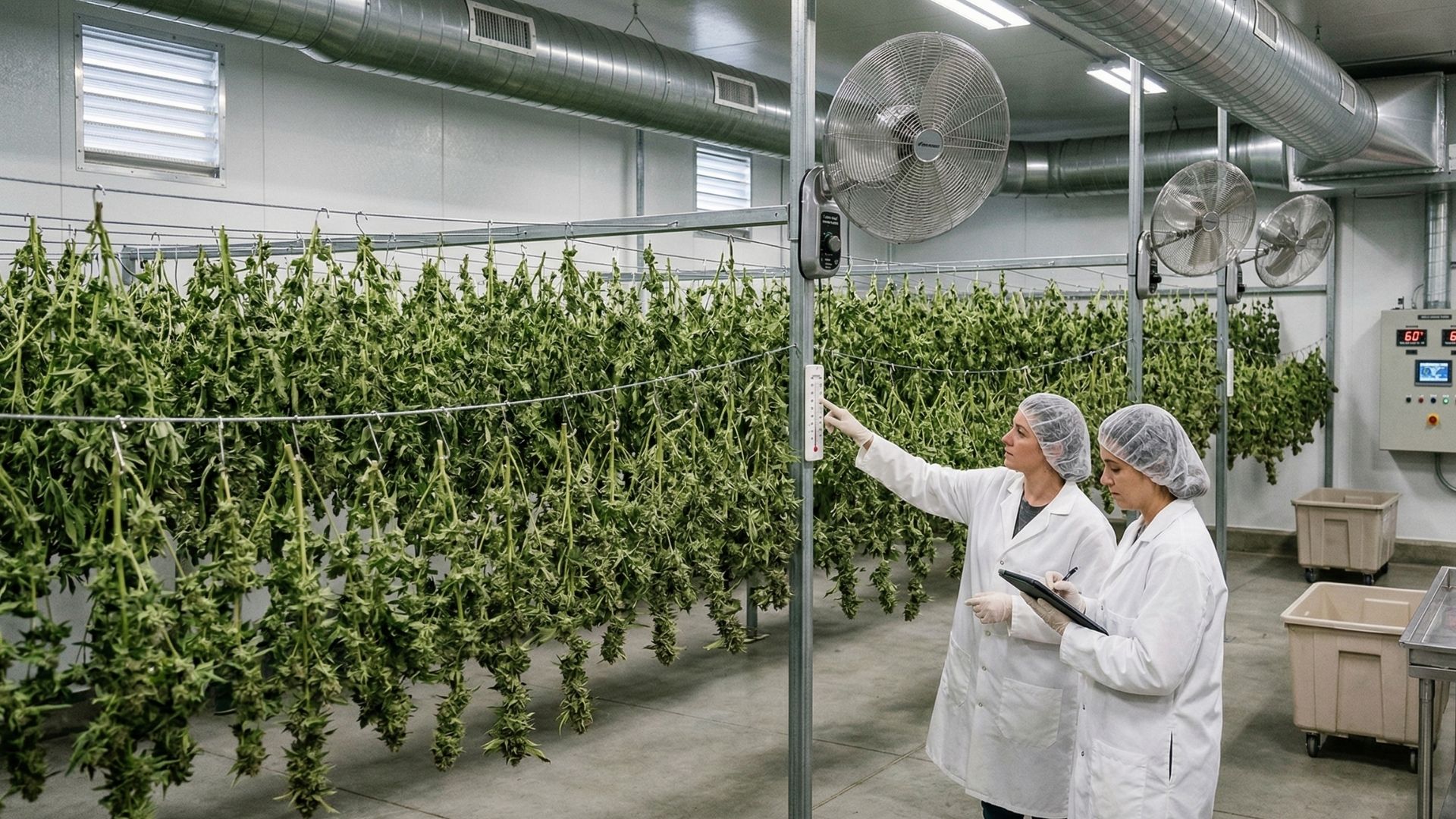
Drying is where quality is often lost, not preserved. Batches that look identical at harvest can end up with different aromas, potencies, and textures simply due to inconsistent drying conditions. Research shows terpene content can drop to as low as 0.54–0.77% during drying, highlighting how easily product quality declines without control.
This creates frustration, rework, and uneven outcomes across harvests. In this guide on drying, we break down the process, ideal conditions, and how to ensure consistent, high-quality results at scale.
A quick snapshot:
- Drying determines final quality. Poor drying can reduce potency, degrade terpenes, and create batch-to-batch inconsistencies.
- Conditions must stay stable. Temperature, humidity, airflow, and light control directly impact drying outcomes and product safety.
- Method impacts results. Whole-plant, wet-trim, and dry-trim approaches affect drying speed, labor, and terpene retention.
- Mistakes lead to repeated issues. Inconsistent monitoring, overcrowding, and poor airflow cause uneven drying and quality loss.
- Consistency comes from control. Standardized processes and structured execution help maintain uniform results across multiple harvests.
What Is Drying in Commercial Cannabis Cultivation?
Drying is the controlled process of removing moisture from freshly harvested cannabis to stabilize the product before curing and storage. In commercial cultivation, it is a critical control point where environmental conditions directly influence final quality, consistency, and shelf life.
This is what happens to cannabis buds during drying:
- Moisture Evaporation Begins: Water content decreases in plant tissue, making buds less susceptible to mold and microbial growth.
- Chlorophyll Breaks Down: The breakdown of chlorophyll improves taste and smoothness by reducing harsh, grassy flavors.
- Terpenes Begin to Volatilize: Aromatic compounds can degrade or evaporate if conditions are not controlled, impacting flavor and aroma.
- Bud Structure Tightens: As moisture leaves, buds shrink slightly and develop their final density and texture.
- Chemical Stabilization Occurs: Cannabinoid profiles begin to stabilize, preparing the product for the curing phase.
Drying outcomes depend heavily on how well environmental conditions are controlled. In the next section, we break down the ideal temperature, humidity, and airflow required to ensure consistent drying across batches.
Suggested Read: A Quick Guide to the 60/60 Drying Method for Cannabis
Ideal Conditions for Drying Cannabis in Commercial Marijuana Growth
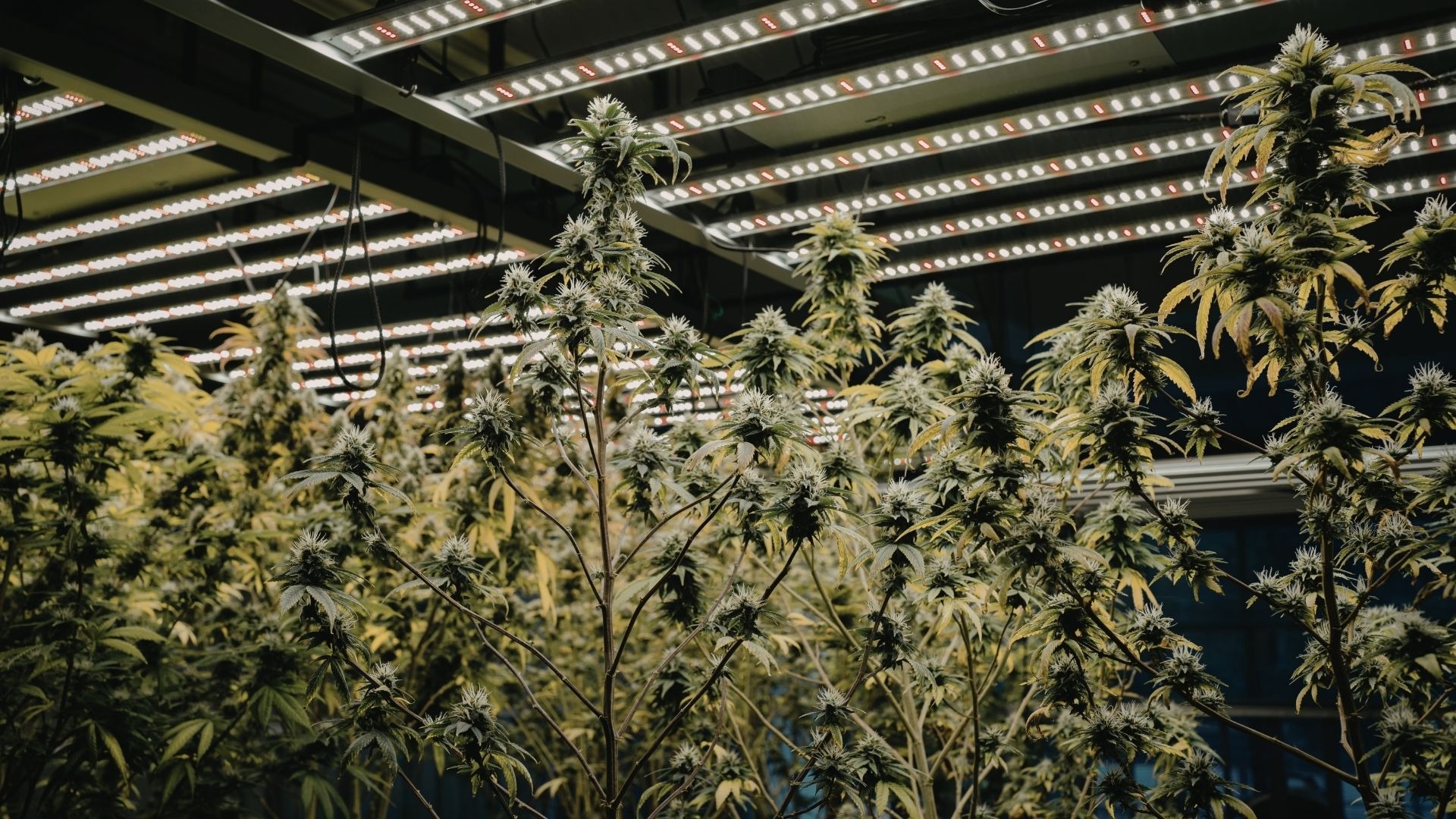
Drying success depends on maintaining stable environmental conditions over time. Even small fluctuations in temperature, humidity, or airflow can lead to uneven drying, terpene loss, or increased risk of mold.
Key conditions to maintain:
- Temperature Control
Keep temperatures within a stable range to prevent rapid moisture loss. High temperatures can dry buds too quickly, reducing terpene retention and overall quality. - Humidity Management
Maintain moderate humidity levels to allow gradual drying. Low humidity accelerates drying, while high humidity increases the risk of mold and microbial growth. - Airflow and Ventilation
Ensure consistent airflow without directly hitting the buds. Proper circulation prevents moisture buildup while avoiding uneven drying across different areas. - Dark or Low-Light Environment
Limit light exposure during drying to preserve cannabinoids and terpenes. Excess light can degrade sensitive compounds and impact final potency. - Batch Spacing and Arrangement
Avoid overcrowding plants or racks to ensure even air distribution. Uneven spacing can lead to inconsistent drying within the same batch.
Maintaining these conditions consistently across rooms and harvests can be challenging without proper tracking. PlanaCan helps by aligning drying schedules with environmental monitoring and task execution. With real-time visibility and structured workflows, it ensures conditions remain consistent throughout the drying process. Schedule a free demo today.
Drying Methods: Whole Plant vs Wet Trim vs Dry Trim
The drying method you choose directly affects drying speed, terpene retention, labor requirements, and final product quality. In commercial operations, the focus is not just on method selection but also on how each approach affects consistency across batches.
Table showing differences in drying methods:
Choosing the right method is only the starting point, but consistent execution determines the final outcome. In the next section, we walk through the step-by-step process to dry cannabis properly, ensuring stable conditions and uniform results across batches.
Suggested Read: Drying Cannabis in a Paper Bag: A Simple Method
Step-by-Step Drying Process for Cannabis Crop Post-Harvest
Small inconsistencies in setup, handling, or monitoring can lead to uneven drying and reduced product quality. A structured process ensures moisture is removed gradually while preserving potency and terpene profile.
Steps to dry cannabis buds include:
1. Prepare the Harvest
Proper preparation sets the foundation for uniform drying. How plants are handled immediately after harvest directly impacts moisture retention and airflow.
Key preparation steps include:
- Decide on Trimming Method: Choose between whole plant, wet trim, or dry trim based on your workflow.
- Handle Plants Carefully: Avoid compressing buds to maintain structure and airflow.
- Remove Damaged Material: Eliminate visibly unhealthy or contaminated parts early.
2. Set Up the Drying Environment
The drying room must be stable before plants are introduced. Inconsistent conditions at this stage can disrupt the entire process.
Ensure the environment is properly configured:
- Set Temperature and Humidity: Maintain stable conditions within target ranges.
- Control Airflow: Ensure consistent circulation without direct airflow on buds.
- Eliminate Light Exposure: Keep the space dark or low-light to preserve compounds.
3. Hang or Rack the Plants
Proper placement ensures even drying across all plants. Overcrowding or poor spacing can create moisture pockets and uneven results.
Focus on the correct arrangement:
- Space Plants Evenly: Allow air to circulate freely between branches or racks.
- Avoid Overlapping Buds: Prevent areas where moisture can accumulate.
- Use Consistent Layouts: Maintain uniform setup across batches.
4. Monitor Conditions Daily
Drying requires continuous observation to maintain stability. Small deviations can quickly impact quality if not corrected.
Track and adjust as needed:
- Check Temperature and Humidity: Ensure conditions remain consistent throughout the process.
- Observe Bud Condition: Look for signs of uneven drying or stress.
- Adjust Airflow Gradually: Avoid sudden environmental changes.
5. Determine When Drying Is Complete
Ending the drying phase at the right time is critical for quality and curing readiness. Over-drying or under-drying can both impact final outcomes.
Use reliable indicators:
- Stem Snap Test: Small stems should snap cleanly, not bend.
- Outer Dry, Inner Moisture Balanced: Buds should feel dry outside but not brittle.
- Consistent Batch Readiness: Ensure most of the batch reaches the same stage.
Even with a defined process, outcomes can vary if conditions are not consistently maintained. In the next section, we look at the signs your cannabis is not drying properly and how to identify issues before they impact quality.
Suggested Read: Determining the Moisture Content in Dried Cannabis
Signs Your Cannabis Is Drying Too Fast or Too Slow

Identifying early signs of imbalance helps prevent terpene loss, uneven moisture levels, and potential mold risks. Recognizing these indicators early allows for timely adjustments and more consistent outcomes.
Signs your cannabis is drying too fast:
- Buds Feel Dry on the Outside Too Quickly: Rapid surface drying within a few days indicates moisture is being lost too aggressively. This can trap moisture inside and affect curing later.
- Harsh Smell Instead of Aroma: Fast drying can prevent proper chlorophyll breakdown, leading to a grassy or harsh odor. This reduces overall product quality.
- Brittle Texture: Buds become overly dry and fragile, breaking apart easily. This often results in terpene loss and reduced market value.
- Uneven Internal Moisture: Outer layers dry while inner moisture remains, creating an imbalance. This can lead to issues during curing.
When drying slows down, the risks shift from quality loss to contamination and instability. Excess moisture begins to linger, creating conditions that are harder to correct over time.
Signs your cannabis is drying too slowly:
- Persistent Dampness After Several Days: Buds remain soft and moist beyond the expected timeframe. This increases the risk of mold development.
- Musty or Unpleasant Odor: Slow drying in high humidity can create conditions for microbial growth. This negatively impacts both safety and quality.
- Limp or Drooping Structure: Buds fail to firm up and retain excess moisture. This indicates insufficient drying conditions.
- Visible Mold or Mildew Formation: White or gray patches signal excessive humidity and poor airflow. Immediate correction is required to prevent spread.
Inconsistent drying often comes down to gaps in monitoring and execution. PlanaCan helps by tracking drying conditions, scheduling checks, and ensuring tasks are completed on time across teams. With clear visibility into each stage, growers can identify issues early and maintain consistent outcomes across batches. Try PlanaCan for free.
Impact of Drying on Final Product Quality for Cannabis
Drying is where the final product is either preserved or compromised. Even if cultivation and harvest are executed perfectly, poor drying can reduce potency, degrade aroma, and create inconsistencies across batches.
Key ways drying impacts cannabis quality:
- Potency Retention: Improper drying conditions can degrade cannabinoids over time. Excess heat or prolonged exposure can reduce overall effectiveness.
- Terpene Preservation: Terpenes are highly sensitive to temperature, airflow, and light. Poor control can lead to significant aroma and flavor loss.
- Appearance and Structure: Drying affects bud density, color, and trim quality. Uneven drying can result in an inconsistent visual appeal.
- Moisture Balance for Curing: Proper drying ensures the right internal moisture level for curing. Over-dried or under-dried buds disrupt this next stage.
- Shelf Stability and Safety: Controlled drying reduces the risk of mold and microbial growth. Poor drying increases contamination risk and reduces product lifespan.
- Consistency Across Batches: Variations in drying conditions lead to quality differences between harvests. This impacts reliability and market value.
Drying directly influences every aspect of the final product, making it a critical control point in commercial cultivation. In the next section, we look at the common drying mistakes and their solutions.
Top Drying Mistakes in Commercial Grows and How to Fix Them
Drying mistakes usually stem from inconsistent execution, poor monitoring, or gaps in cross-team and cross-room coordination. Identifying these mistakes early and applying structured fixes is key to maintaining product quality at scale.
Common drying mistakes and how to fix them:
- Inconsistent Environmental Conditions: Fluctuations in temperature and humidity lead to uneven results across batches. Use controlled settings and monitor regularly to maintain stability.
- Overcrowding Drying Space: Hanging plants that are too close restrict airflow and create moisture pockets. Increase spacing to allow even air distribution.
- Poor Airflow Management: Direct airflow can dry buds unevenly, while insufficient airflow traps moisture. Ensure indirect, consistent circulation throughout the room.
- Lack of Monitoring and Adjustments: Failing to check conditions daily allows small issues to escalate. Implement routine checks and make gradual corrections as needed.
- No Standardized Process: Different teams handling drying differently leads to inconsistent outcomes. Establish clear SOPs and ensure uniform execution.
Drying fails when processes are not consistently followed or tracked. In the next section, we explore how structured systems can bring control, visibility, and consistency to drying operations at scale.
Suggested Read: Understanding How Dryness Affects Cannabis Potency
PlanaCan to Help You Standardize Drying Across Multiple Harvests

PlanaCan is a cultivation management platform designed to bring structure, consistency, and visibility into commercial cannabis operations. It connects planning, task execution, and performance tracking in one system, replacing manual processes and disconnected tools.
This is how PlanaCan helps standardize drying at scale:
- SOP-Driven Templates: Templates help automate work by standardizing drying workflows, ensuring every batch follows the same steps without variation.
- Interactive Calendar Scheduling: The interactive calendar supports schedule management by mapping drying stages, checks, and transitions so tasks are completed on time.
- Centralized Team Communication: Built-in communications ensure teams stay aligned on drying tasks, reducing gaps between shifts and improving execution consistency.
- Performance Tracking with Analytics: Analytics combined with historical tracking helps identify patterns in drying outcomes and improve consistency across harvests.
- Mobile Execution: Mobile access via iOS and Android Apps enables teams to log tasks, update status, and maintain real-time communication from the drying room.
Every step is scheduled, tracked, and executed with consistency across rooms and teams. PlanaCan reduces variability and ensures uniform results across every harvest.
Conclusion
The drying process is where even well-grown cannabis can lose its value. Inconsistent conditions, missed checks, or poorly timed transitions can lead to terpene loss, uneven moisture levels, and reduced product quality across batches. These issues often repeat, not because of the technique, but because execution is not controlled.
PlanaCan addresses this by standardizing drying workflows, aligning schedules, and tracking performance across every stage. With clear visibility into tasks and outcomes, it helps growers maintain consistency and improve quality across multiple harvests.
See how a connected system can help you maintain control from harvest to final product. Schedule a free call today.
Frequently Asked Questions
1. How long should cannabis dry before curing?
Drying typically takes 7–14 days, depending on conditions. The key is reaching the right moisture balance before moving to curing.
2. Can you dry cannabis too much before curing?
Yes, over-drying can remove too much internal moisture, making proper curing difficult. This can affect flavor, aroma, and overall quality.
3. What is the ideal airflow setup for drying rooms?
Airflow should be indirect and evenly distributed. Fans should circulate air without blowing directly onto the buds to avoid uneven drying.
4. Does strain type affect drying time?
Yes, different strains have varying bud densities and moisture content. Dense buds generally take longer to dry than lighter, airier ones.
5. Should stems or branches be removed before drying?
This depends on the drying method. Whole plant drying keeps branches intact, while trimmed methods remove excess material earlier.
6. Can drying conditions affect final weight?
Yes, improper drying can lead to excessive moisture loss or retention. This directly impacts final yield and product consistency.
7. Is it safe to speed up the drying process?
Speeding up drying can reduce quality by degrading terpenes and cannabinoids. Controlled, gradual drying is always preferred.
8. How do you know if the humidity is too high during drying?
Persistent dampness, slow drying, and musty odors indicate high humidity. These conditions increase the risk of mold and contamination.
9. Can you reuse a drying room immediately after harvest?
Yes, but only after cleaning and stabilizing environmental conditions. Residual moisture or contamination can affect the next batch.
10. What is the role of airflow compared to humidity in drying?
Both are critical, but they work together. Humidity controls moisture levels, while airflow ensures even distribution and prevents stagnant zones.