Choosing the right growing medium is one of the most consequential decisions a cannabis cultivator can make. Over the past five years, hydroponic growing equipment has expanded steadily at a compound annual growth rate of 2.2%, with a 0.6% increase in 2025.
This trend highlights the industry’s push toward precision, predictability, and tighter environmental control. This does not mean soil-based cultivation is being left behind. Many growers continue to rely on soil for its natural buffering capacity, biological nutrient cycling, and tolerance for minor management errors.
At commercial scale, both soil and hydroponic systems succeed or fail based less on ideology and more on execution. In this article, we compare soil vs hydroponic growing from an operational perspective.
Quick look:
- Soil and hydroponics can both deliver strong yields. Results depend on how well the system matches the strain and how consistently it is managed.
- Hydroponics favors speed and uniformity. Faster growth and tighter control support higher throughput when systems are well monitored.
- Soil favors stability and forgiveness. Slower cycles reward disciplined planning and reduce risk from small feeding mistakes.
- Strain behavior matters more than the medium. Genetics determines how much yield potential can be unlocked in soil or hydro.
- Planning drives yield at scale. Structured scheduling and clear task execution matter more than the growing method itself.
What Is Soil-Based Cannabis Cultivation?
Soil-based cannabis cultivation relies on organic soil, amended soil blends, or living soil systems to deliver nutrients through biological processes rather than solely on direct mineral feeding.
In commercial environments, soil is rarely “natural dirt” and is instead a carefully engineered medium designed for consistency, drainage control, and predictable nutrient release.
1. Workflow and Cultivation Cadence for Soil Cultivation
Commercial soil grows move at the pace of the plant, not the feed chart. Nutrients become available based on soil moisture, root health, and microbial activity, which means changes do not show up immediately.
Because of that, tasks like watering, top-dressing, and soil care are planned around how long plants take to respond, not quick adjustments to EC or pH. At scale, this workflow introduces planning dependencies that must be anticipated weeks in advance:
- Longer intervals between major nutrient adjustments
- Scheduled soil amendments rather than continuous liquid feeding
- Predictable irrigation cycles with limited mid-cycle correction
2. Common Use Cases for Soil in Commercial Grows
Soil is commonly used by growers focused on producing high-quality flowers rather than the fastest or highest yields. It is often chosen for craft flower rooms, mother plants, and genetics work, where consistency in flavor, aroma, and plant structure matters more than speed.
Many experienced teams prefer soil because it is more forgiving day to day, even though it requires discipline to keep results consistent across cycles. In regulated markets, soil can help growers stand out by delivering reliable quality from harvest to harvest.
Commercial operators typically deploy soil in scenarios such as:
- Premium flower rooms with longer cultivation timelines
- Genetic libraries and mother stock preservation
- Facilities optimizing for flavor, aroma, and post-harvest quality
3. Characteristics of Soil-Based Systems
Soil systems are more forgiving when small feeding mistakes happen, but problems take longer to fix once they show up. Differences between soil batches, changing microbial activity, and room conditions can all affect results, even when the same process is followed.
Because of this, soil grows rely more on good planning and consistent routines than on quick technical adjustments. At scale, these traits define how soil performs in commercial operations:
- Slower response to nutrient and environmental changes
- Higher tolerance for minor execution errors
- Increased variability without standardized scheduling and documentation
Soil cultivation emphasizes biological stability and process consistency, while hydroponic systems prioritize precision and speed. This is explained in the next section.
Suggested Read: Understanding Soil Compaction Problems in Cannabis Cultivation
What Is Hydroponic Cannabis Cultivation?

Hydroponic cannabis cultivation uses soilless systems to deliver water and nutrients directly to the roots, allowing growers to control feeding with much greater precision.
In commercial facilities, hydroponics is less about experimentation and more about speed, consistency, and tight environmental control.
1. Workflow of Hydroponic Cultivation
Hydroponic grows operate on a fast, measurement-driven schedule where changes to nutrients, irrigation, or environment can affect plants within hours. Daily tasks are tied closely to system checks, data readings, and feed adjustments rather than longer response windows.
This creates a workflow that favors close monitoring and rapid decision-making. In practice, this cadence usually includes:
- Frequent EC and pH monitoring and adjustments
- Scheduled system inspections to prevent failures
- Tight irrigation timing based on growth stage and root zone conditions
2. Use Cases for Hydro in Commercial Grow
Hydroponics is widely used in large-scale production environments where yield, turnaround time, and repeatability are top priorities. It is especially common in facilities running multiple rooms on synchronized harvest schedules, where uniformity matters more than individual plant expression.
Hydro systems also support aggressive production targets when managed by trained teams. Commercial operators typically choose hydro when they need:
- Faster crop cycles and higher yield potential
- Uniform plant size and structure across rooms
- Predictable outputs for production planning and supply contracts
3. Characteristics of Hydroponic Systems
Hydroponic systems offer high control with a low margin for error. Small mistakes can escalate quickly, but issues can also be corrected quickly if detected early. Success depends heavily on monitoring, system reliability, and disciplined execution.
At scale, hydro systems are defined by:
- Immediate plant response to feed and environmental changes
- Higher risk from equipment or system failures
- Strong dependence on accurate scheduling and real-time visibility
The next section compares how both systems perform across growth speed, labor, risk, and operational planning.
Suggested Read: How Long Does it Take a Weed Seed to Germinate? Growth Timeline
Side-by-Side Comparison: Soil vs. Hydroponics
Soil and hydroponic systems can both succeed at a commercial scale, but they behave very differently once you factor in speed, labor, risk, and planning complexity.
This is an operational comparison table:
For commercial growers, the right choice depends on how the operation is designed and what the business needs to deliver.
Most growers lean toward soil when they prioritize:
- Craft-quality flower and terpene consistency
- More forgiving day-to-day management
- Teams are comfortable with longer planning horizons
Hydroponics is often a better fit when the operation requires:
- Faster production cycles and higher throughput
- Uniform output across multiple rooms or sites
- Tight scheduling tied to sales forecasts and supply commitments
PlanaCan helps growers manage both soil and hydroponic operations by turning cultivation plans into clear, repeatable schedules tied to actual plant growth. Tasks, timelines, and responsibilities stay visible across rooms, reducing missed steps and last-minute adjustments. Schedule a demo today.
Choosing Soil or Hydroponics Based on Strain Yield Potential

Genetics influence how aggressively a plant feeds, how quickly it grows, and how much stress it can tolerate. Aligning strain behavior with the right growing medium helps maximize yield without increasing risk.
Strains that typically perform better in soil-based systems include:
- OG Kush: Benefits from slower nutrient release and produces stable yields with longer flowering times
- Blue Dream: Responds well to soil’s buffering, delivering consistent structure and terpene expression
- Granddaddy Purple: Performs reliably in soil where nutrient swings are minimized
- Gorilla Glue #4: Handles soil variability well and maintains yield without aggressive feeding
Strains that typically perform better in hydroponic systems include:
- Gelato: Thrives under tight nutrient control and faster growth cycles
- Zkittlez: Responds well to precise feeding and uniform environmental conditions
- Wedding Cake: Produces higher yields with controlled nutrient delivery
- MAC (Miracle Alien Cookies): Shows strong vigor and consistency in hydro systems
Choosing the right medium based on strain behavior helps growers drive yield more predictably while avoiding unnecessary stress or rework. That same alignment also affects cost.
The next section examines how soil and hydroponic methods influence setup expenses, operating costs, and long-term efficiency.
Suggested Read: Step-by-Step Guide to Advanced Cannabis Cultivation Techniques
How Do Soil and Hydroponic Methods Drive Cost?
Each system drives expenses differently through labor, inputs, infrastructure, and risk exposure over time.
Soil-based cultivation typically drives costs through:
- Higher ongoing spend on soil, amendments, and replacement media
- Increased labor for handling, mixing, top-dressing, and disposal
- Longer crop cycles that tie up canopy space for more time
- Variability-related inefficiencies occur if processes are not tightly standardized
Hydroponic cultivation typically drives costs through:
- Higher upfront investment in systems, controls, and infrastructure
- Ongoing costs for monitoring, maintenance, and system redundancy
- Increased risk exposure from equipment or power failures
- Lower per-cycle labor but higher dependency on skilled oversight
PlanaCan shows how cost outcomes improve when complex workflows are structured and predictable. Clear workflows reduce surprise expenses, prevent reactive fixes, and keep operational costs aligned with production goals. Start your free trial today.
Planning Implications When Choosing Soil or Hydroponics
Choosing between soil and hydroponics changes how cultivation work must be planned, scheduled, and tracked on a daily basis. Each system creates different timing dependencies, risk windows, and workload patterns that compound as operations scale.
Soil-based operations require planning that accounts for:
- Longer response times between actions and visible plant results
- Fixed the amendment and irrigation schedules that cannot be easily compressed
- Greater need for forward planning to avoid late-cycle corrections
- Clear documentation to reduce variability between rooms and harvests
Hydroponic operations require planning that accounts for:
- Short response windows where missed tasks escalate quickly
- Tight coordination between feeding, irrigation, and environmental controls
- Frequent system checks tied to growth stage and plant demand
- Real-time visibility to prevent small issues from becoming yield losses
As cultivation systems become more complex, manual planning tools struggle to keep up. The next section explores how technology and structured scheduling workflows help growers stay ahead of these demands.
Use PlanaCan to Improve Your Cannabis Yield
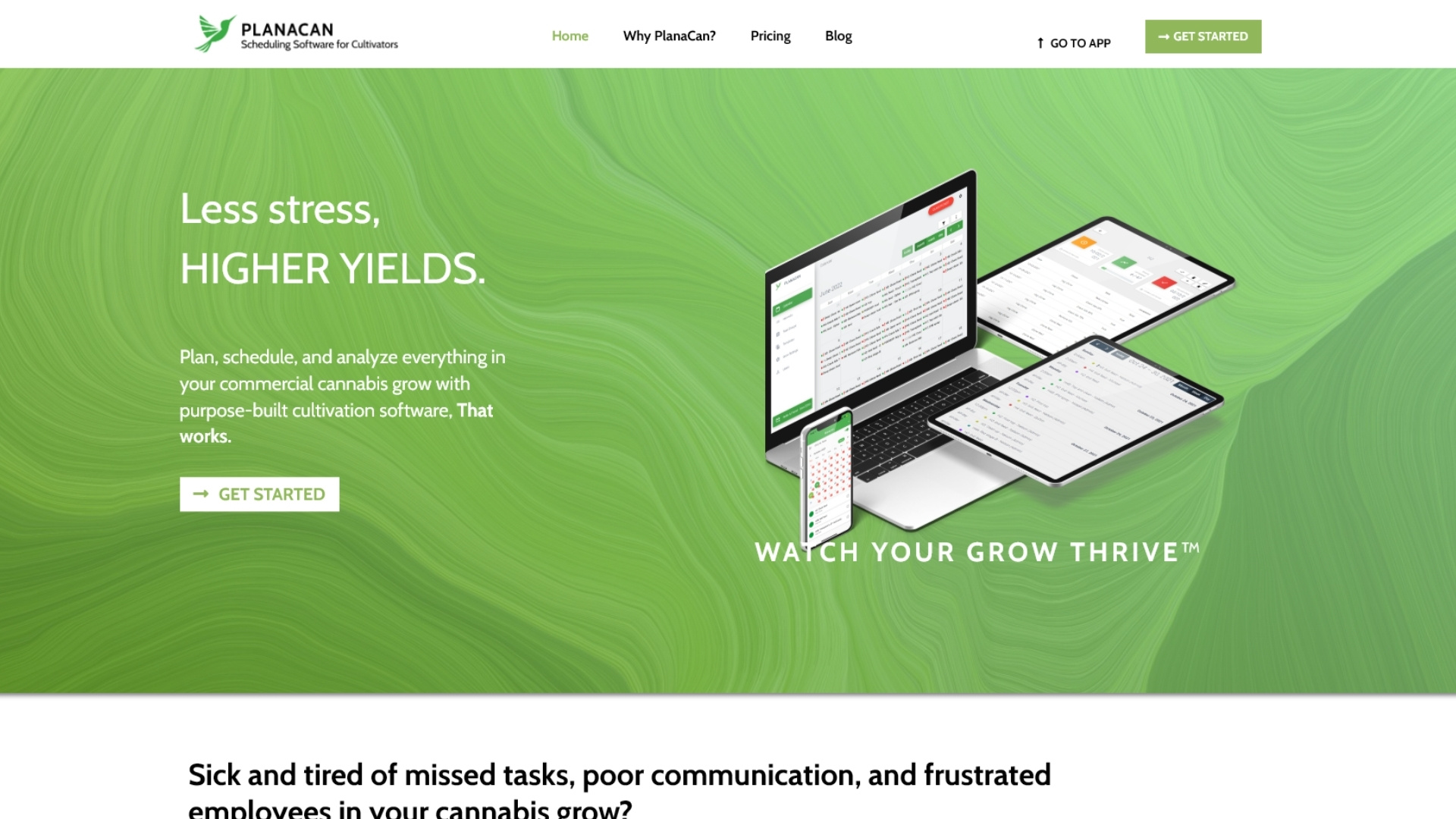
PlanaCan is a cultivation planning and scheduling platform built specifically for commercial cannabis growers. It replaces spreadsheets, whiteboards, and disconnected tools with a single system that aligns daily work to actual plant growth.
Instead of reacting to problems late in the cycle, growers use PlanaCan to plan ahead, stay consistent, and protect yield across every room and harvest.
Core features include:
1. Automated Workflows Built Around Plant Growth
PlanaCan allows growers to build repeatable workflows based on growth stages, not fixed calendar dates. Tasks automatically adjust as plants move through veg, flower, and harvest, reducing missed steps and rushed work. This helps teams execute the same process every cycle, which is critical for protecting yield at scale.
2. Interactive Calendar With Real-Time Visibility
The interactive calendar gives growers and managers a clear view of what needs to happen each day across rooms and cycles. Dependencies between tasks are visible, making it easier to spot conflicts, bottlenecks, or gaps before they affect plants. Better visibility leads to smoother execution and fewer last-minute corrections that reduce yield.
3. Harvest Tracking and Performance Reporting
PlanaCan captures data from each harvest, allowing growers to compare outcomes across strains, rooms, and cycles. Over time, this makes it easier to identify which workflows produce stronger yields and which introduce risk. Reporting turns past harvests into actionable insight instead of forgotten notes.
4. Mobile Apps for On-Floor Execution
With mobile access, tasks are visible and updatable directly from the grow floor. Teams know exactly what needs to be done, when it needs to be done, and can confirm completion in real time. This reduces miscommunication and ensures plans are followed where yield is actually made or lost.
5. Centralized Task Ownership and Accountability
PlanaCan assigns clear ownership to every task, removing confusion about responsibility. When everyone knows what they own and when it must be completed, execution becomes more reliable. Consistent execution is one of the strongest drivers of predictable yield.
PlanaCan is built for real growers dealing with real problems: missed tasks, inconsistent cycles, poor visibility, and reactive decision-making. Turning cultivation plans into clear, executable schedules helps growers protect yield, whether they grow in soil or hydroponics.
Conclusion
There is no single winner between soil and hydroponic cultivation when it comes to yield. The better option depends on the strain, the team running the operation, and how well the system is planned and executed. Growers who match genetics to the right medium and manage it consistently are the ones who achieve reliable, repeatable yields.
PlanaCan supports that consistency by turning cultivation strategy into day-to-day execution. Aligning tasks with plant growth, improving visibility across rooms, and capturing harvest performance over time helps growers reduce variability and protect yield.
See how PlanaCan helps growers plan smarter, execute better, and avoid last-minute corrections. Schedule a free call today.
Frequently Asked Questions
1. How much faster is hydroponics than soil cannabis?
Hydroponic cannabis can grow 10 to 30 percent faster than soil in commercial environments. Faster nutrient uptake and tighter environmental control shorten vegetative time, allowing quicker cycle turnover when systems are managed correctly.
2. Is hydroponic growing better than soil?
Hydroponics is not inherently better than soil. It delivers speed and uniformity, while soil offers buffering and resilience. The better option depends on strain behavior, team expertise, risk tolerance, and how consistently the operation is planned and executed.
3. What is the biggest disadvantage of hydroponics?
The biggest disadvantage of hydroponics is risk concentration. Small mistakes or system failures can escalate quickly, impacting entire rooms. Success depends on constant monitoring, reliable infrastructure, and disciplined scheduling to prevent rapid yield loss.
4. Is DWC faster than soil?
Deep Water Culture is typically faster than soil due to constant oxygen and nutrient availability at the roots. Growth can accelerate significantly, but DWC also carries a higher risk and requires precise control to avoid rapid system-wide issues.
5. Can growers run both soil and hydroponics in the same facility?
Yes. Many commercial operations run soil and hydro rooms side by side. This approach allows growers to match strains to the best medium, but it requires careful planning, separate workflows, and clear scheduling to avoid operational confusion.