Cannabis growers often celebrate dark green veg leaves as a sign of vigorous growth. In reality, this symptom frequently signals nutrient imbalance and early physiological stress, which can stunt development, reduce reproductive potential, and undermine yield quality later in the cycle.
As the cannabis market scales beyond USD 44.6 billion in 2025, profitability is no longer driven solely by expansion. It depends on disciplined, repeatable execution at every growth stage.
Understanding why dark green leaves appear and how to distinguish healthy growth from nutrient stress can directly influence flowering performance and final yield.
This article breaks down the causes of dark green leaves during veg, outlines practical steps for correction, and shows how structured planning prevents the same mistakes from recurring across cycles.
What you need to know:
- Dark green leaves during veg often signal excess nitrogen. The issue usually comes from overfeeding, reused schedules, or reduced transpiration rather than healthy vigor.
- Color alone is not the problem. Leaf posture, texture, growth rate, and environmental conditions determine whether dark green leaves indicate stress or balanced growth.
- Veg-stage issues compound quickly. Uncorrected nitrogen buildup can affect stretch, flower development, and yield predictability later in the cycle.
- Correction requires measured adjustments. Gradual nutrient reductions, improved transpiration, and root zone balance are more effective than aggressive flushes.
- Prevention depends on consistency and tracking. Clear nutrient limits, environmental targets, and documented adjustments help avoid repeating the same veg-stage mistakes.
What Do Dark Green Leaves Indicate in Cannabis Plants?
Dark green leaves during the vegetative stage often sit on a fine line between healthy chlorophyll production and excess nutrient uptake. Overly dark foliage usually signals that uptake has outpaced the plant’s ability to metabolize it.
This imbalance can reduce gas exchange, slow growth, and mask deeper environmental or feeding issues that worsen over time if left uncorrected.
These are a few visual cues growers should document and not ignore:
- Deep, glossy green leaf color that appears darker than cultivar norms
- Early leaf clawing or downward curl, especially at the tips
- Thickened or rigid leaf texture instead of flexible growth
- Uniform darkening across the canopy, not just new growth
- Slower vertical growth despite heavy foliage mass
These signals rarely appear in isolation. Understanding what causes this imbalance is the next step toward correcting it before veg-stage stress carries into flowering.
Suggested Read: How Long to Veg Cannabis for Maximum Yield
Causes of Dark Green Leaves in the Veg Stage

Dark green leaves during veg almost always indicate measurable excess, not a vague imbalance. Identifying how far inputs exceed optimal ranges is critical for correcting the issue without overcorrecting.
These are the common causes:
- Excess Nitrogen in Vegetative Feed Programs
Dark green leaves commonly appear when nitrogen levels exceed 180–220 ppm N in veg, particularly in early to mid-veg. Many cultivars perform optimally closer to 120–160 ppm N, depending on growth rate and environment. Above this range, nitrogen accumulates faster than it can be assimilated into new tissue.
- Elevated EC Beyond Veg Requirements
EC levels above 1.8–2.2 mS/cm in veg frequently drive dark foliage, especially when runoff EC trends upward over multiple irrigations. Plants may appear vigorous while silently accumulating unused nutrients in leaf tissue.
- Overfeeding From Static or Reused Schedules
Applying the same feed schedule across different rooms or cycles ignores differences in plant size, root development, and seasonal transpiration rates. What was appropriate in late veg often becomes excessive in early veg or slower environments.
- Reduced Transpiration From Low VPD Conditions
VPD below 0.6 kPa slows water movement through the plant. Nutrients continue entering the roots, but reduced transpiration limits nutrient distribution and processing, resulting in dark, rigid leaves.
- Root Zone Saturation With Continued Nutrient Availability
Frequent irrigation or insufficient dry-back reduces oxygen availability while still delivering nutrients. This combination disrupts root signaling and increases the likelihood of nitrogen buildup in leaf tissue.
When these conditions persist, the plant reallocates energy away from balanced growth and toward stress management. The next section outlines strategies to overcome this.
Suggested Read: How Long is the Vegetative Stage for Autoflower Cannabis
Step‑by‑Step Guide to Managing Dark Green Leaves in Veg Stage

Correcting dark green leaves requires controlled adjustments, not aggressive resets. These steps should be measured, documented, and evaluated over several days rather than applied all at once.
Step 1: Dial Back Nitrogen Inputs First
Start by reducing nitrogen without disrupting overall plant momentum. In most cases, a modest adjustment is enough to slow accumulation while allowing continued vegetative growth. Sudden or extreme reductions often create secondary stress that complicates recovery.
This step focuses on correcting nutrient inputs at the source.
- Reduce total nitrogen by 20–30 percent, not more
- Lower overall EC toward 1.4–1.6 mS/cm for most veg stages
- Avoid complete flushes unless runoff EC is severely elevated
- Maintain calcium and micronutrient levels to prevent deficiencies
- Track leaf color changes over 5–7 days, not hours
Step 2: Restore Proper Transpiration Conditions
Environmental balance determines how efficiently plants process nutrients. Even correct feed levels can cause dark leaves if transpiration is limited. Fixing climate issues often produces faster visual improvement than nutrient changes alone.
This step addresses how nutrients move through the plant.
- Increase VPD into the 0.8–1.1 kPa range
- Improve horizontal and canopy-level airflow
- Raise leaf surface temperature slightly if conditions are cool
- Reduce excessive nighttime humidity spikes
- Confirm sensors reflect actual canopy conditions
Step 3: Evaluate Root Zone and Irrigation Practices
Roots under stress send misleading signals to the canopy. Saturated media can continue delivering nutrients while limiting oxygen, amplifying nitrogen accumulation in leaves. Improving root zone conditions helps rebalance uptake naturally.
This step focuses on restoring healthy root signaling.
- Extend dry-back intervals between irrigations
- Verify adequate drainage and runoff volumes
- Reduce feed frequency before reducing feed strength further
- Check substrate EC trends, not single readings
- Inspect roots for color, smell, and structure if possible
Step 4: Monitor Recovery, Not Perfection
Correction is not about immediate visual reversal. Healthy recovery shows up as new growth with normal color, not instant changes in existing leaves. Overcorrecting often causes more damage than patience.
This step ensures changes are working as intended.
- Look for lighter green new growth within 7–10 days
- Monitor leaf posture and flexibility, not just color
- Avoid stacking multiple corrections in the same week
- Log every adjustment with date and rationale
- Compare recovery trends across rooms or cultivars
PlanaCan helps teams apply this step-by-step process consistently, rather than relying on memory or scattered notes. By tracking feed changes, environmental adjustments, and recovery timelines in one place, growers can see what was changed, when it was changed, and how plants responded. Schedule a free demo today.
Risks of Overlooking the Condition in Commercial Cultivation
Dark green leaves during veg rarely resolve on their own. What appears minor in veg frequently shows up as performance loss during stretch and early flower.
Operational risks of leaving the issue uncorrected:
- Disrupted Flowering Transition: Excess vegetative signaling delays stretch timing and creates uneven canopy development
- Structural Weakness in Plant Architecture: Nitrogen-heavy growth produces softer stems that require additional support and labor
- Lower Flower Density and Uniformity: Prolonged veg stress reduces energy allocation to flower formation
- Increased Pest and Disease Pressure: Soft, lush tissue is more attractive to pests and more vulnerable to pathogens
- Reduced Yield Predictability Across Cycles: Inconsistent veg performance leads to variable harvest outcomes and planning challenges
These downstream effects are often blamed on genetics or flowering inputs. In reality, they frequently originate from unresolved veg-stage imbalances, making prevention the most reliable path forward.
Suggested Read: Cannabis Supply Chain: Common Challenges and Solutions
How to Prevent the Issue in Future Veg Cycles
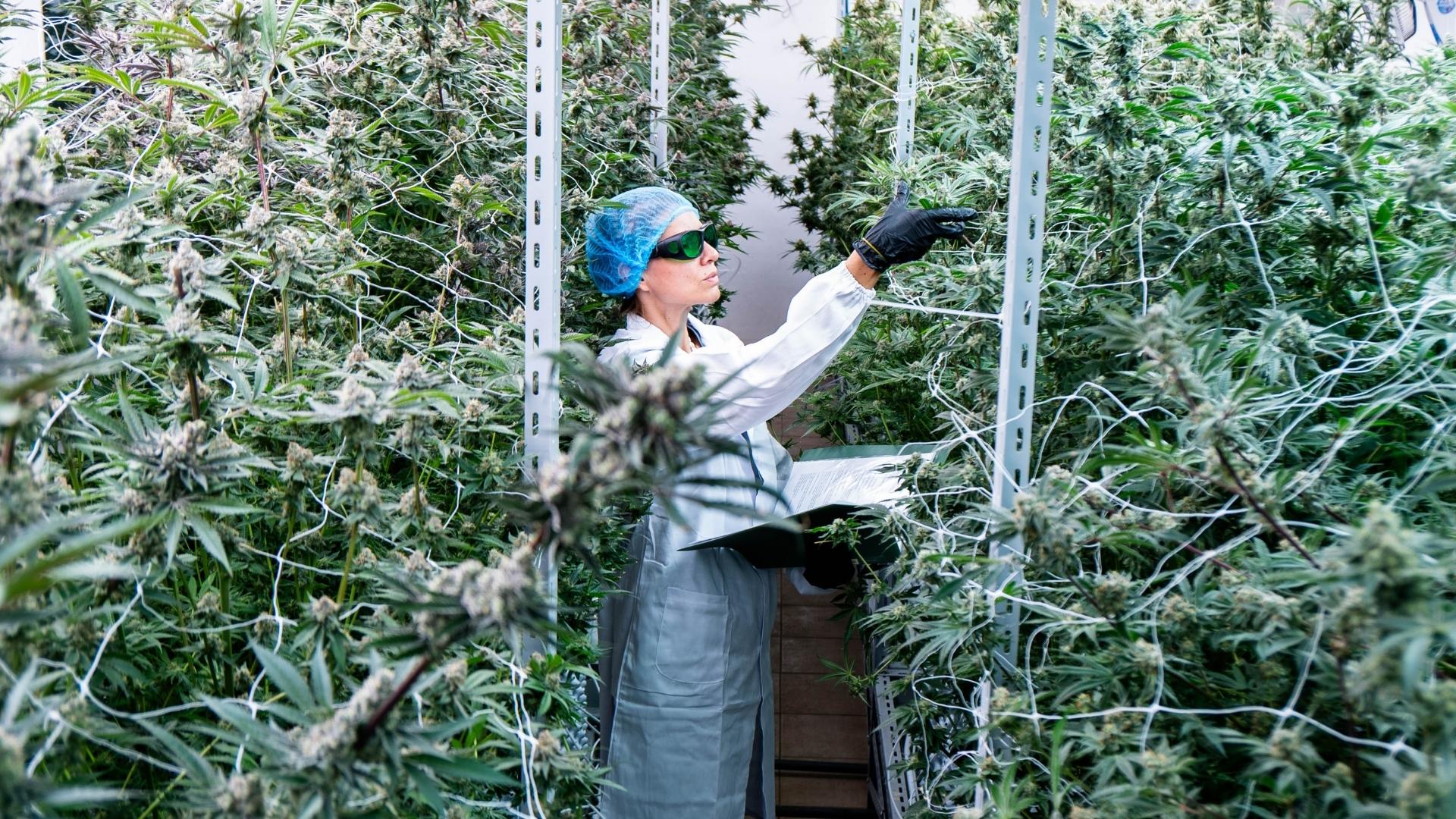
In commercial growth, excess builds when nutrient strength, irrigation frequency, and environment drift out of alignment without being noticed. Effective prevention relies on clear thresholds, consistent observation, and documented decision-making.
Prevention strategies that hold up at scale:
- Define Nitrogen and EC Guardrails: Establish acceptable nitrogen ppm and EC ranges for early, mid, and late veg so feed strength cannot quietly creep upward across irrigations.
- Adjust Feeds Based on Actual Growth Rate: Modify nutrient strength and frequency based on plant size, internode spacing, and daily growth, not fixed calendar timelines.
- Maintain Stable Transpiration Conditions: Keep VPD, airflow, and leaf surface temperature within target ranges so nutrient uptake and metabolism stay balanced.
- Standardize Veg Review Checkpoints: Require structured canopy and data reviews at set veg milestones to catch color, texture, and posture changes early.
- Document Inputs, Changes, and Outcomes: Track what was adjusted, when it was adjusted, and how plants responded to prevent repeating the same overfeeding patterns.
PlanaCan helps prevent veg-stage issues by using automated workflows and interactive calendars to keep feeding, environmental checks, and reviews aligned with actual plant growth. Instead of relying on memory or ad hoc decisions, teams see exactly when adjustments, inspections, and milestones are due. Try PlanaCan for free.
When Are Dark Green Leaves a Good Sign?
Dark green leaves are only a positive signal when they reflect efficient nutrient use rather than excess accumulation. In these situations, color intensity is supported by healthy structure, steady development, and environmental balance.
These are a few indicators that your plants are not under stress:
- Flexible, Upright Leaf Posture
Leaves hold themselves slightly upward and remain pliable rather than rigid or clawed. This indicates proper turgor pressure and active transpiration, not nutrient overload.
- Balanced Internode Spacing
Nodes are compact but evenly spaced along the stem. This shows controlled vegetative growth without hormonal stress or nitrogen-driven compression.
- Consistent Growth Velocity
New leaves emerge and expand on a predictable schedule. Steady growth confirms the plant is metabolizing nutrients efficiently instead of storing excess nitrogen.
- Stable Transpiration Conditions
VPD, airflow, and leaf temperature remain within target ranges throughout the light cycle. This allows nutrients to move through the plant without accumulating in leaf tissue.
- Measured Nutrient Levels Within Range
Feed strength and runoff EC remain stable across irrigations. Consistent readings confirm dark color is supported by balance, not buildup.
As grow operations scale, distinguishing healthy vigor from early stress becomes harder to manage by observation alone. This is why technology plays a growing role in maintaining clarity and consistency across veg cycles.
Use PlanaCan to Track and Fix Cultivation Issues
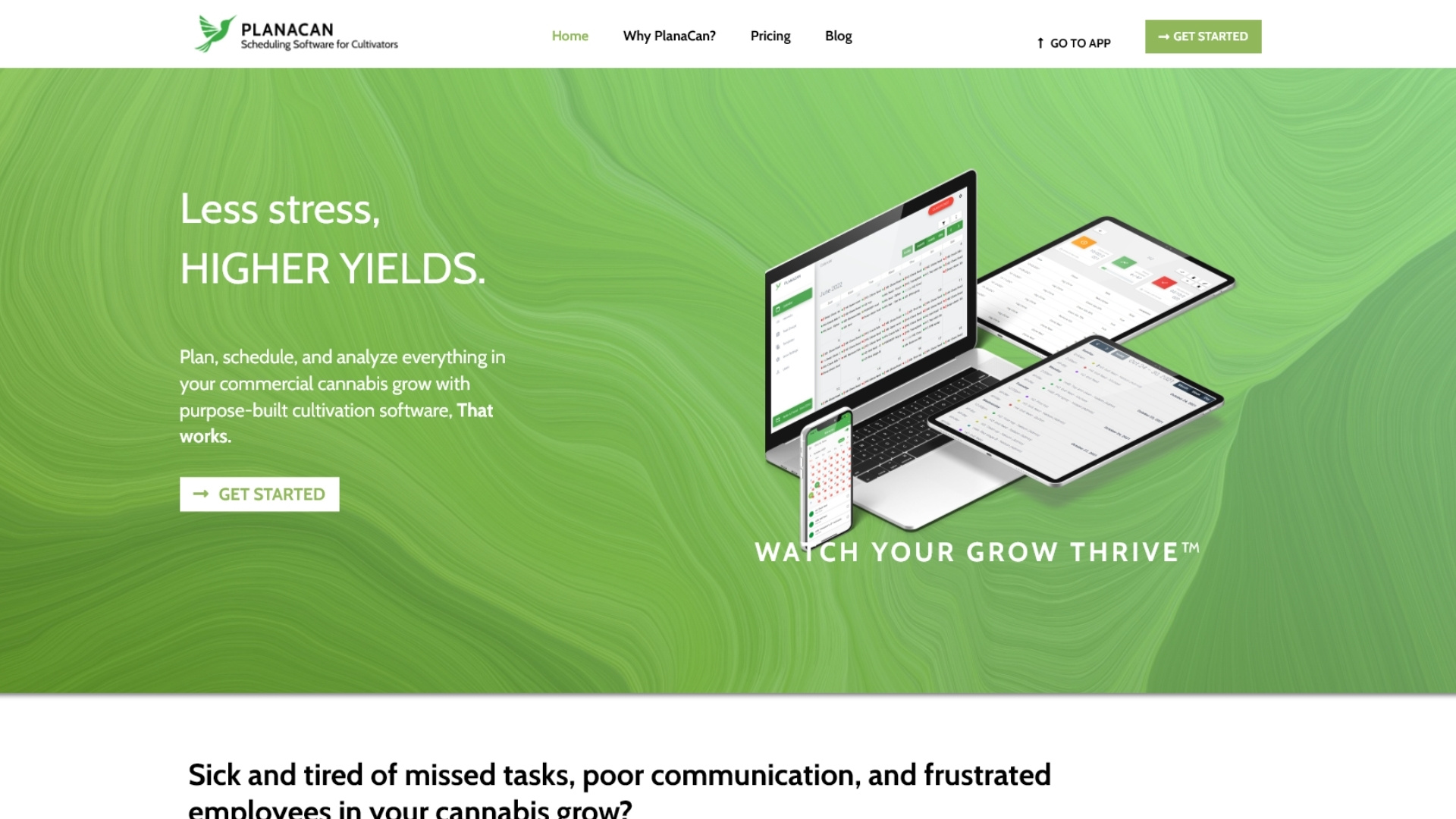
PlanaCan is a cultivation planning and execution platform built specifically for cannabis growers. It is designed to help teams plan work around plant growth, execute tasks consistently, and track what actually happened in the grow.
Instead of reacting to issues like dark green leaves after they escalate, PlanaCan helps growers catch and correct them early through structure and visibility. Core features include:
1. Growth-Based Interactive Calendar
PlanaCan’s interactive calendar schedules work based on plant growth stages rather than fixed dates. This allows feeding changes, environmental checks, and veg milestones to stay aligned with how plants are actually developing. When growth slows or accelerates, schedules adjust without losing clarity.
2. Automated Workflows and Task Templates
Automated workflows let growers standardize veg tasks such as feeding, runoff checks, and canopy reviews. Templates ensure nitrogen limits, EC targets, and review points are applied consistently across rooms and cycles. This reduces overfeeding drift caused by reused or memory-based schedules.
3. Daily Task Tracking and Accountability
PlanaCan shows what was completed, what was missed, and what needs attention each day. When corrective steps are taken for issues like dark green leaves, they are logged and visible to the entire team. This prevents partial fixes or repeated mistakes across shifts.
4. Historical Data and Cycle Comparisons
Every task, adjustment, and outcome is stored by cycle. Growers can look back to see which veg conditions led to excess nitrogen symptoms and which prevented them. Over time, this turns troubleshooting into refinement instead of guesswork.
5. Mobile Access for Real-Time Execution
With mobile access, teams can view tasks, updates, and changes directly from the grow room. Adjustments made in response to plant feedback are communicated instantly, reducing delays between observation and action. This keeps veg-stage corrections timely and coordinated.
PlanaCan is built for growers who want more control, not more complexity. We are available 24/7 via email to help you set up workflows and ensure the platform aligns with how you actually grow.
Conclusion
Dark green leaves are often the result of stacked scheduling errors, reused feed plans, or missed environmental checks that allow excess nitrogen to build unnoticed. When these issues are not addressed early, they compound across rooms and cycles.
PlanaCan changes how growers operate. By combining growth-based scheduling, automated workflows, and real-time task visibility, the platform helps teams catch issues early.
If veg-stage issues are repeating across cycles, it is time to fix the process, not just the plants. Schedule a free call today.
Frequently Asked Questions
1. What Does It Mean When Cannabis Leaves Turn Dark Green?
Dark green leaves usually indicate excess nitrogen uptake or reduced transpiration during veg. While plants may look vigorous, the color often signals nutrient accumulation rather than healthy growth, especially if leaves appear rigid or begin to curl.
2. How Do You Fix Nitrogen Toxicity During Flowering?
Correction during flowering focuses on lowering nitrogen input, improving transpiration, and avoiding aggressive flushes. Because flower-stage recovery is limited, early veg-stage correction is always more effective than reactive fixes later.
3. Should You Remove Fan Leaves During Veg?
Fan leaves should only be removed if they block airflow or light penetration. Removing them to correct the dark green color does not solve the underlying issue and can increase plant stress.
4. Do Plants With Darker Leaves Need Less Light?
Darker leaves do not automatically mean less light is needed. The issue is usually a nutrient and transpiration imbalance, not light intensity, unless high light is paired with poor environmental control.
5. How Long Does It Take Plants to Recover From Excess Nitrogen?
Most plants show improved new growth within 7–10 days once inputs and the environment are corrected. Existing dark leaves may not change color, but healthy growth patterns will return.