Indoor cannabis cultivation faces some of the highest operating costs in agriculture, and many growers struggle to understand where their money is really going. Energy usage is one of the biggest drivers of this challenge, with studies showing that 20% - 50% of indoor grow operating expenses come from electricity alone.
When environmental settings are inconsistent or poorly tracked, these costs rise quickly, and yields suffer. Data-driven cultivation changes this by revealing which decisions strengthen performance and which drain profitability.
In this blog, you will discover six proven strategies to boost cannabis ROI by using accurate, actionable data at every stage of cultivation.
Here's the short version:
- ROI is the core measure of cultivation success. It shows how efficiently a grow converts inputs like labor, energy, and nutrients into a profitable, sellable product.
- Data-driven decisions improve profitability. Tracking environments, irrigation, nutrients, labor, and harvest metrics helps identify what strengthens yield and what reduces waste.
- Six key strategies to improve ROI include environmental stability, precise irrigation and feeding, efficient lighting, strong genetics, optimized labor, and post-harvest control.
- Consistent data collection matters. Incomplete or inconsistent records hide problems, prevent improvements, and make cycles unpredictable.
- Small operational improvements compound over time. Better control of inputs, workflows, and conditions leads to more consistent output and stronger financial returns each cycle.
How Does Cannabis ROI Impact Decisions in the Grow Room
Return on Investment (ROI) measures how much profit your cultivation operation generates compared to the total cost of producing it. In cannabis cultivation, ROI is influenced by yield, labor, utilities, nutrients, equipment efficiency, and post-harvest processes.
When growers understand ROI, they can see exactly where money is gained, where it is lost, and which daily choices have the biggest financial impact.
This is why ROI is a significant stakeholder in marijuana cultivation:
- Improves Profitability: Strong ROI means your growth converts resources into sellable product efficiently, increasing revenue per cycle.
- Reduces Operational Waste: Tracking ROI highlights where energy, nutrients, or labor are being overused without improving yield.
- Strengthens Decision-Making: ROI helps growers compare methods, equipment, and workflows based on measurable outcomes.
- Supports Scalability: Facilities with clear ROI data can expand confidently because they know which systems pay off.
- Protects Against Market Pressure: As wholesale prices fluctuate, high-ROI cultivations remain stable and competitive.
- Identifies Hidden Costs: ROI reveals inefficiencies in drying, trimming, or environmental control that quietly erode margins.
When ROI becomes part of how you evaluate your cultivation process, every adjustment in the grow room gains purpose and clarity. In the next section, we look at six data-driven ways to increase ROI across your entire operation.
Suggested Read: Simple Steps and Tips for Harvesting Cannabis
Six Data-Driven Strategies to Maximize Cannabis ROI

Instead of relying on intuition, you can anchor every choice in terms of environmental, nutritional, operational, or post-harvest to measurable results.
The six strategies below show how specific types of data directly increase yield, reduce waste, and improve financial return across your entire grow.
1. Improve Yield Consistency With Environmental Data
Stable environmental conditions reduce stress and create predictable growth patterns, which directly strengthen ROI. Tracking VPD, temperature, humidity, CO₂, and airflow lets growers eliminate fluctuations that damage yield potential.
Use these steps to maintain consistent environmental performance:
- Map sensor locations to catch microclimates
- Track daily trends instead of one-time readings
- Adjust VPD slowly to avoid plant stress
- Sync HVAC, dehumidifiers, and airflow to prevent swings
2. Optimize Nutrient Programs Through Measured Inputs
Nutrients influence both cost and quality, making data essential for preventing waste and deficiencies. Logging EC, pH, nutrient volume, and runoff helps growers match feeding strength to plant demand for maximum return.
Use these practices to improve nutrient efficiency:
- Record EC and pH at every irrigation
- Track runoff volumes for salt buildup signs
- Adjust recipes based on cultivar response
- Compare nutrient use against yield data
3. Strengthen Irrigation Strategy With Sensor-Based Decisions
Overwatering and underwatering reduce yield and increase resource waste. Substrate moisture sensors help growers irrigate based on plant need, not guesswork, improving root performance and lowering input costs.
Use these steps to make irrigation more precise:
- Install moisture or weight-based substrate sensors
- Log irrigation timing and volume daily
- Adjust irrigation frequency instead of volume first
- Compare sensor trends to growth stage performance
4. Standardize Plant Training Through Growth Stage Data
Training timing affects canopy shape, light penetration, and overall bud density. These are all key ROI drivers. When growers record plant height, node spacing, and vigor, they can schedule training at the moment when it has the greatest impact.
Use these approaches to improve training consistency:
- Set training windows by measurable growth traits
- Track vigor to plan topping and defoliation
- Align trellising timing with canopy expansion
- Compare training methods across batches
5. Optimize Labor Efficiency With Workflow Tracking
Labor is one of the highest costs in any grow. Tracking how long tasks take and how often they repeat helps identify bottlenecks and reduce unnecessary labor hours.
Use these action steps to boost labor ROI:
- Measure time spent per task per cycle
- Identify activities causing delays or rework
- Build weekly task schedules based on data
- Reassign duties to evenly distribute the workload
6. Analyze Harvest Metrics to Improve Future Cycles
Yield, potency, moisture loss, and trim ratios reveal how effective each cycle’s decisions were. When growers compare results across batches, they can refine their approach and steadily improve ROI.
Use these practices to strengthen harvest analysis:
- Track wet and dry weight for shrink ratios
- Record potency and terpene results per batch
- Compare outcomes to environmental and irrigation logs
- Identify which conditions consistently produce the best quality
PlanaCan brings all this data together into a single, structured system, making it easy to see how daily decisions influence performance. The platform turns environmental readings, feeding logs, tasks, and harvest metrics into actionable insights that strengthen ROI over time. Learn more by scheduling a free call today.
How to Calculate ROI in Cannabis Cultivation
Return on Investment (ROI) helps growers understand how profitable a cultivation cycle truly is. The basic formula is:
ROI = (Return – Cost) / Cost
To make this meaningful, you must define what counts as “return” and what counts as “cost” inside a grow operation.
- Return: This includes your total sellable flower weight, the price you receive per pound, the value of high-quality trim, and any quality-driven premiums tied to potency or terpene profile.
- Cost: This includes labor, electricity, lighting, HVAC use, dehumidification, nutrients, water, consumables such as substrate or trellis, and all post-harvest expenses, including drying, curing, and trimming.
An example:
If a grow produces $120,000 in sellable product and costs $80,000 to run, the ROI is:
ROI = (120,000 – 80,000) / 80,000 = 0.50, or 50 percent.
This means every dollar invested returned $1.50 in value.
Understanding ROI this way shows exactly where money is made or lost in each cycle. In the next section, you can look at the key operational factors that impact your returns on investment.
Suggested Read: Indoor Cannabis Cultivation Facility Design Tips
Factors That Directly Improve or Reduce Cannabis ROI
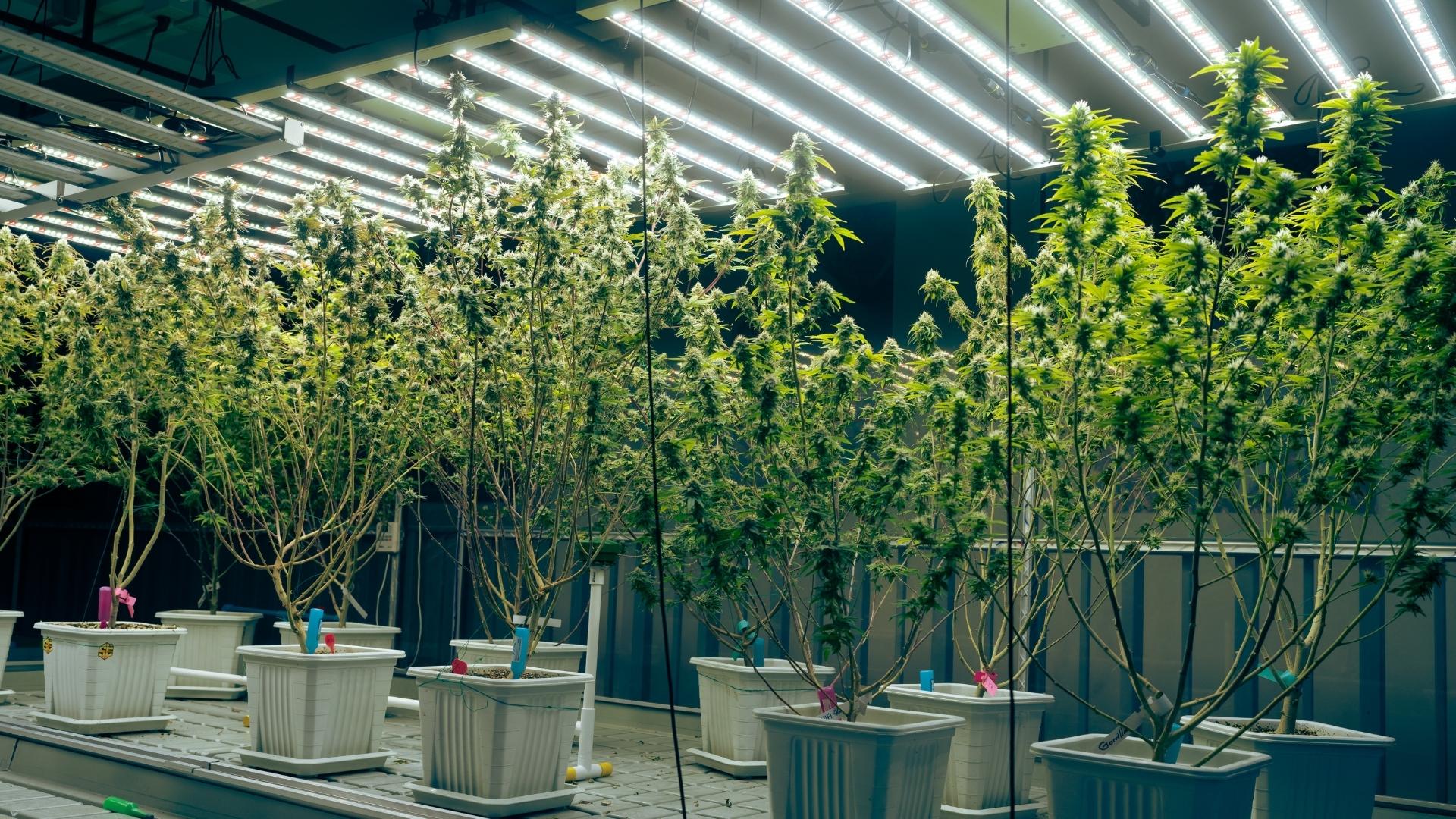
Several operational choices in a grow room have an immediate impact on profitability. Some factors strengthen ROI by improving consistency and reducing waste, while others quietly drain resources, lower yield, or weaken product quality.
Understanding the following variables helps growers focus on the changes that actually move financial performance in the right direction.
- Environmental Stability
- Keeping temperature, humidity, CO₂, and airflow stable prevents the stress events that reduce growth rates and final yield. Even a few days of unstable conditions can lower grams per square foot, increase energy consumption, and force plants to spend resources recovering instead of producing revenue-generating biomass.
- Lighting Efficiency
- Lighting is one of the highest operating costs in indoor cultivation. When PPFD and photoperiod match plant demand, growers produce more grams per watt while reducing waste from excess lighting. This lowers cost per gram and increases total output—two of the strongest ROI levers in the grow room.
- Nutrient Management
- Precise EC, pH, and feed volume control prevents overfeeding, which inflates costs, and underfeeding, which reduces yield. Optimized nutrient programs increase sellable flower weight without increasing input spend, directly improving the profit margin of every cycle.
- Irrigation Accuracy
- Accurate watering reduces runoff, nutrient loss, and root stress, which are the three hidden profit drains. Sensor-based irrigation ensures plants grow efficiently, improving canopy development and final yield while cutting unnecessary nutrient and water costs. Better irrigation = higher ROI through lower waste and stronger plants.
- Labor Productivity
- Labor often represents a significant portion of cultivation costs. Efficient workflows reduce overtime, prevent duplicated tasks, and minimize human error that leads to rework or crop inconsistencies. When labor hours align with measurable output, cost per pound drops and ROI increases sharply.
- Genetic Selection
- Some cultivars produce higher yields, finish faster, or command better market pricing. Choosing genetics with strong production potential can double profitability without increasing square footage or labor. Genetics determines revenue ceiling by making it one of the most powerful ROI decisions a grower can make.
- Post-Harvest Control
- Drying, curing, and trimming preserve the value created during cultivation. Poor control can reduce potency, terpene content, and final weight, sometimes cutting revenue. Strong post-harvest management maximizes sellable product quality, protects price per pound, and prevents avoidable losses that weaken ROI.
PlanaCan helps growers manage these ROI drivers by organizing daily workflows, maintaining consistent environmental logs, and centralizing all operational tasks. Its structured schedules and templates ensure that no critical step is missed, reducing variation that harms yield. Try PlanaCan for free.
Common Mistakes Cultivators Make When Gathering Data
Accurate data is the backbone of ROI-driven cultivation, but many growers unintentionally collect data in ways that create gaps, inconsistencies, and misleading conclusions.
The table below outlines the most common mistakes and why they undermine profitability.
When these mistakes accumulate, growers lose the ability to understand cause and effect in their operation. Correcting them is the first step toward reliable data, better decisions, and stronger ROI.
Fixing these mistakes can help your ROI increase because:
- It allows growers to pinpoint exactly which conditions produce the highest revenue per cycle.
- Better data removes guesswork, reducing unnecessary input costs and labor hours.
- Clean, consistent records reveal hidden inefficiencies that quietly drain profitability.
- Comparing batches becomes easier, helping growers refine methods that improve cost per pound.
- Strong data helps avoid repeating mistakes that previously reduced yield or quality.
When data is inconsistent or incomplete, improving ROI becomes guesswork. Solving these issues requires a system that standardizes how information is collected, logged, and used across every room. This is exactly where PlanaCan makes a measurable difference.
Suggested Read: How to Become a Legal Cannabis Grower in the United States
How Does PlanaCan Support Data-Driven ROI
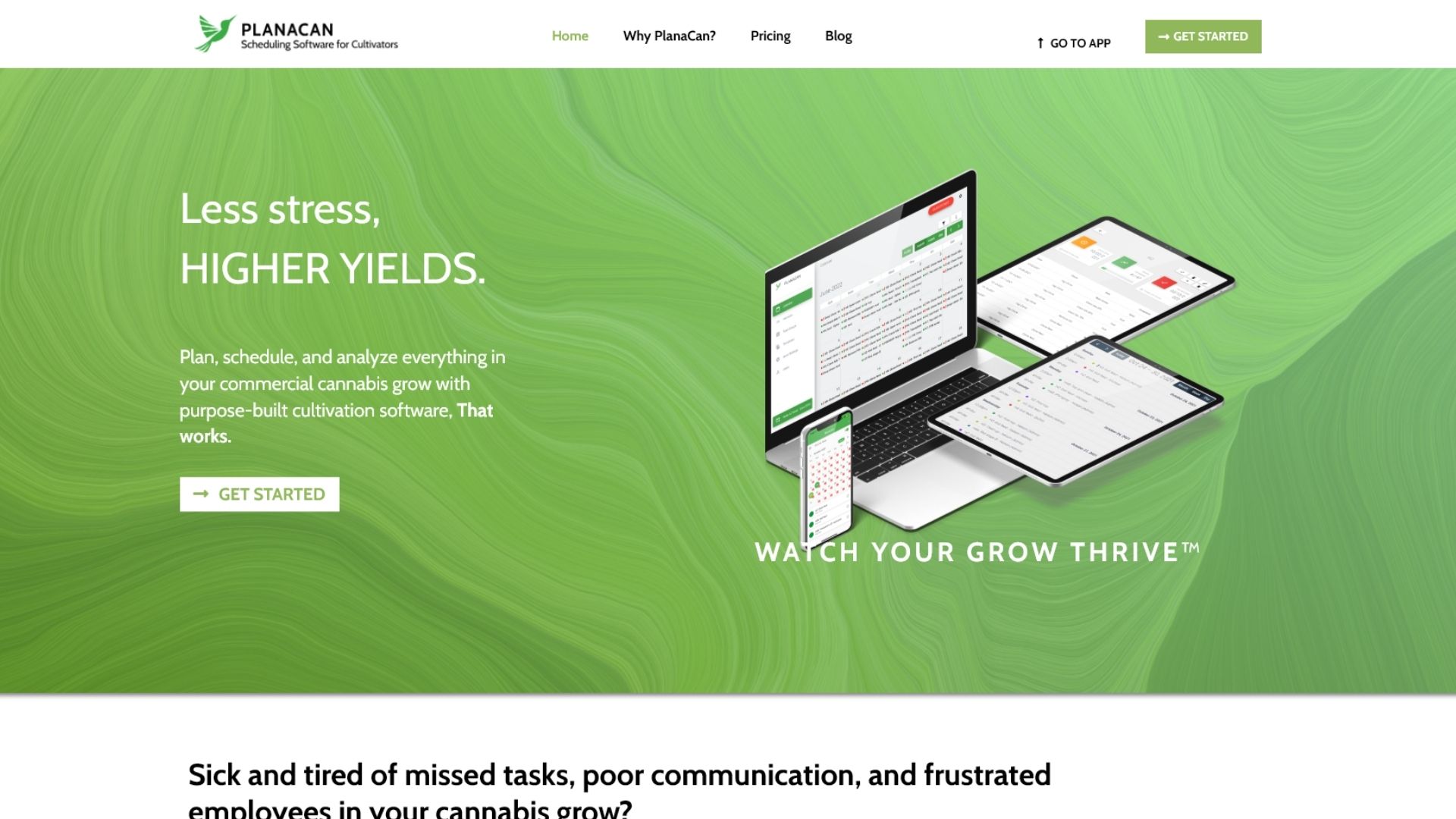
PlanaCan is an end-to-end cultivation management platform designed to replace guesswork with structured, reliable, and actionable data. Instead of scattered notes, inconsistent logs, or team-dependent routines, PlanaCan creates a unified system that tracks environmental conditions, workflows, feeding schedules, labor activity, and harvest results.
It turns day-to-day cultivation practices into measurable data points, making it easier for growers to understand what improves yield, what reduces cost, and what directly increases ROI.
These features set us apart as industry leaders:
1. Automated Work Scheduling
PlanaCan builds and assigns daily tasks automatically so no critical step is missed or repeated. This prevents unnecessary labor hours, avoids workflow bottlenecks, and increases output per worker, an essential driver of ROI.
2. Interactive Calendar
The calendar maps environmental checks, feedings, irrigation events, and training tasks across the entire grow cycle. This visual clarity helps growers predict workload, avoid conflicts, and maintain consistency that translates into higher yield and lower cost.
3. Team Management Tools
With predefined roles, task assignments, and accountability tracking, PlanaCan ensures every team member records and executes their work consistently. This eliminates variation that harms yield and helps keep operational costs aligned with expected output.
4. Harvest Analysis And Reporting
PlanaCan compiles wet weight, dry weight, potency, trim ratio, and other metrics into clean reports. By comparing cycles, growers learn which conditions deliver better ROI and which adjustments are worth repeating.
3. Custom Templates
Drying templates, feeding templates, and environment-monitoring templates ensure information is captured consistently across all rooms. The mobile app lets staff log data instantly, reducing errors and building a high-quality historical record that supports ROI improvement.
PlanaCan gives cultivators the structure, visibility, and consistency needed to make profitable decisions at every stage of the grow. When operations run with this level of precision, ROI becomes easier to control and easier to produce.
Conclusion
ROI is one of the clearest indicators of how well a cultivation operation is performing. Data-driven cultivation replaces uncertainty with clarity, allowing growers to refine each cycle and steadily increase financial return over time.
PlanaCan supports this shift by giving cultivators a structured, consistent, and easy-to-use system for tracking everything that affects ROI. From daily environmental checks to harvest reporting, it turns scattered information into actionable insights.
Ready to improve your cannabis ROI with real data instead of guesswork? Start using PlanaCan today and turn every decision in your cultivation into a measurable step toward stronger financial performance. Schedule a free call today
Frequently Asked Questions
1. How profitable is a cannabis business?
Profitability varies widely by state, scale, and efficiency. Well-managed grows can achieve lucrative profit margins, but poor environmental control, labor inefficiency, or low yields can reduce margins significantly.
2. Is cannabis still a good investment?
Yes, but selectively. Markets with strong demand, manageable taxes, and efficient operations remain profitable. Investors now prioritize cost control, data-driven cultivation, and product consistency over rapid expansion alone.
3. What is the average yield of a cannabis plant?
Indoor plants average 3–6 ounces, but skilled growers using optimized lighting, genetics, and environmental control can exceed this range. Yield depends heavily on cultivation method, canopy size, and grower expertise.
4. What is the most profitable cannabis product?
High-quality flower remains the top revenue driver, but vape oils and concentrates often have higher margins due to a higher price per gram and strong consumer demand.
5. What factors improve ROI in cannabis cultivation?
Consistent environments, efficient lighting, precise irrigation, nutrient control, strong labor workflows, and optimized post-harvest processes all increase yield and reduce costs, directly improving ROI across each cycle.
6. Why do some cannabis growers struggle to stay profitable?
Common issues include high energy costs, labor inefficiency, inconsistent data, poor environmental control, and post-harvest losses. These operational weaknesses reduce yield, increase cost per pound, and tighten margins.