Vapor Pressure Deficit (VPD) is one of the most important yet often under-managed factors in cannabis cultivation. It governs how efficiently your plants transpire, absorb nutrients, and grow. And when it’s even slightly off balance, you’ll see the impact in slower development, inconsistent yields, and increased susceptibility to disease.
As Cannabis Science & Technology explains, VPD directly affects transpiration rates, making it a critical lever in plant performance across all growth stages. Yet, many commercial operations either overlook it entirely or struggle to adjust it accurately, especially when managing multiple rooms, strains, and environments.
This guide breaks down exactly how to lower VPD when needed, when it makes sense to raise it, and how to create a more controlled, high-performing environment for your crops.
Key Takeaways
- VPD isn’t a set-and-forget metric; it changes with temperature, humidity, and your plant’s growth stage. Managing it dynamically is essential for consistent yields.
- To lower VPD, you’ll need to raise relative humidity, lower temperature, or both—while staying within acceptable ranges for your crop stage.
- Low VPD can stunt transpiration, leading to nutrient uptake issues, slower growth, and a higher risk of disease. High VPD can stress plants and accelerate water loss.
- Raising VPD may be necessary during early veg or high-humidity conditions to improve airflow and plant respiration.
- Monitoring and adjusting VPD across rooms and cycles becomes easier with data-driven tools that help you track environmental conditions, task timing, and plant performance in real time.
What is VPD?
Vapor Pressure Deficit (VPD) is the difference between the amount of moisture in the air and how much moisture the air can hold when it’s fully saturated. In simpler terms, it’s a measure of how “thirsty” the air is, and that directly impacts how much water your plants release through their leaves.
When the air is too dry (high VPD), plants lose water rapidly, which can lead to stress and over-transpiration. When the air is too humid (low VPD), transpiration slows down, which can interfere with nutrient uptake and encourage mold or mildew.
VPD essentially controls the flow of water and nutrients within your plants and, by extension, their ability to grow, develop, and resist stress.
Unlike temperature or humidity alone, VPD takes both into account, offering a more accurate reflection of what your plants are actually experiencing.
It also changes depending on the plant’s stage; young seedlings prefer lower VPD, while mature flowering plants thrive under slightly higher values. That’s why one-size-fits-all settings don’t work for high-performance grows.
Mastering VPD isn’t about chasing a single number; it’s about maintaining the right range for the right stage.
The Effects of Too High VPD
When VPD climbs too high, it means the air is much drier than what your plants can comfortably handle. In this environment, plants begin to lose moisture rapidly through transpiration faster than they can replace it through root uptake. Over time, this leads to water stress, stunted growth, and even structural damage to plant cells.
High VPD conditions are especially problematic in flowering stages, when plants are already under metabolic pressure. Even if your nutrient schedule is dialed in, excessive transpiration can throw off internal balances, triggering calcium deficiencies, leaf burn, or curling.
Common signs of high VPD:
- Leaves appear dry, curled, or brittle
- Faster-than-normal wilting, especially midday
- Marginal leaf burn or tip necrosis
- Slowed or inconsistent bud development
- Higher water demand without improved growth
Left unchecked, high VPD doesn’t just stress plants; it compromises yield and quality, and forces your team to play catch-up with environmental adjustments.
The Effects of Too Low VPD
Low VPD means the air is already holding a high amount of moisture, leaving little room to pull more from your plants. While this may sound gentle on your crop, it actually disrupts one of the most critical processes in plant development: transpiration.
When transpiration slows, nutrient uptake does too, leading to deficiencies, slower growth, and a higher risk of pathogen outbreaks.
This is especially risky in vegetative stages when plants are trying to build mass and root strength. With poor transpiration, they can’t pull enough water or nutrients to meet those demands.
Signs of low VPD include:
- Leaves appear droopy or overly soft
- Increased risk of powdery mildew or botrytis
- Nutrient lockout symptoms despite correct feeding
- Condensation on leaves or walls
- Slower growth or stretching
Low VPD can be just as damaging as high VPD, especially if you’re relying solely on temperature and humidity targets without looking at how they work together. Over time, a low-VPD environment can result in weaker plants, uneven development, and inconsistent yields.
How to Lower VPD: Practical Steps for Growers

High VPD usually shows up when temperatures rise faster than your relative humidity can keep up. This often happens during mid-day peaks, in flowering rooms with intense lighting, or when dehumidifiers run too aggressively.
If your plants are showing signs of stress, leaf curl, tip burn, or accelerated wilting, it may be time to bring your VPD back down.
How to lower VPD effectively:
- Increase relative humidity
Adding moisture to the air helps reduce the “thirst” of the environment. This can be done using ultrasonic or high-pressure foggers—but be cautious in flower rooms to avoid mold risk. - Lower air temperature
Bringing down ambient temperature (even slightly) decreases the air’s capacity to hold moisture, which lowers VPD. Prioritize shaded cooling and strategic airflow over blasting cold air to avoid shocking plants. - Reduce light intensity during peak heat hours.
Consider dimming or staggering light cycles if your environment regularly overheats midday. Less heat = less VPD pressure. - Slow down dehumidifiers (strategically)
Over-dehumidifying is a common issue in climate-controlled grows. Monitor RH closely and set parameters to prevent excessive moisture removal. - Improve canopy airflow
While this doesn’t lower VPD directly, it evens out microclimates and helps prevent hot, dry pockets from developing—especially in dense rooms.
Lowering VPD isn’t about a one-time fix; it’s about maintaining the right balance throughout each stage of your crop’s lifecycle. And in multi-room operations, that means tracking changes in real time, correlating them with plant outcomes, and adjusting fast.
Doing all of this manually across spreadsheets, whiteboards, or group chats? That’s where mistakes happen. PlanaCan simplifies the process by helping you log environmental data, track VPD-related tasks, and analyze outcomes all in one centralized platform. With automated scheduling, mobile updates, and harvest insights, you can stay on top of VPD without chasing data. Schedule a call with PlanCan today!
How to Increase VPD (and When You Should)

While lowering VPD gets most of the attention, there are times when increasing it is not only necessary it’s beneficial. Low VPD environments can slow transpiration, promote pathogens, and lead to excess moisture buildup around your plants. This is particularly common during early veg stages, in densely planted rooms, or in regions with naturally high humidity.
When to consider raising VPD:
- In early vegetative stages with low light and high humidity
- After cloning or transplanting, to encourage stronger root development
- During periods of heavy dehumidification lag
- To prevent powdery mildew or mold in high-RH environments
- When nutrient uptake appears stalled despite correct EC/pH
Ways to increase VPD safely:
- Lower relative humidity
Dehumidifiers and HVAC adjustments can reduce moisture in the air, increasing the “pull” on plant transpiration. Just be careful not to drop RH too fast or too far, especially in younger plants. - Raise the air temperature slightly.
Warmer air can hold more moisture, which increases the deficit (VPD). Incremental temperature bumps of 1–2°F can make a measurable difference. - Increase airflow and circulation.
Moving air around the canopy helps prevent microclimates where RH builds up and VPD drops. Use horizontal and vertical fans to maintain even airflow without direct stress. - Space plants appropriately
Overcrowded rooms tend to hold humidity longer, which can suppress VPD. Proper spacing helps maintain balanced air exchange.
The key is to make these changes gradually, monitor plant response, and adjust in real time. VPD management isn’t a one-size-fits-all formula; it requires responsive controls based on your strain, room dynamics, and stage of growth.
How PlanaCan Helps You Monitor and Manage VPD More Effectively
Maintaining ideal VPD is rarely a static task. It changes with your crop stage, lighting schedule, HVAC behavior, and even how your team executes daily tasks. For multi-room operations or even a single high-output grow, tracking and adjusting VPD manually is not just tedious, it’s error-prone.
PlanaCan was built to simplify that complexity.
Here’s how it helps:
1. Automated Task Scheduling by Growth Stage
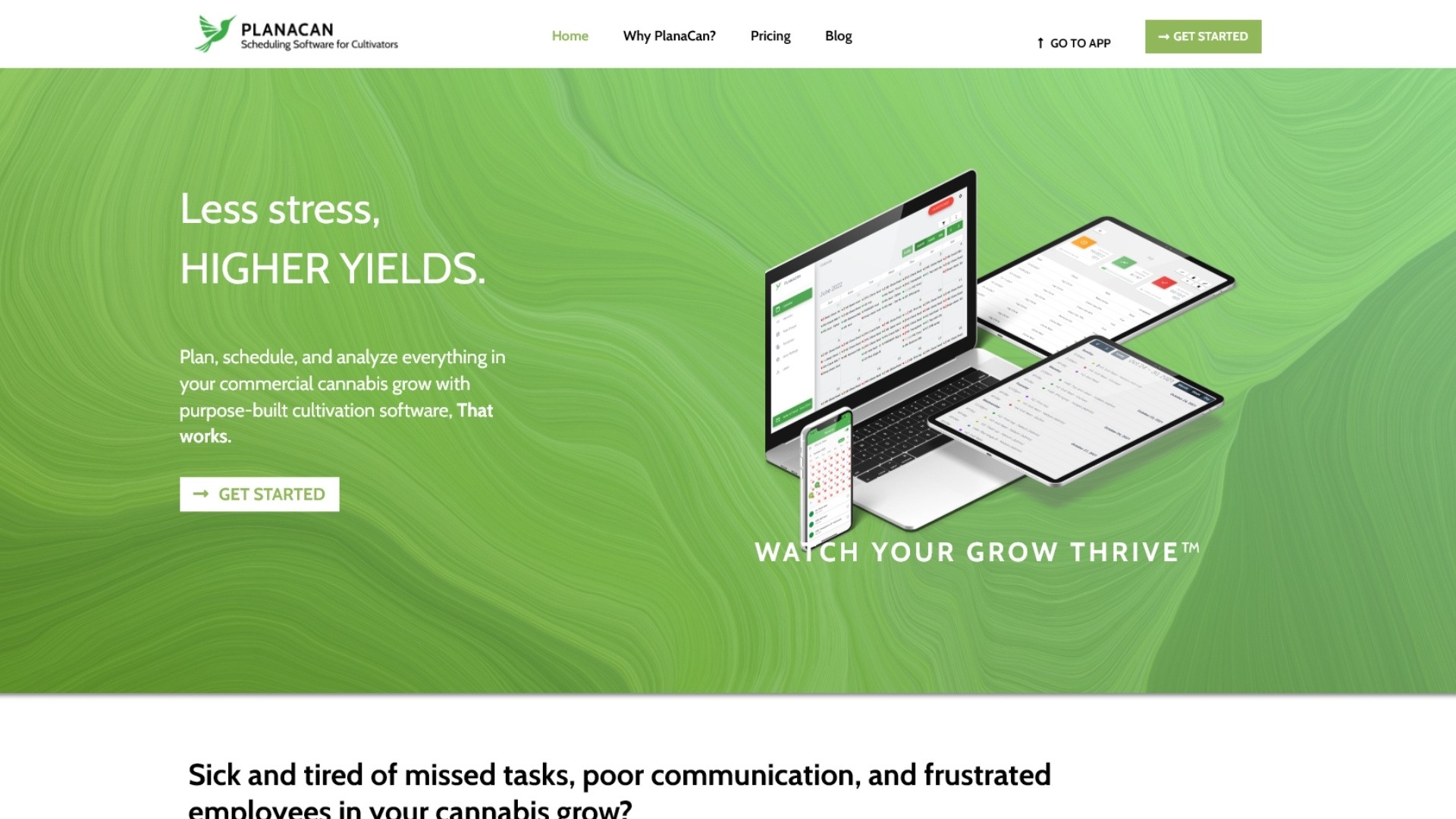
PlanaCan lets you build and apply custom cultivation templates that include VPD-sensitive actions like adjusting lights, monitoring humidity, or staging dehumidifiers. Each task can be scheduled in sync with your crop cycle, ensuring consistent execution across every room and strain.
2. Interactive Calendar with Real-Time Adjustments
Instead of using static charts or separate systems, PlanaCan’s visual calendar gives you a full view of what’s happening across your grow. You can drag, drop, and edit tasks in real time, ideal for responding to unexpected VPD fluctuations without disrupting your entire workflow.
3. Mobile Team Coordination
With mobile apps for Android and iOS, your team can log environmental readings, upload photos of plant stress, or mark VPD-related tasks as complete right from the grow floor. Everyone stays on the same page, no matter the room or shift.
4. Harvest Data and Trend Analysis
PlanaCan doesn’t just help you react, it helps you learn. By tying environmental tasks to harvest outcomes, you can see which VPD management strategies delivered better yields, faster growth, or fewer disease events over time.
If you are ready to take the guesswork out of VPD management, schedule a free call today and discover how PlanaCan helps commercial growers like you easily track, adjust, and optimize environmental conditions.
Best Practices & VPD Ranges by Growth Stage
VPD isn’t a one-size-fits-all number; it needs to shift as your plants grow. Seedlings require gentler conditions to establish roots, while flowering plants can tolerate (and benefit from) slightly more stress to drive trichome development and resin production.
The key is not just knowing the right VPD range, but actively adjusting your environment to match each stage.
Below is a reference table outlining ideal VPD ranges by growth phase, along with suggested temperature and relative humidity pairings:
Note: These are general guidelines. VPD preferences may vary slightly based on strain genetics and grow room dynamics.
Best Practices for Managing VPD Across Growth Stages:
- Track changes daily, especially during transitions (e.g., veg to flower)
- Calibrate sensors regularly to avoid skewed VPD calculations
- Automate repetitive tasks like humidity adjustments or temp shifts via scheduling tools
- Review harvest results to correlate VPD consistency with final yield and quality
Managing VPD reactively is a risky approach, especially in commercial settings. When it’s baked into your workflows, it becomes part of your quality control, not just an environmental checkbox.
Conclusion
VPD isn’t just a number; it’s a dynamic metric that directly influences plant health, nutrient uptake, and yield quality. Whether you’re scaling operations across multiple rooms or fine-tuning a single flower cycle, maintaining optimal VPD at every stage can be the difference between an average harvest and an exceptional one.
By understanding when and how to adjust VPD and integrating it into your team’s daily workflows, you gain more than environmental control. You gain consistency, predictability, and better outcomes at scale.
Simplify your cultivation processes and standardize your VPD management by scheduling a free call with PlanCan today.
FAQs
1. What is the ideal VPD for cannabis plants?
The ideal VPD for cannabis varies by growth stage. Seedlings thrive at lower VPD (0.4–0.8 kPa), while mature flowering plants perform best at higher VPD levels (1.2–1.6 kPa). Adjust VPD gradually to match each stage for optimal growth and yield.
2. How do I calculate VPD accurately?
VPD is calculated using both temperature and relative humidity. While there are online calculators available, most commercial growers use sensors and software that calculate VPD automatically. Tools like PlanaCan help ensure accurate tracking and analysis across your grow operation.
3. Can high VPD cause nutrient deficiencies?
Yes. High VPD leads to rapid transpiration, which can throw off nutrient balance and result in deficiencies, especially calcium and magnesium. Monitoring VPD helps prevent these stress-related issues before they impact yield.
4. Is it okay for VPD to fluctuate during the day?
Some fluctuation is natural, especially during lighting transitions. However, large or frequent VPD swings can stress plants. It’s best to maintain a stable range within each stage and adjust proactively if environmental conditions change.
5. How can I manage VPD across multiple grow rooms?
Manual tracking across rooms can be time-consuming and error-prone. PlanaCan allows you to schedule VPD-sensitive tasks, log environmental data, and correlate results with harvest performance, helping you manage multiple environments consistently and efficiently.