Nitrogen mistakes are one of the fastest ways to derail an otherwise healthy cannabis crop. When nitrogen levels fall outside the optimal range, plants can lose up to 50% of their biomass, directly reducing yield potential before flowering even begins.
This makes nitrogen imbalance a high-impact production risk. The challenge is that nitrogen toxicity and nitrogen deficiency often appear similar in early stages, leading to misdiagnosis and overcorrection.
This guide breaks down how each condition develops, how to tell them apart with confidence, and how growers can manage nitrogen precisely to protect plant health, yield, and final quality.
At a glance:
- Nitrogen balance directly impacts yield and quality. Both deficiency and toxicity disrupt growth, flowering timing, and final harvest outcomes.
- Deficiency and toxicity show different visual patterns. Yellowing starts from the lower leaves in deficiency, while toxicity causes dark, clawed foliage.
- Misdiagnosis worsens plant stress. Overcorrecting without confirmation often compounds nutrient imbalance.
- Safe correction requires gradual adjustments. Slow changes protect roots and prevent secondary nutrient issues.
- Structured planning prevents repeat errors. Stage-based feeding and execution tracking reduce nitrogen-related mistakes across cycles.
Importance of Nitrogen in Cannabis Growth
Nitrogen is essential to cannabis plant development because it directly supports chlorophyll production and photosynthesis. Chlorophyll enables plants to convert light into energy, fueling vegetative vigor, leaf expansion, and structural growth.
When nitrogen levels are balanced, plants develop strong canopies capable of supporting healthy flowering later in the cycle. This is how nitrogen helps at different growth stages:
- Propagation and Early Vegetative Stage: Supports rapid leaf development and establishes photosynthetic capacity needed for early growth momentum.
- Mid to Late Vegetative Stage: Drives stem strength, node spacing, and canopy density, influencing future flower sites.
- Transition to Flowering: Gradual nitrogen reduction signals plants to shift energy from vegetative growth to flower development.
- Flowering Stage: Lower nitrogen levels help prevent excessive leaf growth that can suppress bud formation and terpene expression.
Nitrogen issues escalate quickly because deficiencies or excesses directly affect photosynthesis and energy production. Once chlorophyll production is disrupted, growth slows, or stress responses intensify, often within days.
Understanding how nitrogen deficiency develops is critical for identifying early warning signs before long-term damage occurs.
Suggested Read: NPK Ratio for Cannabis: Ideal Nutrients for Plant Growth
Nitrogen Deficiency in Cannabis Plants
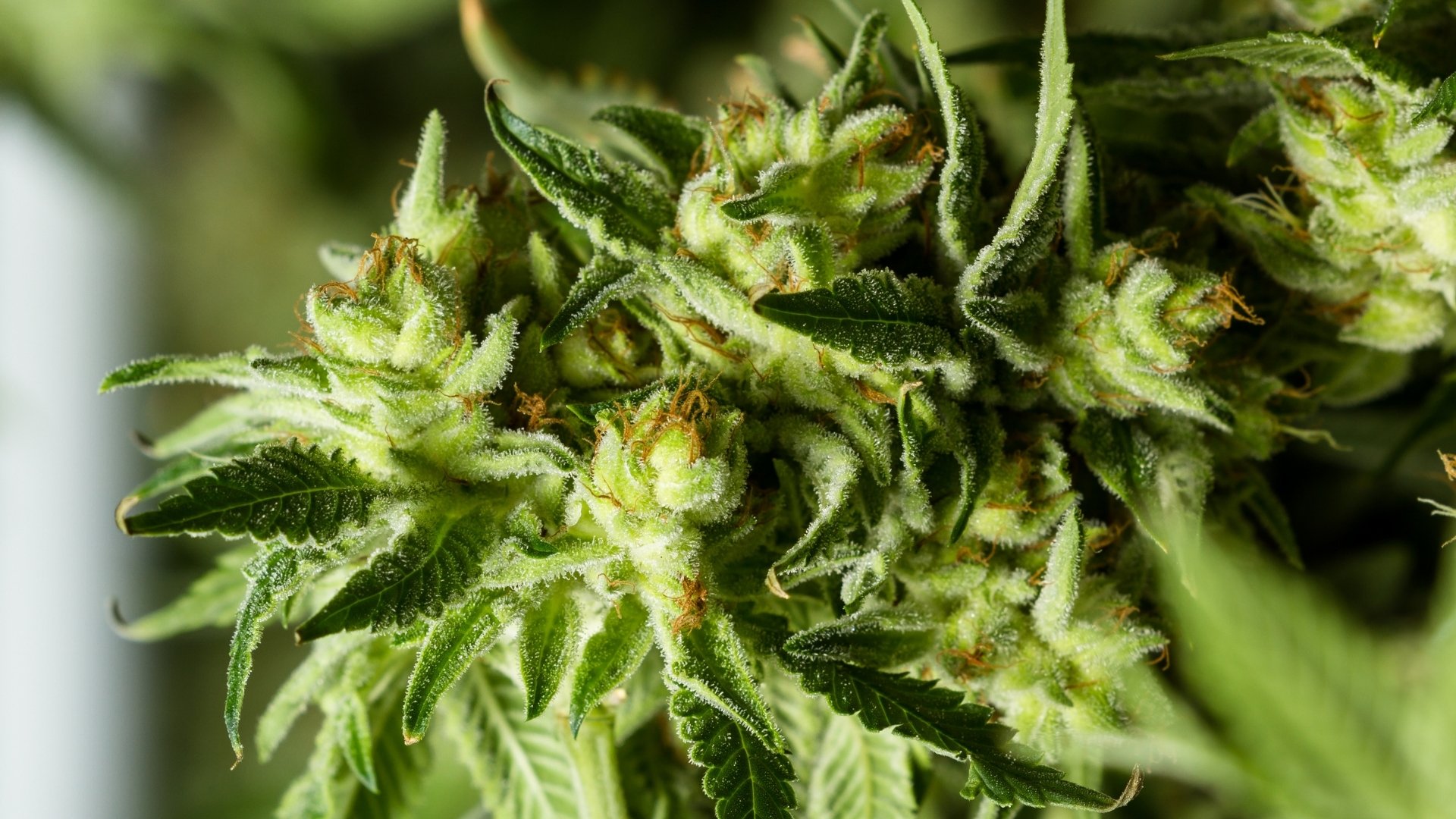
Nitrogen deficiency is one of the most common and easily overlooked nutrient issues in cannabis cultivation. The sections below explain how nitrogen deficiency appears, what causes it, and why it directly impacts harvest outcomes.
Visual Symptoms and Early Warning Signs
Nitrogen deficiency first affects older leaves because the plant reallocates nitrogen to newer growth. Visual symptoms follow a predictable progression that helps differentiate deficiency from other nutrient issues.
Visual symptoms include:
- Lower leaves turn pale green, then yellow uniformly
- Discoloration progresses upward as the deficiency worsens
- Affected leaves may curl, dry, and drop prematurely
Changes in overall growth performance often accompany these visible cues. The following section explains how nitrogen deficiency affects growth rate, plant structure, and overall development.
Growth Rate and Structural Impacts
As nitrogen becomes limited, plants reduce photosynthetic output to conserve energy. This slows vegetative growth and weakens plant structure. Over time, the canopy becomes sparse and uneven.
You will notice:
- Slowed vertical and lateral growth
- Thin stems and reduced branching
- Increased internodal spacing and poor canopy density
When structural development is compromised, plants become more sensitive to environmental stress and nutrient imbalance. These effects are examined in the following section on the underlying causes of nitrogen deficiency.
Causes of Nitrogen Deficiency
Nitrogen deficiency rarely results from a single mistake. It typically develops from feeding inconsistencies, uptake barriers, or root-zone conditions that limit availability. Identifying the root cause is essential to prevent repeated issues.
Common causes include:
- Underfeeding or incorrect nutrient ratios
- pH levels outside optimal uptake ranges
- Root damage, disease, or poor oxygenation
Even when nitrogen levels appear adequate, availability can still be restricted under certain conditions. The next section outlines how these limitations translate into yield and potency losses.
Impact on Yield and Potency
Prolonged nitrogen deficiency reduces the plant’s ability to build biomass before flowering. Smaller canopies limit energy production, directly affecting flower development.
Nitrogen deficiency can lead to:
- Reduced leaf mass and photosynthetic capacity
- Smaller flower sites and lower final harvest weight
- Indirect potency loss due to prolonged plant stress
While nitrogen deficiency weakens plants through a shortage, excess nitrogen creates a different but equally damaging set of problems. The next section examines nitrogen toxicity and how overfeeding disrupts healthy cannabis growth.
Suggested Read: How to Become a Legal Cannabis Grower in the United States
Nitrogen Toxicity in Cannabis Plants

Nitrogen toxicity occurs when plants receive more nitrogen than they can effectively use or metabolize. Excess nitrogen disrupts standard growth signals, delays flowering, and creates stress responses that are often mistaken for other issues.
The sections below explain how nitrogen toxicity presents visually, what causes it, and why its impact extends beyond vegetative growth.
Visual Symptoms and Stress Indicators
Nitrogen toxicity typically appears first in leaf shape and color rather than yellowing. Plants respond to excess nitrogen by concentrating growth in foliage at the expense of balance and structure.
These symptoms tend to worsen quickly under continued overfeeding:
- Dark green, glossy leaves with a rigid appearance
- Leaf tips curling downward in a “claw” shape
- Tip burn or marginal burn as salts accumulate
These signs are frequently confused with other stress conditions, making an accurate diagnosis critical. The following section explains how nitrogen toxicity differs from overwatering and other common issues that produce similar visual symptoms.
Differences Between Toxicity and Overwatering Symptoms
While nitrogen toxicity and overwatering can appear similar, their underlying causes and progression differ. Toxicity affects leaf color and shape first, while overwatering primarily impacts turgor and root oxygenation.
Misidentifying the issue often leads to corrective actions that worsen plant stress in the form of:
- Toxicity produces dark green leaves, not pale or drooping ones
- Leaf clawing persists even when moisture levels are corrected
- Growth remains lush but unproductive under toxicity
Understanding these distinctions helps prevent unnecessary interventions that compound damage. The next section breaks down the most common causes of nitrogen toxicity so corrective action targets the source rather than the symptoms.
Causes of Nitrogen Toxicity
Nitrogen toxicity most often results from feeding strategies that do not adjust for growth stage or cumulative nutrient load. Excess inputs build up quickly, especially in systems with limited runoff control.
These can cause nitrogen toxicity:
- Excessive feeding or incorrect nitrogen ratios
- Poor runoff management leading to salt accumulation
- Using vegetative formulas too deep into flowering
Identifying the source of excess nitrogen is essential before corrective measures are taken. Without this clarity, corrective steps often introduce new imbalances or prolong plant stress.
Impact on Flower Quality and Plant Health
Excess nitrogen keeps plants locked in vegetative behavior when they should be transitioning to flower production. This delays bud development and alters secondary metabolite expression.
Your cultivation may be at risk of:
- Delayed flowering and reduced terpene expression
- Airy flowers with lower density and aroma
- Increased susceptibility to pests, disease, and mold
PlanaCan helps growers prevent nitrogen issues by turning feeding strategies into stage-specific, repeatable workflows. Nutrient tasks, flush windows, and formula changes are scheduled by growth phase and tracked for completion. Schedule a free demo today.
How to Spot Nitrogen Toxicity vs. Deficiency
Nitrogen toxicity and deficiency sit at opposite ends of the nutrient spectrum, but their symptoms are often misread. Understanding how each develops, progresses, and impacts plant behavior allows growers to respond with precision.
Table showing the different symptoms of nitrogen deficiency and toxicity:
While both conditions disrupt plant performance, their timelines and recovery paths differ. Deficiency weakens plants gradually through energy shortage, while toxicity stresses plants by overstimulation and imbalance.
These are the key diagnostic takeaways:
- Deficiency progresses upward as nitrogen is reallocated internally.
- Toxicity alters leaf color and shape before growth slows.
- Overcorrecting either condition increases stress and delays recovery.
Correct diagnosis is only the first step. The following section explains how to correct nitrogen imbalances safely without triggering additional nutrient stress.
Suggested Read: Controlling and Treating Cannabis Leaf Burn and Spots
How to Correct Nitrogen Imbalances Safely

Correcting nitrogen issues requires restraint as much as action. Overcorrection often causes more damage than the imbalance itself. The steps below focus on stabilizing plants while restoring nitrogen levels gradually and safely.
Correcting Nitrogen Deficiency
The actions below focus on restoring nitrogen availability without disrupting overall nutrient balance:
- Increase Nitrogen Gradually: Raise nitrogen levels in small, controlled increments rather than making large feed changes. This allows plants time to adjust and reduces the risk of triggering secondary toxicity or nutrient lockout.
- Verify Root-Zone pH: Confirm the root-zone pH is within the optimal uptake range before increasing feed strength. Incorrect pH can block nitrogen absorption, making additional feeding ineffective or harmful.
- Use Balanced Nutrient Formulas: Rely on complete, stage-appropriate nutrient formulas instead of isolated nitrogen additives. Balanced formulations reduce the risk of creating new deficiencies or antagonisms with other macronutrients.
Correcting Nitrogen Toxicity
These steps remove excess nitrogen while protecting plants from further stress.
- Reduce Feed Strength Immediately: Remove high-nitrogen inputs as soon as toxicity is confirmed to stop further accumulation in the root zone. Continuing to feed at elevated levels prolongs stress and delays recovery.
- Confirm Excess With Runoff EC: Measure runoff EC to verify whether salts and excess nutrients are present before taking corrective action. This prevents unnecessary flushing that can destabilize the root environment.
- Flush Only When Necessary: Flush using properly pH-balanced water only when runoff data confirms buildup. Overflushing can shock roots, strip beneficial nutrients, and slow recovery.
Monitoring Recovery and Avoiding Overcorrection
These practices ensure corrective actions are effective and do not create new issues.
- Maintain Consistent Feeding Intervals: Keep feeding schedules steady during recovery to stabilize nutrient availability. Fluctuating intervals can confuse uptake patterns and slow the correction process.
- Log Adjustments and Outcomes: Record every feeding change, environmental shift, and plant response. Clear documentation helps identify what worked and prevents repeating the same corrective mistakes.
- Resist Reactive Adjustments: Allow plants sufficient time to respond before making further changes. Overreacting to minor symptoms often compounds stress and delays full recovery.
Correcting nitrogen imbalance is only effective when adjustments are controlled and verified. The next section explains how growers can prevent nitrogen issues before they appear.
Preventing Nitrogen Issues Before They Start

Imbalances usually develop from mistimed feedings, inconsistent formulas, or a lack of visibility across growth stages. Prevention depends on treating nitrogen management as a process, not a reaction.
These are a few proactive nitrogen management tips:
- Align Nitrogen With Growth Stage: Adjust nitrogen levels as plants transition from vegetative to flowering growth.
- Maintain Formula Consistency: Avoid frequent changes to nutrient brands or ratios that disrupt uptake.
- Monitor Root-Zone Conditions: Track pH and EC regularly to confirm nitrogen remains available.
- Plan Feedings by Plant Development: Base feeding schedules on growth stage rather than fixed calendar dates.
- Document Inputs and Outcomes: Record feeding changes and plant responses to prevent repeat issues.
Planacan prevents nutrient issues with an interactive calendar that aligns feeding schedules and growth-phase adjustments. Tasks are applied consistently across rooms and cycles, with completion logged for full visibility. Try PlanaCan for free.
How Growers Get Nitrogen Management Wrong
Nitrogen problems often persist not because growers lack knowledge, but because systems break down under scale, speed, or habit. These mistakes are less visible than feeding errors, yet they quietly create recurring imbalance across cycles.
Common nitrogen management mistakes:
- Chasing Visual Perfection: Correcting based on leaf appearance alone without confirming root-zone data leads to repeated overfeeding.
- Ignoring Cumulative Nitrogen Load: Nitrogen buildup across weeks is often overlooked when only single feed events are evaluated.
- Applying One Recipe to All Rooms: Uniform feeding across rooms with different microclimates creates uneven uptake and stress.
- Delayed Formula Transitions: Holding vegetative ratios too long into flowering keeps plants in growth mode.
- Lack of Cross-Cycle Review: Past nitrogen failures are repeated when outcomes are not reviewed between runs.
Most of these issues stem from fragmented planning and limited execution visibility. The next section explains how PlanaCan helps growers enforce consistency and prevent repeat nitrogen mistakes across cycles.
Suggested Read: How Long to Veg Cannabis for Maximum Yield
Plan With PlanaCan to Avoid Nutrient Errors

PlanaCan is a cultivation planning and execution platform built specifically for commercial cannabis growers. It helps teams translate nutrient strategies into structured workflows, ensuring feeding decisions are timed correctly, executed consistently, and reviewed across cycles.
By replacing spreadsheets and informal tracking, PlanaCan reduces nutrient errors caused by misalignment and missed steps. These are a few ways PlanaCan helps prevent nutrient issues:
- Workflow Automation
- Nutrient-related tasks are automated based on growth stages, ensuring feedings, adjustments, and flushes occur in the correct sequence. This reduces reliance on memory and prevents steps from being skipped or repeated.
- Interactive Grow Calendar
- Feeding schedules, nutrient changes, and transition points are visually mapped to plant development. Teams can see what needs to happen each day, reducing mistimed interventions that lead to nitrogen imbalance.
- Standardized Templates
- Growers can build and reuse nutrient templates that reflect proven feeding strategies. Templates enforce consistency across rooms and cycles while still allowing controlled adjustments.
- Mobile Execution Tools
- iOS and Android apps allow staff to view tasks, log completion, and record notes directly from the grow floor. This real-time confirmation improves accuracy and accountability.
- Harvest Tracking and Reporting
- PlanaCan connects execution data to harvest outcomes, making it easier to identify patterns behind nutrient success or failure. Reporting supports continuous improvement across future cycles.
PlanaCan is designed around real cultivation workflows and refined through grower feedback. As operations expand, the platform adapts to support better planning, clearer execution, and more consistent nutrient management.
Conclusion
Nitrogen is one of the most potent drivers of cannabis growth and one of the fastest ways to lose control of a crop. When mismanaged, it leads to stunted plants, delayed flowering, reduced terpene expression, and avoidable yield loss.
PlanaCan helps growers turn nitrogen management from a reactive task into a controlled process. By structuring nutrient workflows, aligning feed schedules with growth stages, and tracking execution across cycles, PlanaCan reduces the errors that lead to deficiency or toxicity.
Reduce nitrogen-related mistakes before they affect yield and quality. Schedule a free call today.
Frequently Asked Questions
1.What is the difference between nitrogen toxicity and nitrogen deficiency?
Nitrogen deficiency results from insufficient available nitrogen, causing yellowing and slow growth. Nitrogen toxicity results from excess nitrogen, leading to dark leaves, clawing, delayed flowering, and reduced quality.
2. Which deficiency is associated with nitrogen in cannabis plants?
Nitrogen deficiency is associated with uniform yellowing of older leaves, reduced vegetative vigor, thin stems, and limited canopy development, especially during early and mid vegetative growth stages.
3. How can growers tell the difference between nutrient burn and deficiency?
Nutrient burn causes dark leaves, tip burn, and clawing, while deficiency causes pale or yellow leaves and slowed growth. Burn usually appears suddenly, while deficiency progresses gradually.
4. How do you fix nitrogen toxicity in organic soil?
Reduce nitrogen inputs immediately, stop top-dressing or high-nitrogen teas, improve drainage, and allow microbes time to rebalance nutrients. Avoid aggressive flushing, which can disrupt soil biology.
5. Can nitrogen issues occur even with a complete nutrient program?
Yes. Nitrogen issues often occur due to timing errors, cumulative buildup, pH imbalance, or inconsistent execution, even when nutrient formulas are technically complete and well-designed.
6. How long does it take cannabis plants to recover from a nitrogen imbalance?
Visible improvement usually appears in new growth within one to two weeks. Full recovery depends on growth stage, severity of imbalance, and how quickly corrective actions are applied.