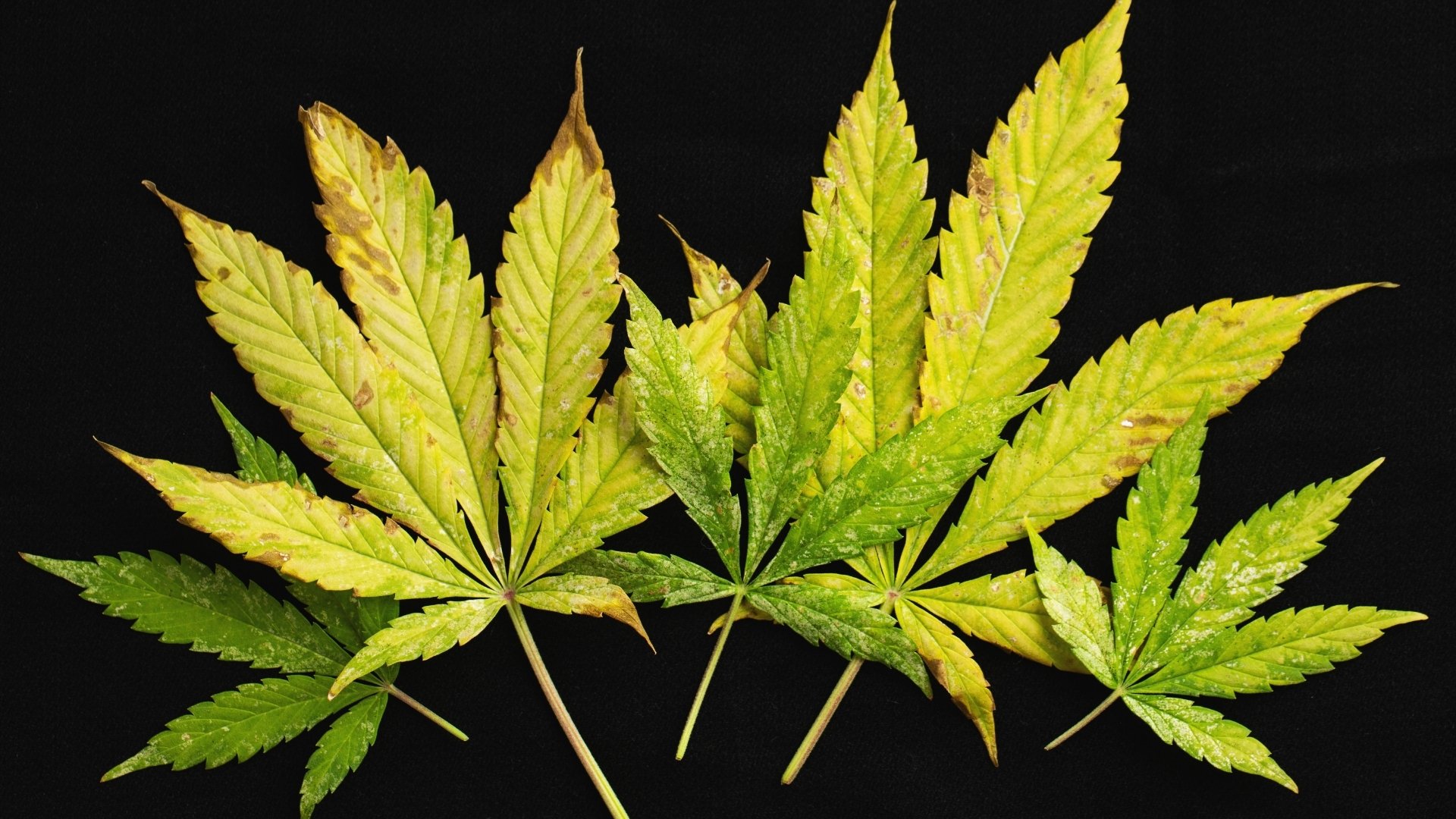
Sulfur deficiency is one of the most overlooked nutrient problems in cannabis cultivation. You will notice it when new leaves turn pale, stems weaken, and aroma fades. Without enough sulfur, your plants cannot form chlorophyll, produce enzymes, or develop rich terpene profiles.
Early detection is crucial. Sulfur issues spread fast and often mimic nitrogen or magnesium deficiencies, making them easy to misdiagnose.
In this guide, you will learn the eight key signs of sulfur deficiency and the fastest, most effective ways to fix it.
At a glance:
- Sulfur is essential but often overlooked. It supports chlorophyll formation, terpene development, and overall plant health, yet deficiencies are easy to miss until growth and aroma decline.
- Deficiency starts at the top. Unlike nitrogen shortages, sulfur deficiency appears first in new growth. Leaves turn pale, veins fade, and stems lose color.
- Buds lose quality and yield. Without enough sulfur, flowers become airy, less resinous, and lack the strong aroma and flavor that define healthy cannabis.
- Restoration requires balance. Adjusting pH, adding sulfur-rich supplements, and monitoring new growth can reverse symptoms within days if caught early.
- Prevention depends on consistency. Stable feeding routines, accurate record-keeping, and stage-specific nutrient adjustments keep sulfur and every other element in balance.
What Sulfur Does for Cannabis Plants
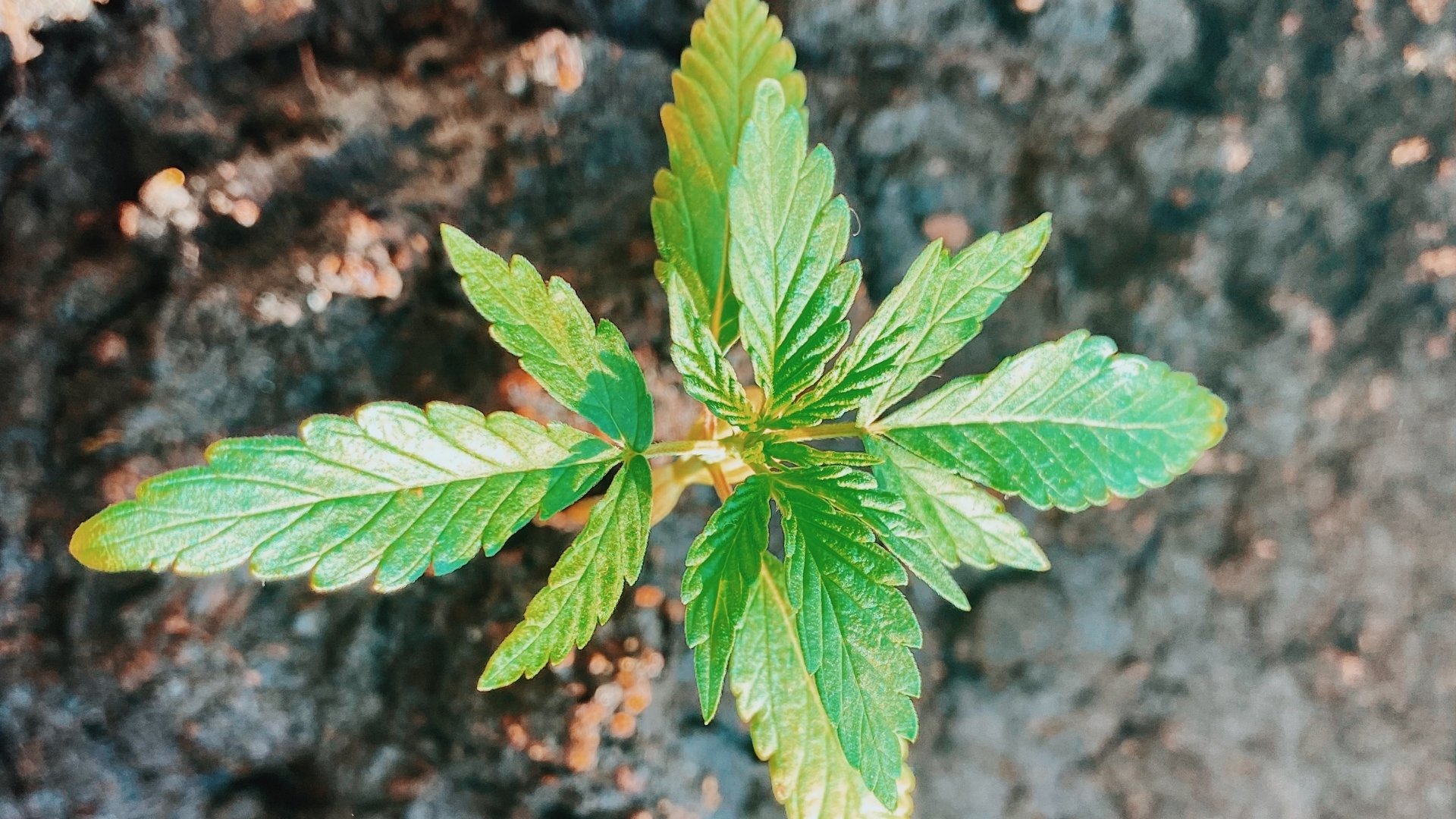
Sulfur is one of the essential secondary nutrients your cannabis plants need to grow strong and flavorful. While NPK (nitrogen, phosphorus, and potassium) usually gets most of the attention, sulfur plays an equally vital role in how your plants process those primary nutrients.
It is a key component of amino acids, enzymes, and vitamins that drive healthy growth from root to flower. Here is how sulfur helps your plants perform at their best:
- Increases Chlorophyll Production: Sulfur helps create and maintain chlorophyll, allowing plants to convert light into energy efficiently.
- Improves Nutrient Absorption: It supports the uptake of nitrogen and phosphorus, ensuring your plants can use these macronutrients effectively.
- Strengthens Cell Structure: Sulfur contributes to thicker, sturdier stems and leaves that resist environmental stress.
- Enhances Aroma and Flavor: It is directly involved in terpene and oil production, which give buds their distinct scent and taste.
- Promotes Healthy Root Development: Sulfur improves soil microbial activity, helping roots grow stronger and absorb nutrients more consistently.
When sulfur levels start to drop, your plants will show it fast through fading color, slower growth, and a weaker aroma. Recognizing these early signals is the key to preventing long-term damage and protecting your yield. The next section lists eight clear signs your cannabis plants are running low on sulfur.
Suggested Read: Beginner’s Guide on Mixing Nutrients for Cannabis Growth
8 Signs Your Marijuana Plants are Missing Sulfur
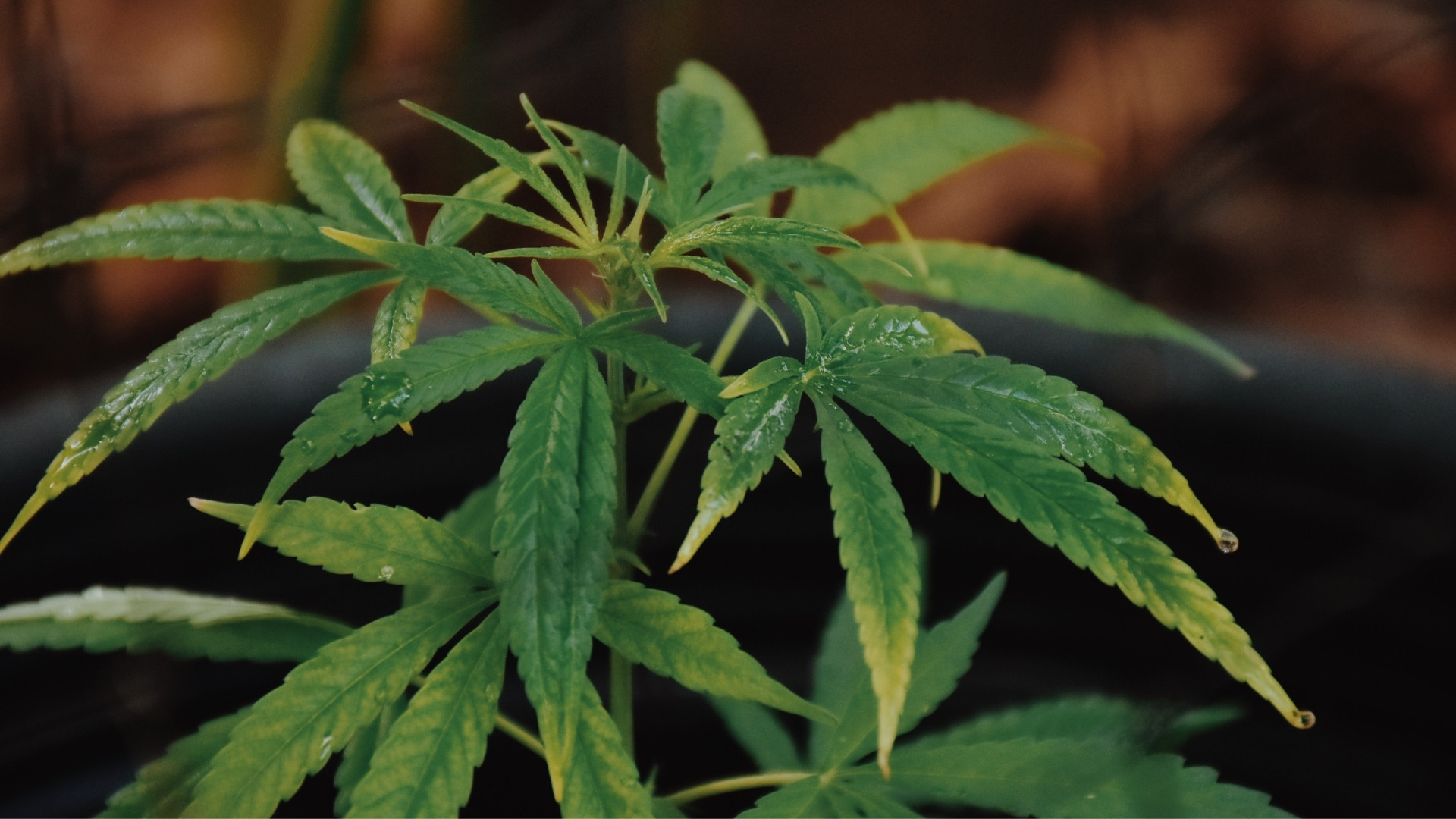
Sulfur deficiency usually starts at the top of the plant, where new growth forms. Unlike nitrogen deficiencies that begin in older leaves, sulfur shortages affect the freshest tissues first because sulfur moves slowly through the plant.
Recognizing these early symptoms is crucial before the problem spreads downward and affects overall yield and aroma. The most evident signs of a lack of sulfur in cannabis plants are:
1. Pale Yellowing of New Growth
Sulfur deficiency first appears as a uniform yellowing of the newest leaves. The leaves lose their vibrant green color and appear washed out or bleached, though veins remain faintly visible.
Here is what you will notice:
- The uppermost leaves are affected before the older foliage.
- The yellowing appears evenly across the leaf blade, not just at the tip.
- This symptom mimics nitrogen deficiency but appears in the new growth zone.
2. Light Green or Faded Leaf Veins
In a sulfur-deficient plant, even the veins begin to fade instead of staying deep green. This creates a soft, pastel-like appearance across the entire leaf. The plant is still trying to produce chlorophyll, but without sulfur, that process slows. Ultimately, the process of photosynthesis, by which your plants obtain food, begins to weaken.
What to look out for:
- The entire leaf loses contrast between veins and interveinal areas.
- Veins themselves may become a softer green rather than the typical bold hue.
- This indicates sulfur’s role in chlorophyll production is compromised.
3. Slowed Growth and Reduced Node Spacing
Growth slows noticeably when sulfur levels drop. Internodes (the spaces between leaves and branches) become shorter, giving the plant a compact, stunted look. The structure seems tight and underdeveloped, with smaller leaves and weaker vertical expansion as the plant struggles to produce energy efficiently.
Signs include:
- New nodes appear closer together than usual.
- Foliage seems smaller and weaker than expected for the strain.
- Because sulfur helps with protein synthesis, its absence slows structural development.
4. Thin or Narrow Leaf Blades
Leaves become thinner, more delicate, and slightly curled at the edges when sulfur is lacking. The leaf surface feels softer and less rigid, often folding or cupping upward under bright light. These changes occur because sulfur deficiency weakens the cell walls and reduces overall leaf density.
Here is how it manifests:
- Leaf blades may look more fragile or limp.
- The edges might curl slightly upward or inward.
- This shows sulfur shortage affecting cell wall and leaf development.
5. Poor Bud Formation and Pale Flowers
During flowering, a lack of sulfur disrupts bud density and resin formation. Flowers appear lighter in color, less compact, and noticeably less sticky. The aroma weakens, and the buds may appear underdeveloped, even if other nutrients are in balance.
What you will see:
- Flowers that look airy or underdeveloped.
- Less resin production and terpene scent compared to healthy batches.
- Sulfur deficiency hampers terpene and oil synthesis.
6. Pale or Discolored Stems and Petioles
Stems and petioles lose their healthy green pigment and take on a faded, yellowish, or even pinkish hue. This discoloration spreads gradually upward as the deficiency worsens. Since sulfur is essential for building amino acids and proteins, stem tissues become visibly weaker and less vibrant.
Specifically:
- Stems may turn light green, yellow, or even reddish.
- Petiole bases may look washed out or slightly pink.
- Indicates sulfur shortage affecting structural tissue development.
7. Reduced Aroma and Weak Terpene Profile
Even if your plants look fine visually, a sharp drop in aroma can be an early clue of sulfur deficiency. Sulfur helps create the volatile compounds that define each strain’s scent and flavor. Without it, buds smell muted, and terpene expression drops significantly.
Look for:
- Buds that smell weaker than typical for the strain.
- Terpene richness seems dull or flat.
- Sulfur is essential in the pathway that generates terpenes and oils.
8. Increased Sensitivity to Stress
Plants short on sulfur become less resilient to stress from light, temperature, or pruning. They recover slowly after environmental changes and often show drooping or leaf deformation after minor fluctuations. This happens because sulfur supports the production of stress-response enzymes, which protect plant tissues under pressure.
Signals include:
- Slower recovery after pruning or temperature shifts.
- Leaves wilt or droop more easily under light stress.
- Because sulfur builds stress tolerance via enzymes, its shortage weakens the plant.
If your plants show one or more of these signs, they are likely running low on sulfur.
PlanaCan helps you keep your nutrient routines consistent so sulfur deficiencies never slip through. Scheduling feedings and task reminders ensures every adjustment happens on time. This consistency helps prevent the small oversights that lead to visible stress. Schedule a free demo today.
But before you start adjusting your feeds, it helps to understand just how serious a sulfur deficiency can be, and why it deserves your full attention.
Suggested Read: Best Nutrients for Cannabis Cultivation
Is a Sulfur Deficiency Really That Bad?
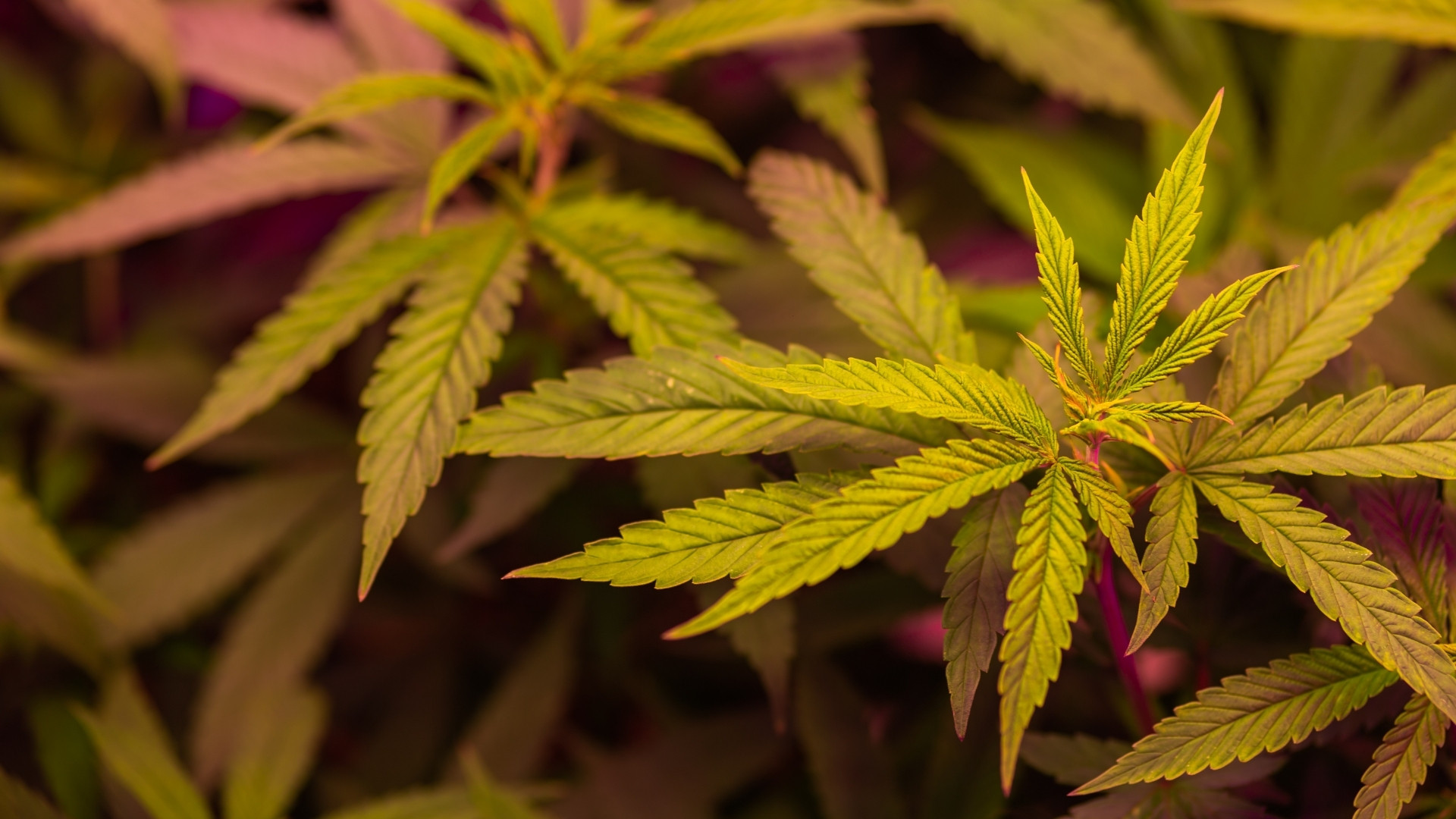
Sulfur might not get as much attention as nitrogen or potassium, but when it runs low, the effects reach every corner of your grow. It weakens your plants, dulls your buds, and eats away at your profit.
What starts as a small discoloration can end with an entire batch that looks fine but smokes harsh and lacks aroma. Here is what sulfur deficiency really means for your grow:
- You Risk Losing a Harvest: Without sulfur, plants cannot form dense buds or sustain flowering, cutting yields dramatically.
- Your Buds Lose Flavor and Scent: Terpenes depend on sulfur compounds—deficiency leads to weak-smelling, tasteless cannabis.
- You Waste Nutrients and Effort: Other feedings become ineffective since sulfur is needed for proper nutrient absorption.
- You Lose Consistency Across Batches: Deficiencies create uneven results between harvests, making it hard to meet quality standards.
- You Damage Your Brand Reputation: Poor flavor, low potency, and harsh smoke can turn one bad crop into lasting distrust among buyers.
Now that you know how important sulfur is, resist the urge to overdo it. Adding too much can cause nutrient lockout and hurt your plants just as badly. The next section explains exactly how much sulfur your plants need at each growth stage to stay balanced and productive.
Sulfur Targets for Healthy Cannabis Development
Sulfur requirements change as your cannabis plants progress through each growth phase. In the early stages, sulfur drives chlorophyll and root development. In later stages, it shapes terpene production and resin quality.
Keeping levels within the right range at each stage helps maintain steady growth, strong aroma, and consistent yields. Table showing ideal sulfur levels across different growth stages:
PlanaCan helps you keep nutrient management organized across every growth stage. You can schedule sulfur applications, assign feeding tasks, and track adjustments in one shared calendar. This ensures your plants get the right nutrients at the right time without overlaps or missed feedings. Try PlanaCan for free today.
Now that you know what your plants need at every stage, you can better pinpoint where things may have gone wrong. The next step is fixing the imbalance.
Suggested Read: How to Diagnose and Fix Nutrient Lockout in Cannabis
How to Fix Sulfur Deficiency in Cannabis Plants

Quick action can turn things around before your plants suffer long-term damage. The goal is to restore sulfur levels without shocking the root zone or disrupting other nutrients.
Here is how to fix sulfur deficiency effectively:
- Check and Adjust pH
Start by testing your pH levels. If the soil pH is below 6.0 or the hydroponic solution is under 5.8, sulfur uptake slows dramatically. Adjust to the ideal range (6.0–6.5 in soil, 5.8–6.2 in hydro) to make existing sulfur more available.
- Use a Sulfur-Rich Supplement
Add Epsom salt (magnesium sulfate) or gypsum (calcium sulfate) to provide an immediate sulfur boost. For hydro systems, dissolve Epsom salt at about one teaspoon per gallon; for soil, mix lightly into the top layer and water thoroughly.
- Try Foliar Feeding for Faster Absorption
A diluted foliar spray (1 tablespoon of Epsom salt per gallon of water) can deliver sulfur directly through the leaves, speeding recovery. Apply in low light to avoid leaf burn.
- Flush Before Refeeding
When buildup is suspected, check your readings against the sulfur table mentioned in the previous section. If levels exceed the range, you need to flush with clean, pH-balanced water to clear salts before adding sulfur again.
- Monitor New Growth, Not Old Leaves
Once corrected, old leaves will not recover, but new growth should appear healthy and green within 5–7 days. Continue observing your plants to confirm that symptoms are no longer spreading.
Fixing the problem is only half the battle. Preventing sulfur deficiency from returning is where true consistency pays off. Small routine checks and balanced scheduling keep your nutrient levels steady and your plants thriving. This is explained in the next section.
Suggested Read: Identifying Cal Mag Deficiency or Nutrient Burn in Plants
Tips to Prevent Future Sulfur Deficiency

Most nutrient deficiencies do not happen overnight. They happen because of poor planning. Missed feedings, inconsistent schedules, and a lack of documentation lead to imbalances that quietly build up over time.
The easiest way to prevent sulfur deficiency is not to react to it, but to plan for it with structure, consistency, and foresight.
Here are some proactive ways to keep sulfur levels stable in every grow cycle:
- Create a Strain-Specific Feeding Chart: Different genetic strains absorb sulfur at varying rates. Customize feeding schedules for each strain instead of following a single, one-size-fits-all plan.
- Rotate Nutrient Sources: Alternate between organic and mineral-based nutrients periodically to keep sulfur and micronutrients balanced in the medium.
- Track Environmental Changes: Record shifts in humidity, temperature, and light intensity. Sulfur uptake can slow when conditions fluctuate too often.
- Use Water Tests as a Routine Check: Municipal or filtered water often lacks natural sulfur content. Test quarterly to understand your water baseline and supplement accordingly.
- Maintain a Growth Journal: Document every feeding, supplement adjustment, and visible symptom. Patterns in these records often reveal issues before they become deficiencies.
Sulfur stability depends on timing, consistency, and good organization—three things that manual note-taking often misses. PlanaCan helps simplify this process by turning your nutrient plans into structured, trackable schedules that keep your entire grow on the same page.
Use PlanaCan to Keep Feed Schedules Consistent

PlanaCan is a cultivation planning and workflow management platform designed to help cannabis growers stay organized and consistent. It replaces manual notes, spreadsheets, and whiteboards with an automated scheduling system that tracks every feeding, flush, and nutrient application.
Here is how PlanaCan keeps your nutrient schedules on track:
- Automated Work Scheduling: Plan and repeat feeding cycles across multiple grow rooms without missing or duplicating tasks. This ensures nutrients like sulfur are applied precisely when needed.
- Interactive Calendar: Visualize upcoming feedings, pH checks, and flushes in one shared dashboard, making coordination easier between team members.
- Task Assignment and Team Tracking: Assign feeding or monitoring tasks to individual growers, so every step in the nutrient plan is completed and logged.
- Harvest and Feeding Reports: Review nutrient data from past cycles to identify what worked best and adjust future feeding schedules accordingly.
- Customizable Templates: Build strain-specific feeding templates that automatically schedule sulfur and micronutrient doses at the right growth stages.
With PlanaCan, your nutrient management becomes proactive instead of reactive. Our mobile apps for Android and iOS let you manage feed schedules, mark completed tasks, and update records right from the grow room, keeping your entire nutrient plan on track wherever you are.
Conclusion
A healthy harvest starts with balanced nutrition. Every nutrient, especially sulfur, plays a role in how your plants grow, taste, and yield. When levels stay consistent, your cannabis rewards you with richer aroma, stronger structure, and higher-quality buds.
PlanaCan makes it easy to remain consistent. It helps you plan, schedule, and track every feeding and nutrient adjustment across your grow. With structured workflows, automated reminders, and clear records, the platform turns nutrient management from guesswork into accuracy.
Plan better. Grow stronger. Harvest smarter. Keep every nutrient cycle consistent and on time with PlanaCan.
Schedule a free call today.
Frequently Asked Questions
1. Can sulfur deficiency affect different strains differently?
Yes. Some strains, especially heavy feeders like Gorilla Glue or Gelato, use more sulfur during flowering to support terpene production. Lighter-feeding or fast-flowering strains may show deficiency symptoms more quickly, so adjusting sulfur levels based on strain genetics helps maintain consistency.
2. Is there such a thing as too much sulfur in organic grows?
Absolutely. Organic amendments like gypsum, compost, or manure can raise sulfur levels over time. When combined with liquid feeds, this can lead to nutrient lockout. Testing soil periodically ensures you are not overloading the medium with slow-release sulfur sources.
3. How does sulfur interact with other nutrients?
Sulfur works closely with nitrogen and phosphorus. When sulfur is low, nitrogen uptake slows, and proteins cannot form efficiently. High sulfur, on the other hand, can compete with calcium and magnesium, leading to secondary imbalances.
4. Can sulfur deficiency occur even when I use complete fertilizers?
Yes. Even full-spectrum fertilizers can fail if pH is off or salts accumulate. When pH drifts outside the 5.8–6.5 range, sulfur becomes unavailable to roots, no matter how much is present in the solution.
5. What is the best long-term approach to maintain sulfur balance?
Consistency is key. Maintain stable pH, rotate between nutrient sources, and monitor each stage’s sulfur requirements. Keeping detailed feeding logs, ideally through a system like PlanaCan, helps track what works best for your strains and growing environment.