Harvest is usually treated as the natural end of the cannabis plant’s life, yet questions about regrowth and reuse continue to surface. This uncertainty often comes from mixing small-scale techniques with commercial realities.
In large operations, harvest decisions directly affect turnaround time, labor efficiency, and yield forecasting. Industry analysis shows the global cannabis market growing at a CAGR of over 34.03% through the next decade. This has led to increasing pressure on cultivators to prioritize speed, consistency, and repeatability.
Understanding whether a plant can realistically survive harvest is less about biology and more about operational discipline. This article explains what actually happens to cannabis plants after harvest and what growers should plan for.
Key takeaways:
- Most cannabis plants do not survive harvest. Standard commercial harvest practices end the plant’s lifecycle, even though limited regrowth is biologically possible.
- Re-vegetation is rare and difficult at scale. Regrowth requires specific conditions and introduces delays, uneven growth, and higher labor demands.
- Harvest decisions affect scheduling and labor. Choices around full harvests versus regrowth directly impact room turnover, manpower, and production timelines.
- Regrowth only makes business sense in limited cases. High-value genetics or operational constraints may justify it, but predictability is usually reduced.
- Planning tools reduce harvest-related disruption. Structured scheduling and task visibility help growers manage harvest and cycle transitions with consistency.
What Happens to a Cannabis Plant at Harvest

Harvest fundamentally alters the cannabis plant’s ability to survive. Once flowering is complete, the plant is already at the end of its natural lifecycle, and harvest actions typically remove the structures required for continued growth.
In commercial cultivation, harvest is designed to maximize flower quality and efficiency, not preserve plant viability.
This is what happens to the plant during the harvest stage:
- Removal of Flowering Sites: Cutting colas eliminates the plant’s primary energy sinks and hormonal drivers, effectively ending productive growth.
- Disruption of Vascular Pathways: Stems are cut in ways that interrupt water and nutrient transport between roots and remaining tissue.
- Loss of Photosynthetic Capacity: Fan leaves and sugar leaves are usually removed or damaged, reducing the plant’s ability to produce energy.
- Stress-Induced Shutdown: By harvest, the plant has already redirected resources toward reproduction, leaving little capacity for recovery.
- Intentional End-of-Cycle Handling: Commercial harvest methods prioritize speed, uniformity, and quality over plant preservation.
Under these conditions, the plant does not recover as many assume. But does that mean a cannabis plant cannot regrow after harvest? This is explained in the next section.
Suggested Read: Tips on Outdoor Cannabis Growth from Seed to Harvest
Can Cannabis Plants Regrow After Harvest?
In limited cases, cannabis plants can regrow after harvest through re-vegetation, or re-veg. This process involves returning a flowering plant to vegetative light cycles, forcing it to reverse its growth signals and produce new shoots instead of completing senescence.
Your plants should fulfill the following for re-veg:
- Sufficient Healthy Foliage Remains
- Lower fan leaves and small shoots must be left intact to maintain photosynthesis. Without active leaf tissue, the plant cannot generate the energy needed to restart growth.
- Functional and Undisturbed Root System
- Roots must remain healthy, oxygenated, and free from disease or rot. Damaged or stressed roots significantly reduce the plant’s ability to recover.
- Immediate Shift Back to Vegetative Light Cycles
- Extended light periods are required to override flowering hormones. Delays in changing the light cycle reduce the likelihood of successful re-veg.
- Conservative Harvest Technique
- Main stems and lower nodes must remain intact to support new shoot development. Aggressive cutting often removes the very sites needed for regrowth.
- Stable, Low-Stress Environment
- Temperature, humidity, and nutrition must be carefully controlled during recovery. Additional stress during this phase often pushes the plant toward decline rather than renewal.
Even when these conditions are met, regrowth is inconsistent and slow. So, why do growers even consider re-vegetation? This is discussed in the next section.
Suggested Read: Cannabis Harvesting in Cold Temperatures: Tips and Effects
When Does Regrowth Make Sense in Commercial Cultivation?

The question is not whether the plant can regrow, but whether regrowth delivers more value than resetting the cycle with new plants. In most cases, the threshold for choosing regrowth should be high.
These are a few scenarios when you may consider regrowth:
- Protecting High-Value or Proven Genetics
- When a cultivar consistently delivers strong yields, desirable terpene profiles, or premium market pricing, losing it can be costly. Regrowth may preserve genetics that would otherwise require time, risk, and resources to re-establish through new clones.
- Preventing Costly Production Gaps
- Empty rooms represent lost revenue, not just unused space. Regrowth may help maintain partial canopy coverage when restarting from clones would create a gap that disrupts cash flow and harvest scheduling.
- Managing Supply Chain or Propagation Delays
- Delays in clone availability, seed access, or internal propagation can stall production. Regrowth can act as a temporary hedge while normal supply is restored, reducing downtime risk.
- Meeting Contractual or Market Commitments
- When sales agreements, processor schedules, or retail demand are time-sensitive, regrowth may help avoid missed deliveries. In these cases, consistency of output may outweigh optimal plant structure.
- Operating Under Capital or Space Constraints
- Limited expansion capacity or cash flow can restrict immediate replanting. Regrowth may extend the productivity of existing infrastructure while longer-term operational adjustments are planned.
PlanaCan helps commercial growers evaluate regrowth decisions with clarity instead of assumptions. By using growth-based calendars and historical cycle data, teams can see how regrowth timelines compare against starting fresh and what that means for revenue and room utilization. Schedule a free demo today.
Risks in Reusing Plants on a Commercial Scale
Reusing cannabis plants through regrowth introduces risks that compound quickly at scale. While re-veg may succeed in isolated cases, commercial environments amplify inconsistencies in plant structure, timing, and performance. What looks manageable with one plant often becomes a liability across an entire room.
Table showing various risks in cannabis revegetation:
Experience shows that some cultivars tolerate re-vegetation better than others. These strains tend to exhibit stronger vegetative resilience, slower senescence, and greater ability to re-establish growth after flowering stress.
These strains handle revegetation more reliably:
- Blue Dream: Known for strong vegetative vigor and flexible branching, making it one of the more forgiving strains during re-veg attempts.
- Sour Diesel: Maintains active growth late into flower, which can support regrowth when sufficient lower growth remains.
- OG Kush (Select Phenotypes): Some OG phenotypes respond well to re-veg due to their ability to push new lateral shoots after stress.
- Super Lemon Haze: Sativa-leaning structure and prolonged flowering resilience can improve recovery odds under controlled conditions.
- White Widow: Balanced growth habits and strong root systems can support limited regrowth when harvest is conservative.
Outcomes vary significantly by phenotype, harvest method, and environmental control. Understanding which genetics might tolerate re-vegetation is only the starting point. The next step is knowing how to execute regrowth, if it is attempted at all.
Suggested Read: When to Know Your Cannabis Plant is Ready for Harvest
How to Harvest for Preserving Regrowth Potential

Preserving regrowth potential requires a fundamentally different harvest mindset. Each step must protect the plant’s ability to photosynthesize, transport nutrients, and generate new vegetative growth.
You need to follow these steps:
1. Retain Lower Growth and Fan Leaves
Lower growth and fan leaves are the plant’s only remaining energy source after harvest. They allow continued photosynthesis and provide the carbohydrates needed to restart vegetative growth.
Removing too much foliage forces the plant into irreversible decline. The following actions ensure photosynthetic capacity is preserved:
- Leave multiple healthy fan leaves on lower branches
- Preserve small secondary shoots below the main canopy
- Avoid stripping leaves for airflow or aesthetics
- Confirm remaining leaves are green and functional, not senescing
- Inspect plants individually before cutting, not row by row
If this step is skipped, the plant lacks the energy required to initiate new growth, and re-veg will fail regardless of lighting or nutrients.
2. Preserve Main Structural Stems and Nodes
Structural stems and nodes are the sites from which new shoots emerge during regrowth. Cutting too low removes these growth points permanently. Regrowth cannot occur without intact nodes.
To preserve regrowth sites, harvest must be executed deliberately:
- Cut above multiple active nodes, not at the base
- Avoid topping or shortening primary stems unnecessarily
- Leave branching junctions intact wherever possible
- Use clean, sharp tools to prevent stem crushing
- Mark regrowth-designated plants clearly before harvest
If nodes are removed or damaged, no amount of environmental correction will restore regrowth potential.
3. Stagger Harvest Instead of Full Cutdown
Staggered harvest allows the plant to maintain biological function while removing mature flower sites. This approach reduces shock and preserves hormonal balance. Full cutdowns almost always end the plant’s lifecycle.
A staggered approach requires precise execution:
- Harvest upper colas first, leaving lower growth untouched
- Space cuts over multiple days rather than one event
- Monitor plant posture and leaf response after each cut
- Avoid simultaneous heavy defoliation
- Maintain consistent irrigation and environment during harvest
Failing to stagger harvest causes systemic shock that prevents hormonal reversal and stops regrowth.
4. Minimize Mechanical and Handling Stress
Post-harvest stress compounds rapidly in regrowth scenarios. Bent, split, or crushed stems interrupt vascular flow and slow recovery. Plants under structural stress often stall instead of regenerating.
To reduce mechanical damage:
- Support branches before cutting heavy colas
- Avoid twisting or bending stems during removal
- Handle regrowth plants separately from full-harvest plants
- Prevent tools or trays from resting on remaining branches
- Train staff specifically on regrowth-sensitive handling
Excessive handling stress often results in stalled growth, infection risk, or complete failure to re-veg.
5. Maintain Root Zone and Post-Harvest Stability
Roots must remain active and oxygenated immediately after harvest. Sudden dry-back or nutrient changes confuse uptake signals and accelerate decline. Root stress after harvest is one of the most common regrowth failure points.
To maintain root stability:
- Continue normal irrigation schedules initially
- Avoid aggressive flushing after harvest
- Maintain stable EC and pH levels
- Monitor root zone moisture closely for several days
- Adjust feeds gradually only after new growth appears
If root conditions collapse post-harvest, the plant loses the ability to support any regrowth effort.
PlanaCan supports regrowth-focused harvests by using custom harvest templates that define exactly how regrowth plants are handled. Teams can separate partial-harvest steps from full cutdown workflows, ensuring critical foliage, nodes, and root care tasks are not missed. Try PlanaCan for free.
How Do Harvest Decisions Affect Planning and Scheduling
Harvest decisions determine how rooms turn over, how labor is allocated, and how reliably the next cycle starts on time. Whether a plant is entirely removed, partially harvested, or held for regrowth changes the entire production timeline.
This is what growers need to account for:
- Room Turnover Timing: Full harvests allow immediate sanitation and reset, while partial harvests delay cleanup and overlap cycles.
- Labor Allocation: Regrowth or staggered harvests require repeated labor passes instead of a single, concentrated harvest window.
- Veg Intake Alignment: Unclear harvest outcomes often delay the introduction of new plants into veg or flower rooms.
- Environmental Scheduling: Climate and lighting plans shift when rooms remain partially occupied longer than expected.
- Production Forecasting: Inconsistent harvest strategies make yield and timing projections harder to lock in.
When these variables are managed informally, execution slips quickly. This is why many commercial operations rely on scheduling software to clearly define harvest outcomes, prevent overlap, and keep production moving without disruption.
Use PlanaCan to Manage Harvest and Cycle Transitions
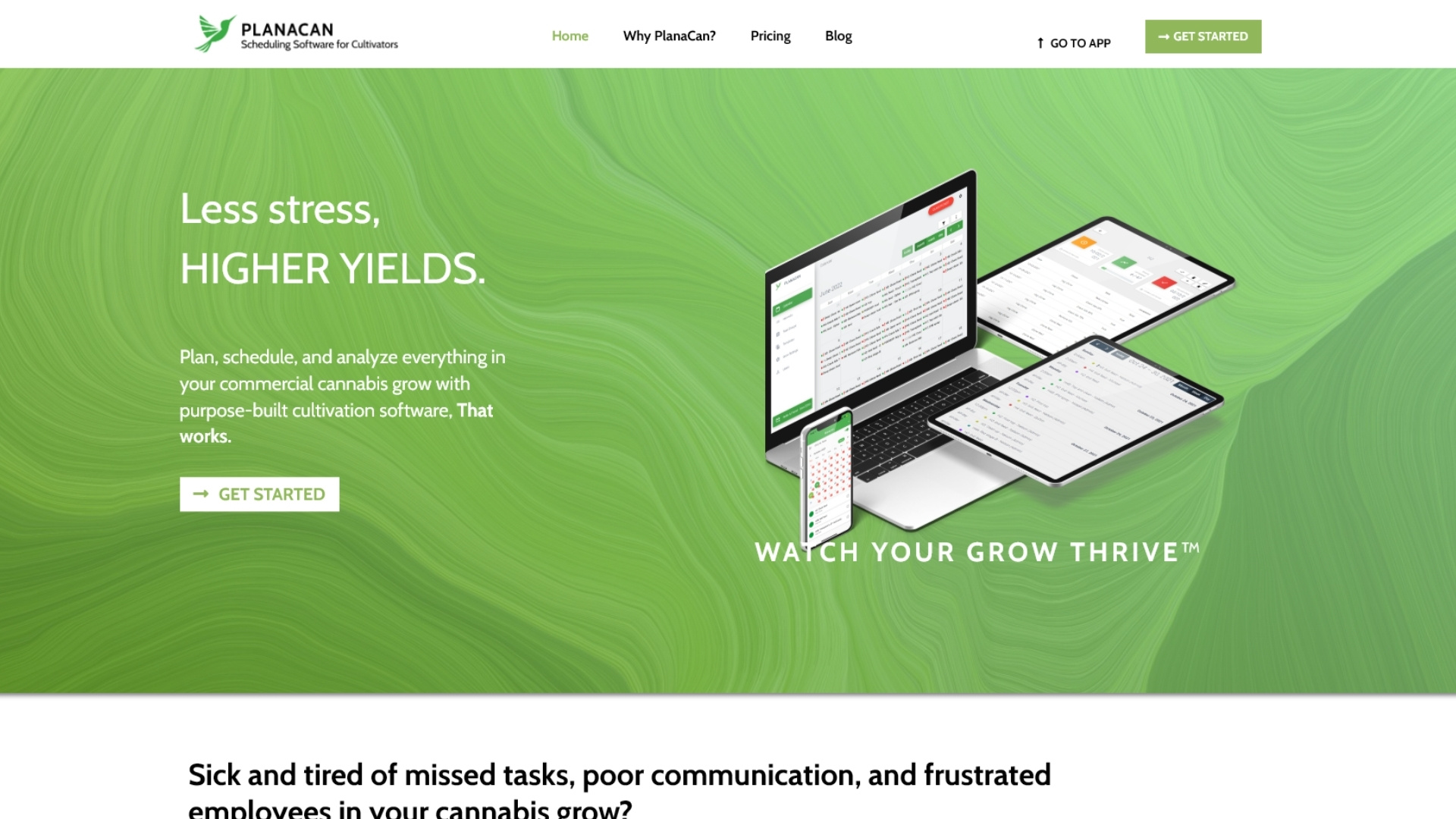
PlanaCan is a cultivation planning and execution platform built specifically for commercial cannabis growers. It helps teams schedule work around actual plant growth, standardize tasks through templates, and track what gets done across rooms and cycles.
Instead of relying on verbal instructions or static spreadsheets, growers can manage transitions with visibility, accountability, and precision.
Core features include:
1. Growth-Based Harvest Scheduling
PlanaCan schedules harvest activities based on actual plant stages rather than fixed calendar assumptions. This allows teams to plan full harvests, partial harvests, or regrowth scenarios without breaking downstream timelines. When harvest timing shifts, dependent tasks automatically realign.
2. Custom Harvest and Reset Templates
Harvest templates in PlanaCan define exactly what happens after each type of harvest decision. Whether the room is being reset, partially cleared, or held for regrowth, tasks are standardized and repeatable. This prevents missed sanitation steps, delayed resets, or confusion across shifts. Templates replace interpretation with clarity.
3. Clear Task Ownership During Transitions
PlanaCan assigns responsibility for every transition task, from final cuts to room resets. Teams can see what was completed, what is pending, and where delays are forming. This reduces handoff errors between harvest crews, cultivation staff, and facility teams. Accountability keeps transitions moving without friction.
4. Cycle Visibility Across Rooms
With PlanaCan, growers can view harvest and post-harvest activity across all rooms in one place. This makes it easier to coordinate veg intake, flowering starts, and environmental changes without overlap. Visibility prevents double-booking space or labor. It also supports more accurate production forecasting.
5. Historical Tracking for Better Decisions
Every harvest decision and cycle transition is logged in PlanaCan. Growers can compare timelines, outcomes, and delays across past cycles to see what worked and what did not. Over time, this data improves planning accuracy and reduces avoidable downtime. Decisions become informed, not reactive.
PlanaCan is built for growers who want control without complexity. We work closely with cultivation teams to ensure the platform fits real-world operations, not idealized workflows. If you want harvests and cycle transitions to run as smoothly as the rest of your grow, we are here to help make that happen.
Conclusion
Decisions around full harvests versus re-veg attempts determine how labor is deployed, how long rooms stay occupied, and how predictable the next cycle will be. When those decisions are unclear or poorly scheduled, inefficiencies multiply quickly.
This is where PlanaCan brings structure to the process. By connecting harvest decisions to growth-based schedules, templates, and task ownership, the platform helps teams manage harvest and re-veg transitions without confusion or overlap.
If harvest and regrowth decisions are disrupting your schedules, it is time to fix the process. Schedule a free call today.
Frequently Asked Questions
1. Does Cannabis Regrow After Cutting?
Cannabis can regrow only under specific conditions, usually through re-vegetation. This requires leaving viable growth, returning the plant to vegetative light cycles, and accepting slower, unpredictable recovery. It is uncommon in commercial production.
2. Do Cannabis Plants Die After Harvest?
In most commercial harvests, yes. Removing flowering sites and major foliage ends the plant’s lifecycle. While roots may remain alive briefly, the plant typically cannot recover without deliberate regrowth planning.
3. How Do You Know When Your Cannabis Plants Are Done?
Plants are ready for harvest when trichomes reach the desired maturity, pistils darken and recede, and overall growth slows. Final timing balances potency, terpene development, and operational scheduling.
4. What Happens to a Cannabis Plant After Flowering?
After flowering, the plant enters senescence. Energy is depleted, nutrient uptake slows, and physiological recovery becomes limited. Without intervention, the plant naturally declines after reproductive growth is complete.
5. Is Re-Vegetation Worth It for Commercial Growers?
Re-vegetation is rarely worth it at scale. Extended timelines, uneven growth, and higher labor demands often outweigh any short-term savings, making fresh plant starts more predictable and efficient for commercial operations.