Maintaining consistent cannabis yields throughout the year can be a challenge. Seasonal changes affect temperature, humidity, and airflow. The smallest fluctuations in the growing environment can stress plants, reduce cannabinoid levels, and slow growth.
Climate control is fast becoming a cornerstone of scalable, compliant production. The global cannabis HVAC market is projected to reach $10.8 billion by 2033. In this blog, we will explore how cannabis HVAC systems help growers ensure predictable harvests.
Here’s the short version:
- HVAC ensures consistent year-round growth by maintaining optimal temperatures, humidity, airflow, and CO₂ levels. This helps cannabis plants thrive through both the vegetative and flowering stages, resulting in maximum yield and bud quality.
- Even small fluctuations can create significant issues, such as stress, mold, or stunted growth, highlighting the importance of monitoring and understanding how HVAC conditions affect your plants.
- Different systems offer distinct advantages, with ducted, ductless, VRF, and cassette units suited to various spaces, budgets, and grower needs.
- Complementary tools enhance stability, including chillers, VPD monitoring, CO₂ enrichment, and environmental sensors, which support consistent conditions and healthier plants throughout the seasons.
- Organized task scheduling and tracking matter, as logging maintenance, environmental checks, and recurring tasks ensure the grow room stays in optimal condition and prevents lapses that can impact yields.
How Do Seasonal Changes Impact Cannabis Growth?
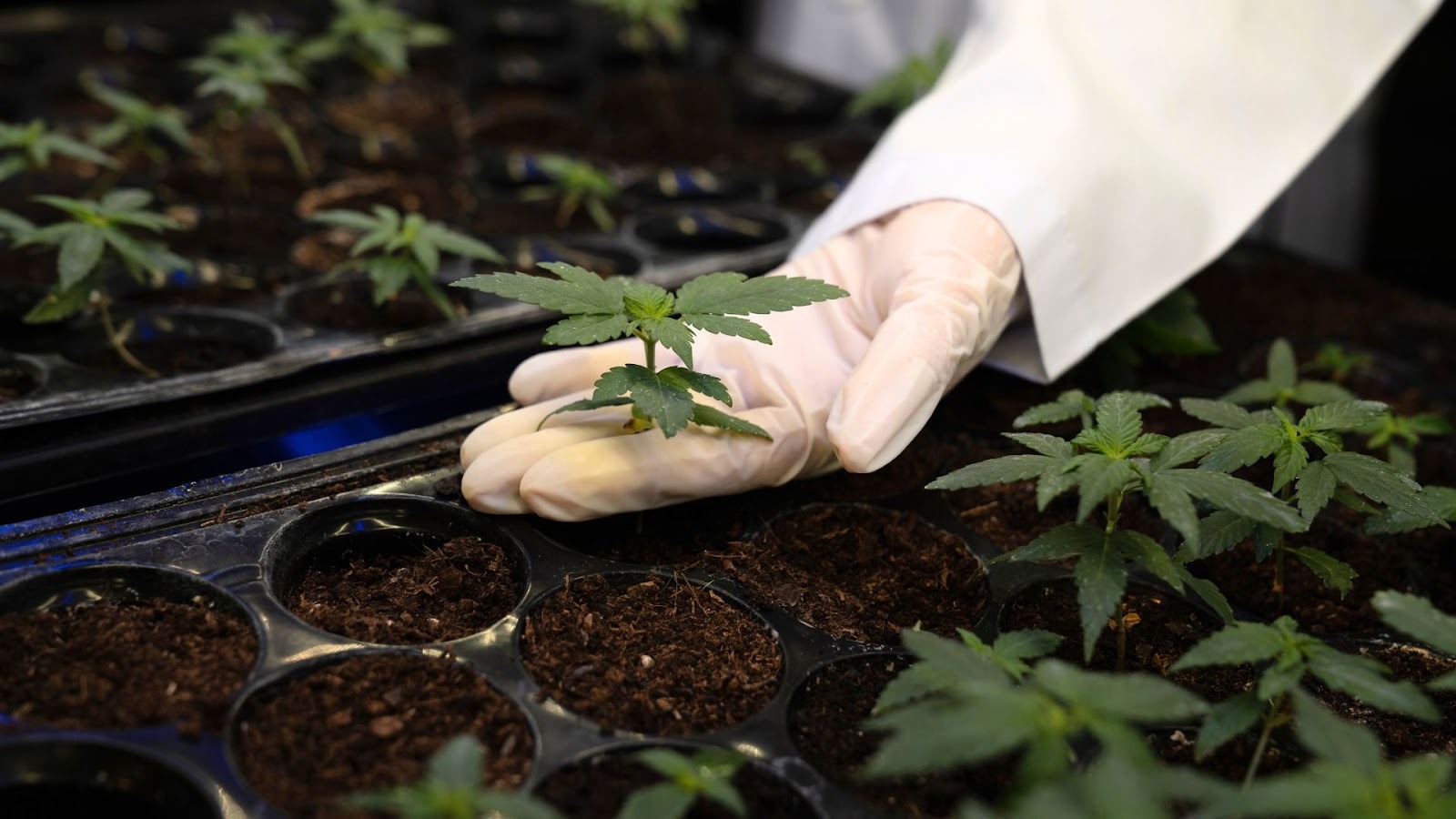
Cannabis plants are sensitive to changes in their environment. Seasonal fluctuations in temperature, humidity, and airflow can quickly affect growth rates, flowering times, and overall yield.
Effects of seasonal changes:
- Temperature Swings: Extreme heat or cold can stress plants, slow growth, and reduce cannabinoid production.
- Humidity Variations: Excessive humidity encourages the growth of mold and mildew, while insufficient moisture can cause leaves to dry out and stunt plant growth.
- Airflow and Ventilation Challenges: Seasonal winds or stagnant air can affect CO₂ levels and create microclimates within the greenhouse.
- Light Fluctuations: Changes in sunlight intensity and duration can alter flowering cycles and affect bud quality.
- Pest and Disease Pressure: Certain pests thrive in specific seasonal conditions, creating an added risk for unprotected crops.
Recognizing how seasonal changes affect cannabis growth shows just how fragile the plant’s environment can be.
To keep conditions steady and give your plants the best chance to thrive, a reliable climate management solution, like an HVAC system, is essential.
Suggested Read: Drying Cannabis in a Paper Bag: A Simple Method
What is a Cannabis HVAC System?
A cannabis HVAC system is a specialized setup designed to control the temperature, humidity, and airflow in a greenhouse or indoor grow space. Unlike standard residential or commercial HVAC systems, these systems are designed to meet the delicate needs of cannabis plants.
HVAC grow setups ensure the plants remain in an optimal environment throughout every stage of growth. They help prevent plant stress, reduce the risk of disease, and create conditions that maximize both yield and quality.
Think of it as the backbone of your grow environment. Everything else, from lighting to watering schedules, works best when the climate is stable. With a solid HVAC system in place, growers can maintain consistent conditions, even when seasons change.
In the next section, we examine exactly how these machines accomplish that.
How Does an HVAC System Maximize Yield?
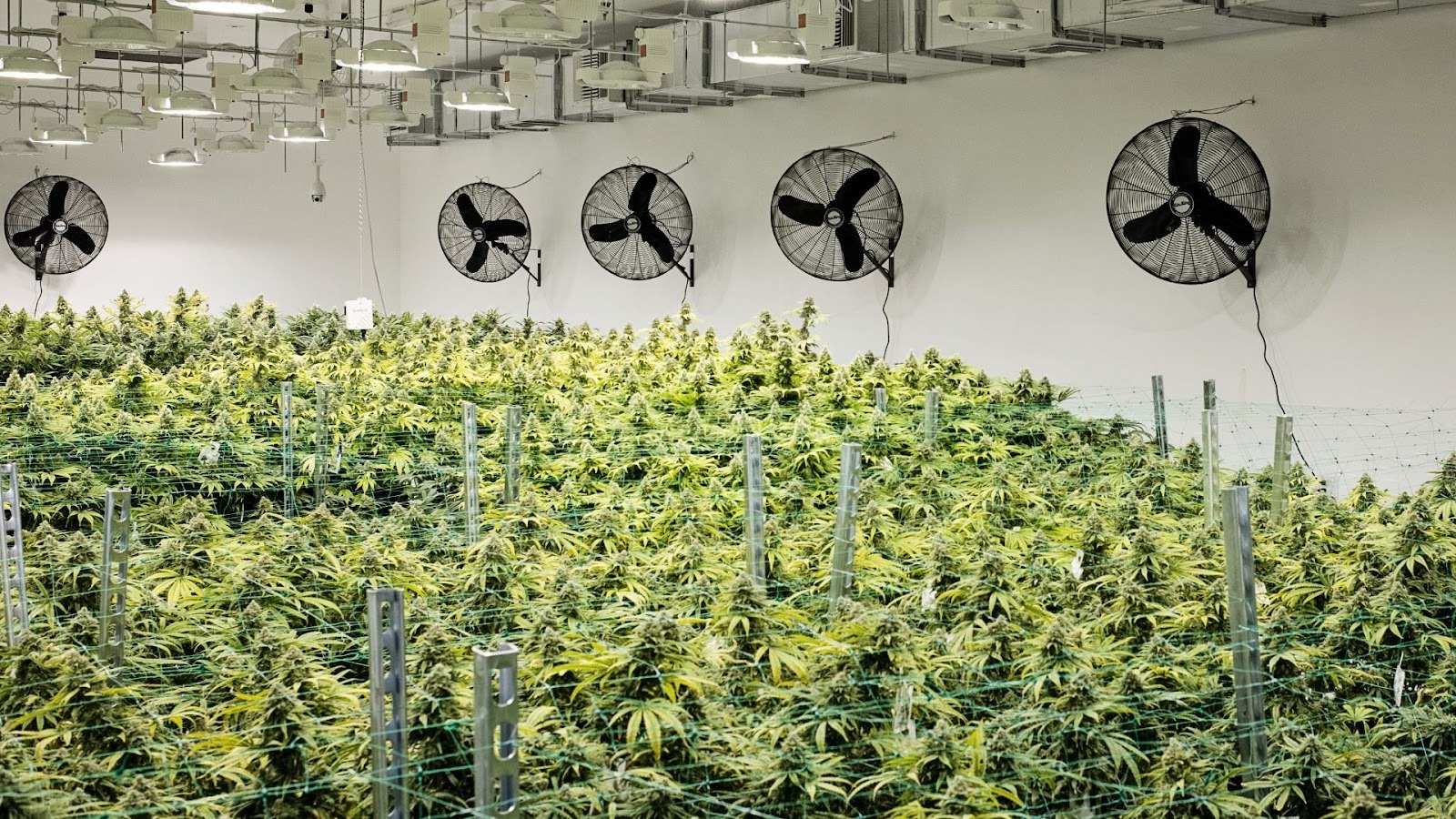
A well-designed HVAC system has a direct impact on plant health, flowering quality, and overall yield. It ensures the cannabis plants can thrive at every growth stage.
Let’s break down the key components and how each one contributes to maximizing your harvest:
1. Heating and Cooling Units
Maintaining consistent temperatures is critical for cannabis during both vegetative and flowering stages. Excessive heat can stress plants, while cold snaps can slow growth and impact bud development.
- Benefit: Heating and cooling units prevent stress-related stunting, ensuring buds develop fully and flowering occurs on schedule.
2. Ventilation and Airflow Management
Proper air circulation prevents stagnant pockets that can promote the growth of mold or pest infestations. It also helps maintain even temperature and humidity levels throughout the grow area.
- Benefit: Ventilation keeps plants healthy and encourages uniform growth, reducing the risk of weak or underdeveloped buds.
3. Humidifiers and Dehumidifiers
Cannabis plants have different humidity needs at each stage — higher during vegetative growth, lower during flowering to prevent mold. Uncontrolled humidity can damage leaves and reduce overall potency.
- Benefit: Humidity control optimizes transpiration and nutrient uptake, supporting vigorous growth and improving cannabinoid concentration.
4. Filtration and Air Quality Control
Dust, pathogens, and pests in the air can compromise plant health if not properly filtered. Contaminated air can lead to diseases that impact both yield and quality.
- Benefit: Filtration protects buds from contaminants, ensuring cleaner, healthier harvests with fewer losses.
5. Automation and Monitoring
Manual adjustments are prone to errors and inconsistency, which can stress plants and reduce yield. Automated sensors and monitoring systems track conditions in real-time and trigger alerts when conditions deviate from the ideal range.
- Benefit: Automation ensures exact environmental control, reducing human error and maintaining optimal growth conditions for maximum yield.
Next, we will examine the various types of HVAC grow rooms, allowing you to determine which setup best suits your grow space.
Types of HVAC Systems Used in Cannabis Cultivation
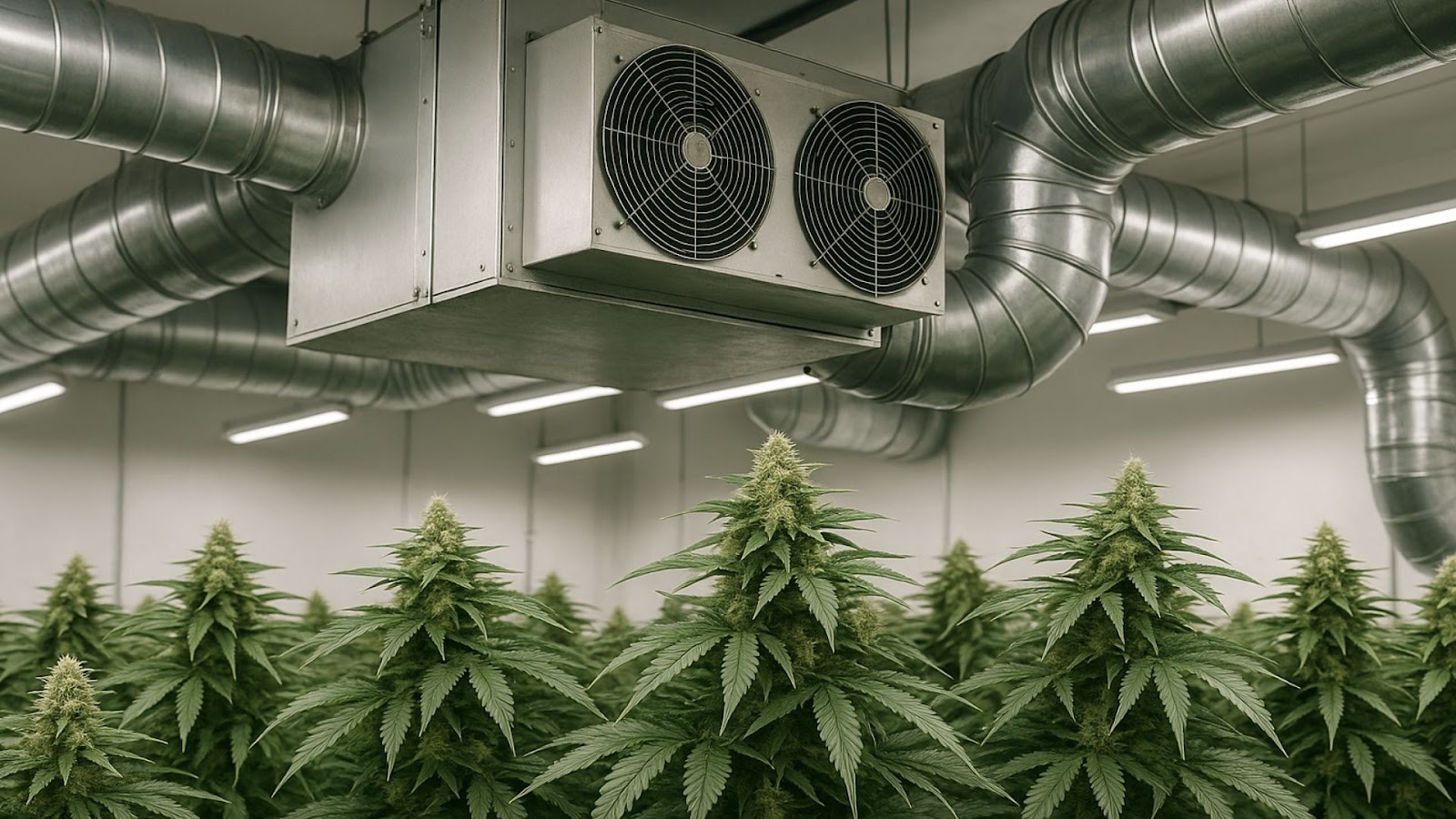
Different systems offer unique advantages depending on the size of your grow, budget, and level of control needed. These are the main types of HVAC systems used in cannabis cultivation.
1. Ducted HVAC Systems
Ducted HVAC systems distribute conditioned air through a network of ducts, providing consistent temperature and humidity across large grow areas. They are ideal for greenhouses or multiple grow rooms where uniform conditions are critical.
While installation is more complex, their ability to manage multiple zones efficiently makes them a favorite for commercial operations.
- Pros:
- Even air distribution for uniform growth.
- Efficient for large spaces and multiple zones.
- Can integrate with automation for environmental control.
- Cons:
- High installation costs.
- Less flexible if layout changes occur.
- Requires careful duct design to avoid hot/cold spots.
- Best For: Commercial or large-scale greenhouse growers needing consistent environmental control across multiple zones.
2. Ductless HVAC Systems (Mini-Splits)
Ductless or mini-split systems deliver conditioned air directly to specific grow areas without ducts, making them flexible and easy to install.
They are perfect for small to medium indoor grows, allowing temperature and humidity adjustments per room. Coverage per unit is limited, but multiple units can be used for larger setups.
- Pros:
- Flexible, easy installation.
- Lower upfront cost than ducted systems.
- Ideal for small to medium-sized grows.
- Cons:
- Limited coverage per unit.
- Energy use increases if many units are needed.
- Manual adjustments are required if not integrated with automation.
- Best For: Small to medium indoor growers, hobbyists, or operations needing flexible setups.
3. VRF (Variable Refrigerant Flow) Systems
VRF systems circulate refrigerant to multiple indoor units, providing heating and cooling for each zone. They are highly energy-efficient, scalable, and can simultaneously heat and cool different areas depending on plant needs.
The high installation cost and professional setup limit them to large commercial operations.
- Pros:
- Energy-efficient with highly accurate zone control.
- Can heat and cool multiple zones simultaneously.
- Scalable for large operations with multiple strains.
- Cons:
- High upfront cost.
- Requires professional installation and maintenance.
- Best For: Large commercial growers with multiple rooms or strains needing accurate climate control.
4. Cassette HVAC Systems
Cassette units are ceiling-mounted and provide 360-degree airflow for even climate control, without occupying wall space.
They are ideal for smaller grow rooms or where floor and wall space need to be maximized. Cassette systems are often paired with sensors or automation to maintain stable environmental conditions.
- Pros:
- Discreet, ceiling-mounted design saves space.
- Provides even airflow for consistent temperature and humidity.
- Can integrate with sensors and automation.
- Cons:
- Limited cooling/heating per unit; multiple units may be needed.
- Professional installation is required.
- Maintenance is slightly more complex than wall-mounted units.
- Best For: Small to medium indoor growers seeking even airflow without sacrificing space.
Whichever HVAC system you choose, PlanaCan can help you monitor and regulate it with ease. From temperature and humidity to CO₂ levels, it tracks every detail so your plants stay in optimal conditions. Schedule your free demo today.
Other Complementary Systems for All-Season Yields
There are several complementary tools that can further stabilize conditions and help maximize cannabis yields. These systems work alongside HVAC to monitor, adjust, and optimize factors that affect plant growth, ensuring consistent quality across all seasons.
You may want to consider investing in the following:
- Cannabis Chillers: Maintain optimal water or nutrient solution temperatures, preventing root-zone stress and supporting consistent growth.
- VPD (Vapor Pressure Deficit) Monitoring: Tracks the difference between leaf moisture and air humidity, helping optimize transpiration and nutrient uptake.
- CO₂ Enrichment Systems: Supplement CO₂ levels to improve photosynthesis, growth rate, and bud development.
- Environmental Sensors: Measure temperature, humidity, light, and airflow for real-time monitoring and alerts.
- Automation and Task Management Tools: Integrate with HVAC and auxiliary systems to adjust conditions automatically and ensure no steps in cultivation are missed.
By combining these systems with a properly configured HVAC system, you can create a stable and predictable environment for plants all year round. In the next section, we look at how controlled conditions directly translate into healthier plants and higher yields.
Suggested Read: How Long is the Vegetative Stage for Autoflower Cannabis
6 Benefits of HVAC Grow Rooms
HVAC-controlled grow rooms create a stable environment that allows cannabis plants to thrive, regardless of external weather or seasonal changes. Here are six key benefits of using HVAC systems for cannabis cultivation:
- Consistent Temperature Control: Maintains optimal conditions for vegetative and flowering stages, preventing heat or cold stress that can stunt growth.
- Humidity Regulation: Maintains moisture levels within the ideal range, thereby reducing the risk of mold, mildew, and leaf damage.
- Improved Airflow: Ensures uniform CO₂ distribution and oxygen availability, supporting photosynthesis and overall plant health.
- Enhanced Bud Quality: Stable environmental conditions promote larger, denser buds with higher cannabinoid concentration.
- Reduced Pest and Disease Pressure: Controlled airflow and filtration minimize the likelihood of infestations and airborne pathogens.
The next step is to understand the right settings for your cannabis HVAC system. This will ensure that every component works together to maximize yield and quality.
Optimal Settings for Your Cannabis HVAC System
You need to fine-tune your HVAC system to the specific requirements of cannabis at each growth stage. Optimal temperature, humidity, airflow, and CO₂ levels vary between vegetative and flowering phases, and small adjustments can make a big difference in growth and bud quality.
Here are the recommended settings that growers should aim for:
Temperature
- Vegetative Stage: 70–85°F
- Flowering Stage: 65–80°F
- Maintaining consistent temperatures prevents stress and encourages robust growth.
Humidity
- Vegetative Stage: 50–70%
- Flowering Stage: 40–50%
- Proper humidity control reduces mold risk and supports optimal transpiration.
Airflow
- Gentle, uniform airflow across the canopy ensures CO₂ distribution and prevents stagnant pockets.
- Fans should circulate air without directly blowing on plants to avoid stress.
CO₂ Levels
- Maintain 800–1200 ppm during the light cycle for maximum photosynthesis and growth.
- Proper CO₂ enhances flowering and increases bud density.
Fine-tuning these parameters helps growers maintain a stable, high-performing environment for their plants. Now, it’s time to explore best practices so every system works efficiently and supports consistent cultivation.
Best Practices for Optimizing Your Cannabis HVAC System
Even the best HVAC system won’t perform optimally without proper setup, monitoring, and maintenance. These strategies help keep your system running efficiently and your plants thriving.
- Regular Maintenance: Clean filters, inspect ducts, and check system components to ensure efficient operation and prevent airflow issues.
- Calibrate Sensors: Regularly verify the accuracy of temperature, humidity, and CO₂ sensors to maintain accurate readings and reliable environmental control.
- Use Zoning: Divide larger grow areas into zones to manage microclimates, ensuring uniform conditions for all plants.
- Monitor Airflow: Adjust fans and vents to prevent stagnant pockets and ensure even distribution of temperature and CO₂.
- Integrate Automation: Automate temperature, humidity, and CO₂ adjustments to reduce human error and maintain stable conditions.
- Plan for Seasonal Changes: Anticipate external temperature and humidity shifts and adjust HVAC settings proactively.
To stay on top of the settings, you should use a planning and tracking software. The next section explains how you can monitor HVAC settings with PlanaCan.
Suggested Read: Tips to Increase the Potency of Your Cannabis Plants
Track HVAC Conditions in Real Time With PlanaCan

Maintaining optimal conditions in a cannabis grow room requires careful planning and consistent monitoring. PlanaCan provides growers with tools to schedule, track, and visualize HVAC-related tasks. It can help you keep the temperature, humidity, CO₂, and airflow within ideal ranges.
By organizing tasks and centralizing information, you can avoid missed maintenance and keep every grow cycle on track. These are a few ways PlanaCan can help:
1. Real-Time Environment Monitoring
PlanaCan allows growers to log and track temperature, humidity, and airflow readings across all zones. By keeping a clear record of conditions, you can spot trends and ensure your HVAC system supports healthy plant growth.
2. Task Scheduling for HVAC Maintenance
Plan regular maintenance for HVAC units, filter changes, and system checks using PlanaCan’s scheduling tools. Reminders and task tracking help prevent lapses that could compromise plant health.
3. Mobile Apps for Task Management
PlanaCan’s Android and iOS apps let you update and check HVAC-related tasks from anywhere. You can mark tasks as done, add notes, and keep your team aligned even if you’re off-site.
4. Interactive Calendar for Grow Tasks
The interactive calendar provides a visual overview of all scheduled HVAC and grow-room tasks. Templates and color-coded schedules make it easy to track recurring checks, seasonal adjustments, and environmental logging.
5. Reporting and Insights
PlanaCan compiles task history, environmental logs, and notes into reports that highlight trends and potential issues. Growers can use this information to refine schedules and maintain ideal conditions throughout the grow cycle.
With PlanaCan, you can stay organized, track HVAC-related tasks, and ensure your grow environment remains stable, supporting healthier plants and consistent yields. Contact us to schedule a complimentary trial and test the system before committing.
Conclusion
Maintaining ideal environmental conditions is crucial for cannabis cultivation, and a well-designed HVAC system is central to achieving this. Consistent levels are essential for plants to thrive and maximize yields. However, even small deviations or lapses in monitoring can quickly create stress, mold, or other growth issues.
PlanaCan helps growers avoid these mishaps by providing a centralized platform for task scheduling, interactive calendars, mobile access, and detailed reporting. By keeping all HVAC- and grow-related tasks organized and visible, PlanaCan ensures nothing is overlooked.
Stay on top of your grow room with task scheduling and tracking features. Schedule a free call today.
Frequently Asked Questions
1. What is the best ventilation for cannabis plants?
Proper ventilation balances airflow, temperature, and humidity while supplying fresh CO₂ to plants. Inline fans, oscillating fans, and intake/exhaust systems work together to prevent stagnant air, reduce mold risk, and ensure consistent growth across the canopy.
2. What is the best system to grow cannabis in?
The ideal system depends on grow space, budget, and control needs. Climate-controlled greenhouses or indoor grow rooms with HVAC, supplemental CO₂, and environmental monitoring provide consistent conditions. They maximize yield and bud quality throughout the vegetative and flowering stages.
3. Can cannabis thrive without HVAC control?
Yes, but only under mild climates or short growth cycles. Without HVAC, plants are vulnerable to temperature swings, high humidity, or airflow inconsistencies, which can reduce yield, stunt growth, or increase pest and disease risks.
4. How often should I monitor my HVAC system?
Frequent monitoring, ideally daily or several times per week, ensures temperature, humidity, CO₂, and airflow remain within optimal ranges. Logging these readings helps identify trends, prevent issues, and maintain a stable grow environment for maximum yields.
5. Are there specific HVAC settings for different cannabis strains?
Yes. Different strains may prefer slightly varied temperature, humidity, and airflow ranges. Indica-dominant strains often tolerate slightly cooler temperatures, while sativa-dominant strains may prefer warmer, more humid conditions.
6. How can PlanaCan help with HVAC task scheduling?
PlanaCan allows growers to schedule HVAC maintenance, filter changes, and environmental logging. Templates, reminders, and an interactive calendar ensure tasks are completed on time, reducing the risk of missed checks or deviations in grow-room conditions.
7. Can I track HVAC conditions remotely with PlanaCan?
Yes. PlanaCan’s mobile apps for Android and iOS let growers view schedules, log environmental data, and track HVAC-related tasks from anywhere. This remote access helps maintain stable conditions even when you’re away from the grow room.