If you’re running a commercial cultivation facility, you know the challenge: keeping every parameter in check, lights, nutrients, temperature, humidity, and team communication, all while scaling operations. When things slip, yields suffer, tasks get missed, and your margins begin to shrink.
That’s where cannabis grow room automation systems come in. By letting you monitor, control, and standardize your environment and workflows, automation tools shift you from firefighting to proactive growth.
Key Takeaways
- Automation delivers consistency and repeatability by controlling lighting, irrigation, climate, and nutrients across cycles.
- With data-driven monitoring and control, you can boost yield by 20–30% (while reducing energy/waste) in a properly automated facility.
- It also plays a significant role in scaling operations, lowering labor, helping with compliance, and enabling remote monitoring, a foundational step for multi-room or multi-state growers.
- However, automation isn’t plug-and-play: you need the right systems, integration with your workflows (including task scheduling, team communications, and harvest tracking), and feedback loops to refine your process.
- For growers using PlanaCan, automation becomes an integral part of a broader workflow, encompassing interactive calendars, task scheduling, harvest analysis, and team coordination.
Now let’s dive deeper into how automation works, key system components, benefits & ROI, common pitfalls, and how you can implement it in your facility.
Why Automation Matters in Commercial Grow Rooms?
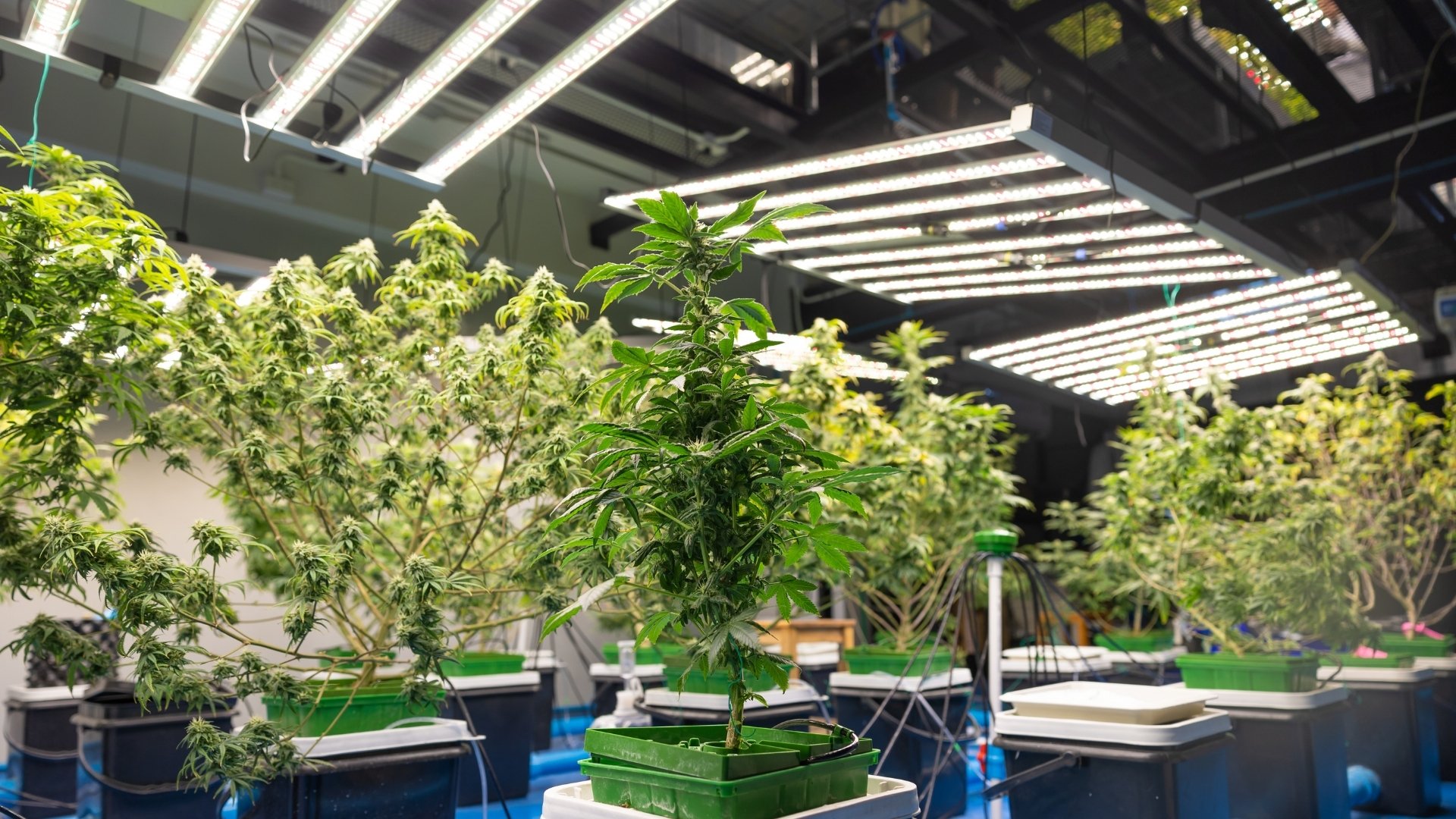
For commercial cannabis cultivators, automation is no longer optional. It’s becoming a competitive advantage.
- Consistency & Quality Control
Automation ensures that every plant receives the same light cycle, irrigation, nutrient delivery, and climate control. That uniformity means more predictable outcomes.
- Operational Efficiency & Labour Savings
Many routine tasks, such as switching lights, adjusting fans, watering, and documenting data, can be automated. That translates to fewer hours of manual labour and fewer errors. Studies highlight automation’s ability to free up growers’ time, allowing them to focus on strategy rather than operations.
Additionally, labour in many commercial operations is one of the largest variable costs, so reducing it gives you margin relief.
- Scalability & Growth Support
When you’re running a single room, manual adjustment might suffice. But once you scale to multiple rooms or sites, you’ll hit the limits of manual control. Automation enables you to replicate your process, maintain quality across rooms, and grow without linear cost hikes.
- Energy & Resource Efficiency
Indoor cannabis cultivation is energy-intensive. Lighting, HVAC, and dehumidification all add up in cost. Automation helps optimize that usage.
For example, one research paper found that indoor cannabis operations allocate ~38% of electricity to lighting and ~51% to HVAC/dehumidification. Automation tools help adjust usage dynamically (based on canopy, time of day, light intensity) and so can reduce waste.
- Compliance & Data Traceability
Especially in regulated markets, you need documentation on the environment your plants were in, the nutrients delivered, and so on. Automation systems help capture data and provide traceability.
Suggested read: How Long to Veg Cannabis for Maximum Yield
What Does a Grow Room Automation System Actually Include?
Here’s a breakdown of the core components you’ll typically see and that you should evaluate when automating your growth.
Environmental Sensors & Controllers
- Temperature sensors, humidity sensors, CO₂ monitors, light level sensors (PPFD/DLI)
- Controllers that manage HVAC, fans, dehumidifiers, lights, and irrigation pumps
- Set-point control logic and alarms when environmental thresholds are exceeded
- Automation helps you maintain target conditions, for example, by controlling VPD (Vapor Pressure Deficit) across different growth stages.
Lighting & Light Cycle Automation
- Programmable light schedules for vegetative vs flowering phases
- Dimming or spectrum shifts (for LED systems)
- Sensors or dashboards monitoring light levels and adjusting to maintain target PPFD/DLI
- Proper lighting automation ensures that you’re neither over-lighting (wasting energy) nor under-lighting (reducing yield).
Irrigation, Nutrient Delivery & Fertigation
- Automated pumps, drippers, nutrient mixing and feeding schedules
- Sensors for solution EC (electrical conductivity) and pH in more advanced systems
- Scheduling based on plant stage, strain, and canopy size
- Consistent feed helps avoid stress and variance across your crop.
Climate & Airflow Management
- Automation of fans, vents, HVAC systems, dehumidifiers and CO₂ injection
- Sensors' feedback loops maintain set-points and reduce human intervention
- In indoor growing, especially controlling airflow and humidity is key to avoiding mold, mildew, and yield loss.
Data Monitoring, Logging & Analytics
- Dashboards showing the real-time condition of rooms, and alerts if values drift
- Historical data logged for analytics: yield per cycle, energy consumption, results per strain
- Optional: AI/ML or computer vision for stress detection, growth monitoring, phenotyping
- This data feedback loop is what helps you improve beyond just running the same process.
Integration with Task Scheduling & Team Workflow
This is where software like PlanaCan adds value: automation of the environment is one part, but automation of task workflows, team communication, and harvest reporting is the next.
- Define templates for each growth cycle (strain, room, phase)
- Calendar tasks tied to environment changes or milestones
- Mobile access for team updates or overrides
- By linking environmental automation with workflow automation, you ensure that human tasks and machine tasks are aligned and visible.
How to Evaluate ROI: What to Expect & What to Measure?
When you invest in a grow room automation system, you need to track metrics to justify the spend.
What to measure
- Yield per m² or per room vs prior cycles (should improve)
- Uniformity of plants (variance reduction)
- Energy usage (kWh) per harvest or per kg of product; look for reduction
- Labor hours per harvest or per kg
- Quality metrics: cannabinoid/terpene consistency, defects, crop losses
- Compliance risk reduction: number of missed records, audit issues
Typical improvements
- Some reports show 20-30% yield increases from precise climate/automation control.
- Energy savings are harder to quantify, but reducing wasted light/HVAC use can have a meaningful impact on monthly utility bills.
- Labor cost savings scale rapidly; the more rooms you have, the more you benefit.
Example calculation
If you run one room producing X kg every 8 weeks, and automation helps you yield an additional 15% while reducing labor by 20%, then you’re capturing additional revenue + cost savings. If your automation system cost is amortized over several cycles, it becomes part of your operational ROI.
What to watch out for
- Upfront hardware & installation costs (sensors, controls, wiring)
- Integration costs (making sure everything speaks together)
- Training staff on the new workflows and system monitoring
- Ongoing maintenance of sensors/controllers (calibration, replacement)
- If you treat automation as a “set it and forget it”, you’ll likely miss the full value.
Suggested read: Step-by-Step Guide to Advanced Cannabis Cultivation Techniques
Common Automation Mistakes & How to Avoid Them

Here are the pitfalls that growers often encounter when adopting automation, along with tips on how to avoid them.
Mistake 1: Automating Too Much Too Soon
Trying to automate every little thing at once can overwhelm your team and process. It's better to start with key components (climate and lighting), then layer in irrigation, fertigation, and analytics. This gradual approach ensures you get value early and avoid overwhelming your team with complexity.
Mistake 2: No Integration with Workflow & Task Scheduling
Automation of the environment is only half the story. If your team still uses spreadsheets, whiteboards, and text threads for tasks, you’ll get a disconnect. Integrating environment controls with task-scheduling software ensures alignment: when a room automatically shifts to flowering, corresponding tasks appear for your team.
Mistake 3: Poor Data/Feedback Loop
Installing sensors and controllers is good, but if you don’t monitor, analyze, and act on the data, you miss the value.
Set up dashboards, trend reports, and hold regular reviews: What happened last cycle? Did any rooms drift off set-points? Did yield vary by strain? Use that insight to refine templates.
Mistake 4: Neglecting Maintenance & Calibration
Sensors drift, lights age, and HVAC units degrade. If your automation system isn’t regularly maintained, you’ll get “automated errors.” Schedule periodic audits: sensor calibration, controller updates, and firmware checks.
Mistake 5: Ignoring Change Management
Your team requires training to utilise the automation system, understand alerts, and respond effectively. If they see it as extra work or prefer manual override all the time, the benefits degrade. Build buy-in early, show the value (fewer surprises, fewer lost plants, less overtime), and embed the automation into daily routines.
How to Implement Grow Room Automation: A Step-by-Step Guide?

For commercial cannabis growers, automation is not just about efficiency—it is about consistency, compliance, and maximizing the return on a high-value, highly regulated crop. This roadmap is tailored to the specific needs of licensed cannabis production facilities.
1. Define Your Goals: The Business Case for Compliance and Potency
Automation in cannabis must address two primary drivers: increasing the value and ensuring regulatory adherence.
- What the step is about: Establishing a clear quantitative link between environmental control and critical quality attributes like cannabinoid potency, terpene profiles, and compliance costs.
- How to do it:
- Quantify Quality Baseline: Track the variance in your average final potency and terpene concentration across different strains and rooms. A tight control of variance.
- Calculate Compliance Costs: Determine the labor hours spent on manual logging, inventory tracking, and audit preparation (e.g., METRC/BioTrack entry). Automation should aim to reduce these non-productive compliance hours significantly.
- Target Environmental Recipes: Set specific goals related to the environment: "Achieve 98% uptime adherence to the target VPD (Vapor Pressure Deficit) schedule for our highest-value strain," or "Reduce instances of RH overshoot that risk mold/mildew to zero."
- Outcomes/Results: A Compliance and Quality Automation Charter demonstrating how technology will protect the crop from environmental stress and reduce the audit burden.
2. Map Your Current Workflow: The Compliance and Hand-Off Review
In a cannabis facility, every task must be traceable. Mapping the workflow identifies the "compliance friction points" where manual logging or inconsistent environmental control occurs.
- What the step is about: Documenting all cultivation tasks with a strong focus on data entry, regulatory logging, and the precise environmental parameters applied to each unique batch or strain.
- How to do it:
- Traceability Audit: Track how environmental data is currently linked to specific plant batches (tags) and regulatory reporting systems. Identify where manual data entry is prone to human error.
- Critical Task Review (IPM & Nutrient): Detail the exact timing and execution of high-risk tasks, such as pesticide application (IPM) and nutrient mixing. Automation must log these events automatically for compliance records.
- Data Silo Identification: Pinpoint systems that operate independently controller, a manual lighting timer, a separate METRC logging spreadsheet). These silos are where consistency and audit failures begin.
- Outcomes/Results: A detailed Compliance Workflow Map that isolates manual data transfers and high-risk environmental control points, proving where automation will provide reliable, timestamped records.
3. Prioritise Components: Maximizing Cannabinoid and Terpene Expression
Given the high value of the crop, initial automation investment must target the variables with the greatest impact on final product quality (potency and yield).
- What the step is about: Prioritizing systems that ensure precise environmental delivery, leading directly to higher quality and higher yields.
- How to do it:
- Phase 1 Focus: Closed-Loop Climate Control (VPD): Invest first in sensors and controllers that integrate temperature, RH and carbon dioxide to calculate and dynamically maintain a precise VPD target. This is paramount for managing transpiration, nutrient uptake, and preventing fungal pressure.
- Phase 2 Focus: Precision Dosing & EC/pH Management: Automate the nutrient system to continuously monitor and adjust EC (Electrical Conductivity) and pH in real-time, delivering strain-specific nutrient "recipes" without manual intervention.
- Phase 3 Focus: Spectral and DLI Control: Integrate advanced LED lighting systems capable of dynamic spectral shifts and precise DLI (Daily Light Integral) control to optimize light exposure based on the plant's growth stage, maximizing flower density and terpene production.
- Outcomes/Results: A Phased Quality Automation Plan where the highest ROI systems (VPD, precision feeding, dynamic light) are deployed first to drive immediate quality and yield gains.
4. Select Technology & Partner: GACP/GMP Ready Systems
The chosen technology must be robust, reliable, and provide the level of data logging and security required for regulatory audits GACP/GMP.
- What the step is about: Selecting industrial-grade controllers and software that offer reliable data security, granular historical logging, and seamless integration for regulatory reporting.
- How to do it:
- Audit-Ready Logging: Require systems that provide non-editable, timestamped, historical data logs for every environmental parameter and process intervention. This is essential for defending against audit scrutiny.
- Enterprise Scalability: Choose a system that can handle multiple flower rooms, veg rooms, mother rooms, and processing areas, all while maintaining separate environmental recipes and logging.
- Integration with Seed-to-Sale: Ensure the automation platform can communicate with your enterprise ERP or Seed-to-Sale system (like METRC or BioTrack) to automatically associate environmental data with specific batch IDs.
- Service Level Agreements SLAs: Demand high-level support SLAs that guarantee quick response times for critical system failures, as crop loss due to climate failure is financially catastrophic.
- Outcomes/Results: A chosen GACP/GMP-Compliant Automation System with verified data integrity and a support contract that minimizes risk of high-value crop loss.
5. Integrate with Your Workflow System: The Digital SOP and Audit Trail
Automation alerts must be immediately funneled into a traceable system, turning an environmental anomaly into a compliant, documented intervention.
- What the step is about: Linking the physical events in the grow room to your digital Standard Operating Procedures SOP and compliance tracking software.
- How to do it:
- Task-Based Alerts: Configure the system so that when an environmental deviation occurs (eg., VPD drifts 10% out of range), it automatically generates a high-priority, trackable task in your workflow software (e.g., PlanaCan, ERP).
- Mandatory Acknowledgment: Require team members to digitally acknowledge and document the precise intervention taken (and its reason) via the mobile workflow system before the task is closed. This provides a clean audit trail.
- Digital Recipe Management: Use a centralized system to manage and deploy strain-specific environmental recipes. Changes to these recipes must be logged and approved digitally.
- Outcomes/Results: A centralized Digital Operations System where every environmental setting and manual team action is logged, providing a complete, defensible audit trail required for licensure and $\text{GMP}$ certification.
6. Set up Data Collection & KPIs: Focusing on Potency and Efficiency
Metrics must go beyond basic yield to focus on the economic value and resource efficiency of the final product.
- What the step is about: Defining KPIs that tie environmental stability and resource consumption directly to the final chemical quality of the flower.
- How to do it:
- Economic KPIs: Track W/g (Watts per gram of finished product) and L/g (Liters of water/nutrient solution per gram) to measure operational efficiency.
- Quality KPIs: Track the average variance of the THC and terpene results per batch. The goal is a negligible variance, indicating perfect environmental control.
- Environmental Stability KPIs: Use metrics like Control Deviation Hours (the number of hours the VPD or DLI was outside the pm 5\% target range) as a leading indicator of crop quality risk.
- Compliance KPIs: Track the time saved on data entry and the number of compliance errors or rejected batches due to poor records.
- Outcomes/Results: Cannabis-Specific Performance Dashboards that clearly illustrate the correlation between automated environmental stability and improvements in yield, potency, and operational cost efficiency.
How PlanaCan Fits Into Your Automation Strategy?

Automation of your grow environment is one piece but to truly optimize operations, you need to tie environment + tasks + data together. That’s where PlanaCan becomes central.
- Task Scheduling & Template Creation: You define cultivation templates (strain, room type, phase). Then your team’s tasks automatically populate a calendar.
- Interactive Calendar: Visual timeline of all cultivation tasks, linked to automation timelines of lighting/climate/irrigation.
- Team Management & Mobile Access: Grow team sees tasks, marks completions via mobile apps, adds notes and context (for example: “Humidity spike during lights-on phase”).
- Harvest Analysis & Reporting: At cycle end, you collect all data (environment + tasks + yield) in one place; analyze what worked, what didn’t, and refine templates for next cycle.
- Automation Alignment: When your environment automation system alerts or logs events (e.g., light schedule shifts, HVAC changed), the task system in PlanaCan can link these events to human tasks and notes giving you full visibility from environment to team to harvest.
Ready to bring automation and workflow into one dashboard? Schedule a free call today with PlanaCan to explore how you can automate your grow room scheduling, team tasks and harvest tracking and finally get consistent yields, lower labour and clearer data.
Conclusion
If you’re serious about scaling your commercial cannabis cultivation and getting repeatable, high-quality yields, implementing an automation system for your grow rooms is a smart move. The benefits are clear: improved consistency, labour efficiency, energy savings, better data, and scalability.
But technology alone won’t deliver results. You need it integrated into your workflows, task scheduling, team coordination, and harvest analysis. That’s where combining environmental automation with a workflow platform like PlanaCan makes the difference.
Schedule a free call today to explore how PlanaCan can help you unify automation, workflows and data-driven decision making so you stop juggling tasks and start optimizing every harvest.
FAQs
Q1. What exactly is a “cannabis grow room automation system”?
It’s a system composed of sensors, controllers, software and workflow integrations that monitor and control your grow-room environment (lights, climate, CO₂, irrigation, nutrients) and link these controls with tasks and data reporting.
Q2. Can smaller or single-room operations benefit from automation?
Yes. While the biggest gains are seen by multi-room/multi-site operations, even a single room can benefit through better consistency, reduced labour, and improved yields. It’s about building a repeatable process.
Q3. What cost savings or yield boost can I expect?
It depends on your starting point, but industry reports suggest yield improvements of 20–30% from precise climate control and automation. Energy and labour savings likewise depend on how manual your previous process was.
Q4. What are typical pitfalls to watch out for?
- Automating before your process is stable and well-documented.
- Ignoring task/workflow integration (so machines automate but tasks lag).
- Skipping calibration and maintenance of sensors/controllers.
- Not collecting or acting on data (so automation runs, but you don’t improve).
Q5. How does automation tie into regulatory compliance?
Automation systems can log environmental data (temperature, humidity, CO₂, fertigation) and link to workflows (who did what when). This historic data trail helps with audits, inspections, traceability and can reduce compliance risk.