Cannabis legalization is sweeping across the U.S., with 74% of Americans now living in states where it's legal in some form. This wave creates huge opportunities for growers, but the path to legally cultivating cannabis isn’t as simple as just planting seeds. The licensing process can be complicated, time-consuming, and varies from state to state.
In fact, cultivation licenses dropped by 1% in Q3 2024, reflecting stricter regulations and a growing number of applicants. For those trying to get in, the process can feel like a hurdle race. From figuring out the right permit to ensuring your operation stays compliant with local laws, the stakes are high.
This guide is designed to cut through the confusion. We’ll walk you through the exact steps, from selecting the right license for your operation to staying on top of state-specific requirements. If you’re about to start cultivating cannabis legally, this is the place to start.
In brief:
- Getting a cannabis cultivation license involves several steps: verifying state eligibility, choosing the right license type, preparing business and security plans, and submitting a complete application with required documentation.
- Understanding the licensing process is crucial because mistakes, incomplete applications, or ignoring compliance rules can delay approval and create costly legal challenges.
- Licensing requirements vary by state and may include residency, financial stability, background checks, and facility specifications. Staying informed prevents unintentional violations.
- Maintaining compliance after receiving a license requires seed-to-sale tracking, regular reporting, security measures, employee training, and environmental management. Neglecting these can risk fines or suspension.
- Planning your first grow effectively involves workflow management, scheduling, harvest tracking, and task delegation, ensuring a smoother operation and maximizing yield potential under regulatory standards.
Federal vs. State Laws for Growing Pot
The legality of growing marijuana in the United States is not uniform. What is permitted in one state may still be illegal under federal law. This conflict between two levels of governance shapes how licenses are issued, what growers can do, and where they can operate.
Here is a quick breakdown of how the two systems differ:
- Federal Law (Prohibition Still in Effect)
Under the Controlled Substances Act, marijuana is classified as a Schedule I drug, meaning it is illegal to grow, sell, or possess at the federal level. This affects access to banking services, interstate commerce, and federal tax deductions for cannabis businesses.
- State Laws (Legalization at the Local Level)
Many states have legalized cannabis for medical, recreational, or both purposes. In these states, cultivation is legal only for licensed growers operating under strict local regulations. Each state sets its own limits on plant count, facility type, and licensing fees.
- Federal Non-Interference Policy
While marijuana remains federally illegal, the federal government has generally taken a hands-off approach in states that regulate and monitor cannabis responsibly. Enforcement is rare unless laws are seriously breached.
The federal-state divide determines where you can grow, what license you need, and how you manage compliance. Failing to align with both systems can lead to penalties or license revocation.
Next, let us explore where marijuana cultivation is legal in the U.S., and what that means for potential growers.
Suggested Read: Fertilizer Mix for Cannabis Flowering Stage
Where Is Marijuana Legal to Grow in the U.S.?
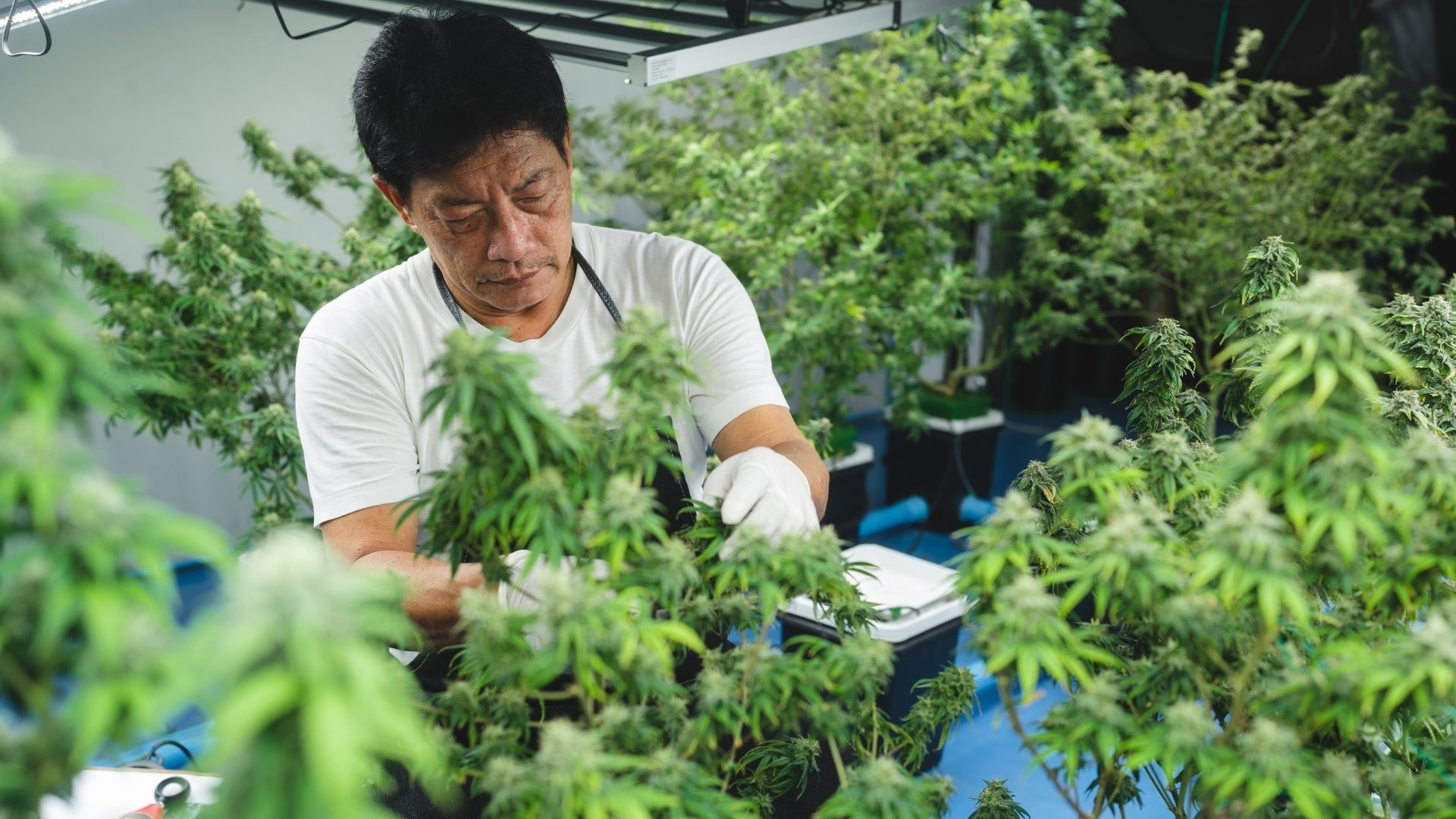
Laws vary widely by state, from full home cultivation to strictly regulated commercial operations. Before you apply for a cultivation license, you must know where growing cannabis is legally permitted.
This table shows a state-wise legal status for marijuana:
(The information in this table was fact-checked on October 16, 2025.)
States use varying rules and restrictions. These are a few other things to keep in mind:
- Some allow only licensed commercial cultivation, not home grow.
- Others impose plant count limits, maturity thresholds, or security requirements.
- Local (city or county) laws can further restrict license eligibility or home cultivation.
Next, we will explore the different types of grow licenses so you can decide which license fits your goals.
Suggested Read: Top 8 Things to Know to Start a Commercial Cannabis Grow
What Are the Different Types of Cultivation Licenses?

Alt text:What Are the Different Types of Cultivation Licenses?
While the terminology varies from state to state, most cannabis cultivation licenses in the United States can be grouped into broad categories based on scale, setting, and purpose.
These are not the exact names used in every jurisdiction, but they represent how licenses are generally segregated nationwide.
1. Micro or Small-Scale Cultivation Licenses
Designed for growers with limited canopy or plant count, these licenses often apply to small businesses or home-based cultivators.
- Usually capped at a few hundred to a few thousand square feet of canopy.
- Require fewer resources for compliance, making them ideal for beginners.
- May allow personal sales to dispensaries under tight state oversight.
2. Medium-Scale or Standard Cultivation Licenses
These cover professional-grade operations that grow for the regulated retail market.
- Typically, the range is between 5,000 and 20,000 square feet of canopy.
- Often require environmental control systems (HVAC, humidity, CO₂ management).
- Must meet rigorous reporting and product-tracking standards.
3. Large-Scale or Commercial Cultivation Licenses
For large facilities producing cannabis on an industrial scale.
- Can exceed 20,000 square feet or the maximum canopy allowed by state law.
- Subject to the most extensive security, compliance, and energy-use regulations.
- Frequently limited in number or awarded through competitive applications.
4. Nursery or Propagation Licenses
For those growing seeds, clones, or immature plants.
- Do not permit flower production for sale.
- Focused on early-stage plant genetics and propagation.
- Typically held by suppliers who sell to licensed cultivators.
5. Mixed-Light and Indoor/Outdoor Licenses
Categorized by where and how the plants are grown.
- Indoor licenses require fully enclosed spaces with artificial lighting.
- Outdoor licenses cover traditional open-field growing.
- Mixed-light licenses allow greenhouses that use both sunlight and supplemental lighting.
6. Research or Experimental Licenses
Offered in certain states to universities, biotech firms, or licensed cultivators studying plant genetics, pest control, or environmental impact.
- Restrict commercial sales but allow controlled studies.
- Often require federal or state research approval in addition to cultivation permits.
Although these categories are common across the United States, the exact names, canopy limits, and eligibility requirements differ by state. Always check with your state’s cannabis regulatory agency or local licensing office to determine which type applies to your grow operation.
Who Can Apply for a Cannabis Grow License?
Cannabis cultivation regulations differ from state to state, but the basic eligibility criteria remain largely consistent across the United States. Most states require applicants to demonstrate good character, financial responsibility, and the ability to operate within strict regulatory frameworks.
Below are the common qualifications for those seeking a cannabis cultivation license:
- Age Requirement: Applicants must be at least 21 years old.
- Residency: Some states require proof of residency before applying.
For instance, in Washington, you need to have been a state resident for at least 6 months before applying.
- Background Checks: A clean criminal record, particularly free of felony drug convictions, is generally mandatory.
- Financial Stability: States often ask for proof of financial capacity to fund operations, cover application fees, and maintain compliance.
For instance, the Department of Cannabis Control (DCC) in California requires extensive financial documentation.
- Business Entity Formation: Applicants must form a registered business entity (LLC, corporation, or partnership) recognized in the state.
- Premises Ownership or Lease: Proof of legal access to the cultivation site, through ownership documents or lease agreements, is required.
- Security and Compliance Plan: Submission of detailed security, waste management, and record-keeping protocols.
- Tax Compliance: Applicants must be current on all state and federal taxes, including income, payroll, and property taxes.
- Local Approval: In some jurisdictions, local municipal consent or zoning clearance is necessary before state licensing.
While these points outline the typical standards, there may be additional requirements depending on the state in which you intend to grow. Some regions impose social equity provisions, renewable energy mandates, or local inspection processes before approval.
Now that you understand who can apply for a cannabis grow license, let us look at the steps involved in actually obtaining one.
Suggested Read: Beginner’s Guide on Mixing Nutrients for Cannabis Growth
How To Get a License to Grow Pot?
Obtaining a cannabis cultivation license in the United States is a structured, multi-step process designed to ensure compliance, transparency, and responsible production.
While the application details differ by state, the overall framework follows a similar path everywhere. These steps can help you plan effectively and avoid costly delays.
1. Research State Regulations
Each state has its own cannabis regulatory agency, such as the Department of Cannabis Control (California) or the Cannabis Control Commission (Massachusetts).
Before beginning the application process, review your state’s:
- Eligibility requirements
- Zoning restrictions
- Plant count limits
- Tax obligations
- Licensing fees
2. Create a Business Plan
A well-drafted business plan demonstrates professionalism and helps meet regulatory requirements. Include:
- Business structure and ownership details
- Estimated costs, funding sources, and profit projections
- Operational plan covering cultivation methods, supply chain, and staffing
- Security and compliance procedures
3. Secure a Suitable Location
You must identify and secure a property that complies with zoning and buffer zone laws (for example, distance from schools or public spaces). Many states require proof of property ownership or a signed lease before processing your application.
4. Prepare and Submit Application Materials
Applications typically include:
- Business entity documents
- Background checks for all stakeholders
- Financial disclosures
- Security and facility layout plans
- Environmental impact assessments (where applicable)
Applications are often scored based on completeness and attention to compliance—accuracy matters.
5. Pass Background and Financial Checks
Applicants and key personnel must undergo state and federal background screenings. Additionally, states may verify your financial capacity to fund operations for several months, covering staff, utilities, and licensing fees.
6. Facility Inspection and Final Approval
Once preliminary approval is granted, inspectors visit your facility to ensure compliance with health, safety, and security standards. If all checks are satisfied, the official cultivation license is issued.
7. Maintain Ongoing Compliance
After licensing, cultivators must stay compliant with:
- Seed-to-sale tracking systems
- Regular reporting and audits
- Tax filings
- Waste disposal and environmental guidelines
Getting licensed is just the start. PlanaCan helps growers simplify cultivation with scheduling, harvest planning, and outcome tracking—all in one platform. Ditch the whiteboards. Watch your grow thrive. Schedule a free call today.
In the next section, we will explore common licensing mistakes and how to fix them, helping you avoid setbacks before your first seed even touches soil.
5 Common Licensing Mistakes and How to Fix Them
Securing a cannabis cultivation license in the United States can be an extensive process. Understanding these mistakes and knowing how to fix them can save time, money, and reputation.
These are a few tips to help you get started:
- Read your state’s cannabis regulations carefully. They often differ from federal guidelines.
- Stay updated on local policy changes, as cannabis laws evolve frequently.
- Create an internal compliance calendar to track renewal deadlines, reporting dates, and inspections.
- Engage professionals, attorneys, accountants, or compliance experts if applying for large-scale operations.
Getting licensed is only the first step. The real challenge begins after approval—maintaining compliance, tracking inventory, and ensuring your cultivation process meets all legal standards.
Maintaining Compliance After Receiving Your License
Alt text:Maintaining Compliance After Receiving Your License
Maintaining compliance is a continuous responsibility that ensures your operation stays legally protected and audit-ready. Regulators frequently review cultivation sites, so having strong systems in place is essential to avoid penalties or suspension.
Key compliance practices for licensed growers:
- Seed-to-Sale Tracking
Every plant must be tagged, monitored, and logged from germination to final sale. Systems like METRC or BioTrack are mandatory in most legal states.
- Regular Reporting
States typically require monthly or quarterly reports covering production volumes, waste disposal, and inventory changes. Ensure records are accurate and timely.
- Security and Surveillance
Most states require 24/7 camera coverage, restricted entry points, and alarm systems. Security lapses can lead to license suspension.
- Employee Training and Background Checks
Staff should be trained in compliance procedures, including how to handle product and document transfers and follow safety regulations.
- Environmental and Waste Management
Proper disposal of plant waste, chemical runoff, and packaging materials must meet local environmental standards.
- Financial and Tax Compliance
Maintain transparent accounting and pay taxes according to cannabis-specific regulations under Section 280E of the Internal Revenue Code.
- Routine Internal Audits
Schedule quarterly self-audits to identify any compliance gaps before regulators do. Use technology to document and assign corrective tasks efficiently.
Once compliance is under control, you can shift your focus to the next step for setting up your first grow. The next stage is where planning, workflow management, and cultivation expertise come together.
Suggested Read: Utilize Silica for Healthier Cannabis Cultivation
What Comes After Licensing: Planning Your First Grow
You might feel overwhelmed by constantly coordinating schedules, tracking compliance tasks, managing staff, and predicting harvest timelines. PlanaCan simplifies cannabis cultivation with AI-driven planning, automated task management, and real-time collaboration tools.
We keep your operation compliant, organized, and efficient, whether you run a small indoor grow or a large licensed facility. These features can impact the quality of your harvest:
1. Automated Work Scheduling
PlanaCan’s AI scheduler automatically assigns daily, weekly, and stage-specific tasks to your team. Each task is logged with time, responsibility, and completion tracking, ensuring nothing is missed. Growers can visualize every phase, from cloning to curing, on a single dashboard, improving accountability and efficiency.
2. Interactive Calendars
The interactive calendar helps cultivators plan growth cycles, feeding schedules, and compliance check-ins seamlessly. You can adjust timelines in real-time based on plant health or environmental changes, and everyone on the team stays instantly updated.
3. Mobile and Web Apps
PlanaCan’s mobile and web applications make it easy to manage operations on the go. Supervisors can assign tasks, track completion, and communicate updates directly from the app, ensuring productivity even when off-site.
4. Harvest Analysis and Reporting
Gain deep insights into each harvest. PlanaCan’s reporting module analyzes yield trends, nutrient efficiency, and cycle timing. It helps growers pinpoint what worked well and where adjustments can improve future batches without manually compiling data.
5. Real-Time Collaboration and 24/7 Availability
Your team can collaborate directly within PlanaCan, sharing notes, uploading photos, and logging updates for every batch. The platform also offers 24/7 support through email, ensuring assistance whenever you need it.
6. Inventory and Compliance Tracking
PlanaCan integrates compliance reporting and inventory tracking into your daily workflow. Every plant, product, and input is logged automatically, simplifying your audit process and preventing costly recordkeeping errors.
7. AI Insights for Better Planning
Beyond tracking, PlanaCan’s AI learns from your operation data, suggesting optimal lighting cycles, feeding schedules, and task sequences based on prior yields and conditions. This transforms reactive management into proactive optimization.
Start for free:
You can start for free and upgrade as your business expands. Explore our intuitive dashboards, scheduling tools, and analytics through a trial period designed to help you experience how effortless cannabis management can be.
Conclusion
Obtaining the right cannabis cultivation license is crucial to operating legally and maximizing your grow’s potential. Without proper licensing, even the best cultivation plans can lead to costly setbacks or compliance issues.
With PlanaCan, licensed growers can plan every stage of their operation efficiently. We handle task scheduling and harvest tracking so you can grow healthier plants, achieve higher yields, and enjoy smoother workflows.
Take control of your licensed grow today. Start with a free plan for small-scale operations or explore our trial for advanced features. Schedule a free call today.
Frequently Asked Questions
1. Can a business hold multiple cultivation licenses in different states?
Some states allow multi-state ownership, but each license application is reviewed independently. Applicants must meet residency, financial, and operational requirements for every state.
2. Are there age restrictions for cannabis cultivation license holders?
Yes, most states require applicants to be at least 21 years old, though some medical-only licenses may allow younger applicants under strict supervision.
3. Do local municipalities have additional restrictions beyond state laws?
Yes, cities or counties may impose limits on plant count, location, odor mitigation, or operating hours. Compliance with both local and state rules is essential.
4. Can a licensed cultivator sell cannabis to out-of-state buyers?
No, federal and state regulations prohibit interstate cannabis sales. Licensed growers can only sell within the state and to permitted distributors or retailers.
5. Are there insurance requirements for cannabis cultivation operations?
Many states and lenders require growers to have liability, property, and crop insurance. These policies typically cover theft, fire, crop failure, and environmental damage.