Nutrient deficiencies are one of the fastest ways for commercial cannabis crops to lose yield without growers realizing it early enough. Visual symptoms are often subtle, misread, or confused with environmental stress, leading to delayed or incorrect corrections.
A controlled scientific study found that cannabis plants grown with nutrient deficiencies experienced flower yield losses ranging from 33% to 72%, with nitrogen deficiency alone reducing vegetative biomass by up to 73% compared to fully nourished plants.
For commercial growers, mistakes at this level are not cosmetic. They directly impact output, consistency, and revenue. In this guide, you will find comprehensive, practical canna deficiency charts to help you accurately diagnose nutrient issues and respond before losses compound.
Quick look:
- Nutrient deficiencies cause significant yield loss when misdiagnosed or corrected late. Many symptoms overlap, making visual diagnosis alone unreliable.
- Most deficiencies are due to uptake issues, not to missing nutrients. pH imbalance, root stress, and environmental factors often reduce availability.
- Deficiency appearance changes by growth stage. Timing affects where symptoms show and how plants respond to corrections.
- Misidentification leads to overcorrection and lockout. Treating the wrong cause often worsens plant stress.
- Process control prevents repeat issues. Consistent inputs, stage-based checks, and documented responses reduce deficiency risk at scale.
Why Are Nutrient Deficiencies Common in Cannabis
Nutrient deficiencies in cannabis are usually the result of uptake issues, environmental interference, or management practices that prevent plants from accessing what is already available.
In commercial cultivation, multiple variables interact at once, making deficiencies both common and easy to misdiagnose.
Nutrient deficiencies are widespread in cannabis because:
- High Nutrient Demand and Fast Growth: Cannabis grows aggressively, especially during veg and early flower, increasing the risk of imbalance when feed schedules lag behind plant demand.
- pH and EC Sensitivity: Small deviations in root-zone pH or electrical conductivity can quickly limit nutrient availability and cause lockout.
- Environmental Stress Impacts Uptake: Temperature, humidity, and VPD stress reduce transpiration, which directly affects nutrient movement within the plant.
- Overfeeding and Reactive Corrections: Excess nutrients often create lockout conditions that mimic deficiencies, leading to compounding errors.
- Strain-Specific Uptake Differences: Different cultivars absorb and tolerate nutrients differently, making uniform feeding strategies unreliable.
The following section presents a comprehensive chart outlining nutrient deficiencies in cannabis cultivation, helping growers identify issues and maintain plant health.
Suggested Read: Beginner’s Guide on Mixing Nutrients for Cannabis Growth
Quick Cannabis Nutrient Deficiency Chart

In commercial cultivation, misdiagnosing a nutrient deficiency can cost weeks of growth and significant yield. This consolidated chart provides growers with a clear, side-by-side view of deficiency symptoms, causes, and corrective actions.
Table showing practical indicators growers can use to identify nutrient deficiencies:
Steps to use this chart correctly:
- Start with mobility and location to quickly narrow candidates.
- Use common misdiagnoses to rule out look-alike issues before reacting.
- Always perform the key check before adding nutrients to avoid compounding errors.
The next step is to break down deficiencies by nutrient type, starting with the primary macronutrients that drive the most visible growth responses.
Suggested Read: NPK Ratio for Cannabis: Ideal Nutrients for Plant Growth
Primary Macronutrient Deficiencies in Cannabis Cultivation

Primary macronutrients are required in the greatest quantities and support core plant functions, including growth rate, energy transfer, and water regulation.
When these nutrients fall outside optimal ranges, deficiencies show up quickly and often cause visible damage that is difficult to reverse.
1. Nitrogen (N) Deficiency
Nitrogen is the primary driver of vegetative growth and chlorophyll production. During active vegetative growth, cannabis typically performs best with nitrogen supplied at approximately 150–250 ppm, with demand tapering gradually during late flower.
The table below explains how nitrogen deficiency presents, why it happens, and how to correct it:
2. Phosphorus (P) Deficiency
Phosphorus supports root development, energy transfer, and flower formation. Cannabis typically requires phosphorus in the range of 30–60 ppm, with slightly higher demand during early flowering.
The table below outlines phosphorus deficiency characteristics and corrective steps:
3. Potassium (K) Deficiency
Potassium regulates water movement, enzyme activation, and stress tolerance. During flowering, cannabis often requires 200–300 ppm of potassium, with demand increasing as buds develop.
The table below details potassium deficiency indicators and responses:
PlanaCan helps prevent macronutrient deficiencies by embedding nutrient checks into automated workflows for each growth stage. You can trigger inspections, feeding reviews, and corrective tasks exactly when plants reach critical points in veg or flower. Schedule a free demo today.
Secondary Macronutrient Deficiencies in Canna Crops

Secondary macronutrients are required in smaller quantities than primary macros, but they are just as critical to plant structure, nutrient transport, and metabolic stability.
Deficiencies in this category often appear suddenly and are frequently misdiagnosed as environmental or root-zone problems.
1. Calcium (Ca) Deficiency
Calcium is essential for cell wall development, root health, and nutrient transport. Cannabis typically performs best with calcium levels around 100–200 ppm, with consistent availability being more important than high concentration.
The table below explains how calcium deficiency presents and how to address it:
2. Magnesium (Mg) Deficiency
Magnesium is a core component of chlorophyll and is essential for photosynthesis. Cannabis generally requires magnesium at 40–70 ppm, with demand increasing under high light intensity.
The table below outlines magnesium deficiency characteristics and responses:
3. Sulfur (S) Deficiency
Sulfur supports amino acid formation and enzyme activity. While required in lower quantities, cannabis typically benefits from sulfur levels around 50–80 ppm throughout the cycle.
The table below details sulfur deficiency indicators and management steps:
The next section looks at micronutrient deficiencies in cannabis plants, where symptoms are subtler and more tightly linked to pH and environmental conditions.
Suggested Read: How to Spot and Resolve Cannabis Leaf Burn due to Nutrients
Micronutrient Deficiencies in Cannabis Growth

Micronutrients are required in very small amounts, yet their roles in enzyme function, photosynthesis, and metabolic regulation are critical. These deficiencies are often triggered by a pH imbalance rather than a true absence.
1. Iron (Fe) Deficiency
Iron is essential for chlorophyll formation and energy transfer. Cannabis typically requires trace amounts of iron (2–5 ppm), and its availability is highly sensitive to pH.
The table below explains iron deficiency presentation and correction:
2. Manganese (Mn) Deficiency
Manganese supports photosynthesis and enzyme activation. Cannabis generally performs best with manganese levels around 0.5–2 ppm, depending on growth stage.
The table below outlines manganese deficiency indicators:
3. Zinc (Zn) Deficiency
Zinc regulates hormone production and internode spacing. Typical zinc availability for cannabis is around 0.05–0.1 ppm, with deficiencies showing up quickly under imbalance.
The table below summarizes zinc deficiency traits:
4. Copper (Cu) Deficiency
Copper plays a role in respiration and lignin formation. Cannabis requires copper at approximately 0.05–0.1 ppm, and deficiencies are uncommon but impactful.
The table below details copper deficiency behavior:
5. Boron (B) Deficiency
Boron is critical for cell division and reproductive growth. Cannabis typically benefits from boron levels around 0.2–0.6 ppm, with deficiency quickly affecting growth points.
The table below highlights boron deficiency patterns:
PlanaCan supports micronutrient management by using its interactive calendar to surface critical checks at the right time. pH verification, runoff monitoring, and visual inspections can be placed directly on the calendar at growth stages where micronutrient availability is most sensitive. Try PlanaCan for free.
Misidentified Deficiency Symptoms in Cannabis Cultivation

Many nutrient deficiencies in cannabis share overlapping visual symptoms, especially in fast-growing or high-input environments. Misidentification often leads growers to apply the wrong correction, compounding stress instead of resolving it.
1. Nitrogen vs Magnesium Deficiency
Nitrogen and magnesium deficiencies are frequently confused because both cause yellowing in lower leaves. The key difference lies in how the discoloration presents and progresses.
Table showing differences:
2. Calcium vs Potassium Deficiency
Calcium and potassium deficiencies both cause leaf damage and necrosis, but they affect different parts of the plant and develop under different conditions.
Table showing differences:
3. Iron vs Manganese Deficiency
Iron and manganese deficiencies appear similar in early stages and are highly sensitive to pH. Subtle visual cues help distinguish between them.
Table showing differences:
4. Nutrient Deficiency vs Light Stress
Light stress can mimic nutrient deficiencies, especially under high PPFD or poor canopy management.
Table showing differences:
5. Nutrient Deficiency vs Root Issues
Root problems often present as nutrient deficiencies because uptake is impaired even when nutrients are present.
When deficiencies are ruled out, environmental conditions are often the real limiting factor. This is explained in the next section.
Suggested Read: Best Nutrients for Cannabis Cultivation
Environmental and pH Factors That Mimic Deficiencies
Many nutrient deficiencies in cannabis are not caused by missing nutrients but by conditions that block uptake. Identifying these factors first prevents unnecessary changes to feeding programs.
Common environmental and pH factors that mimic nutrient deficiencies include:
- Root-Zone pH Drift: Out-of-range pH limits nutrient availability even when nutrients are present, producing deficiency-like symptoms.
- Temperature Extremes: Cold root zones slow phosphorus uptake, while heat stress disrupts calcium movement and transpiration.
- Humidity and VPD Imbalance: Low transpiration reduces calcium and micronutrient transport, causing distorted new growth.
- Overwatering and Low Oxygen: Saturated media restrict root function, leading to widespread uptake failure.
- Rapid Environmental Changes: Sudden shifts in light, temperature, or humidity can trigger stress responses that resemble nutrient issues.
Environmental effects often vary by growth stage, changing how and where symptoms appear. In the next section, we examine how the appearance of deficiency shifts across different growth stages.
Impact of Growth Stage on Deficiency Symptoms
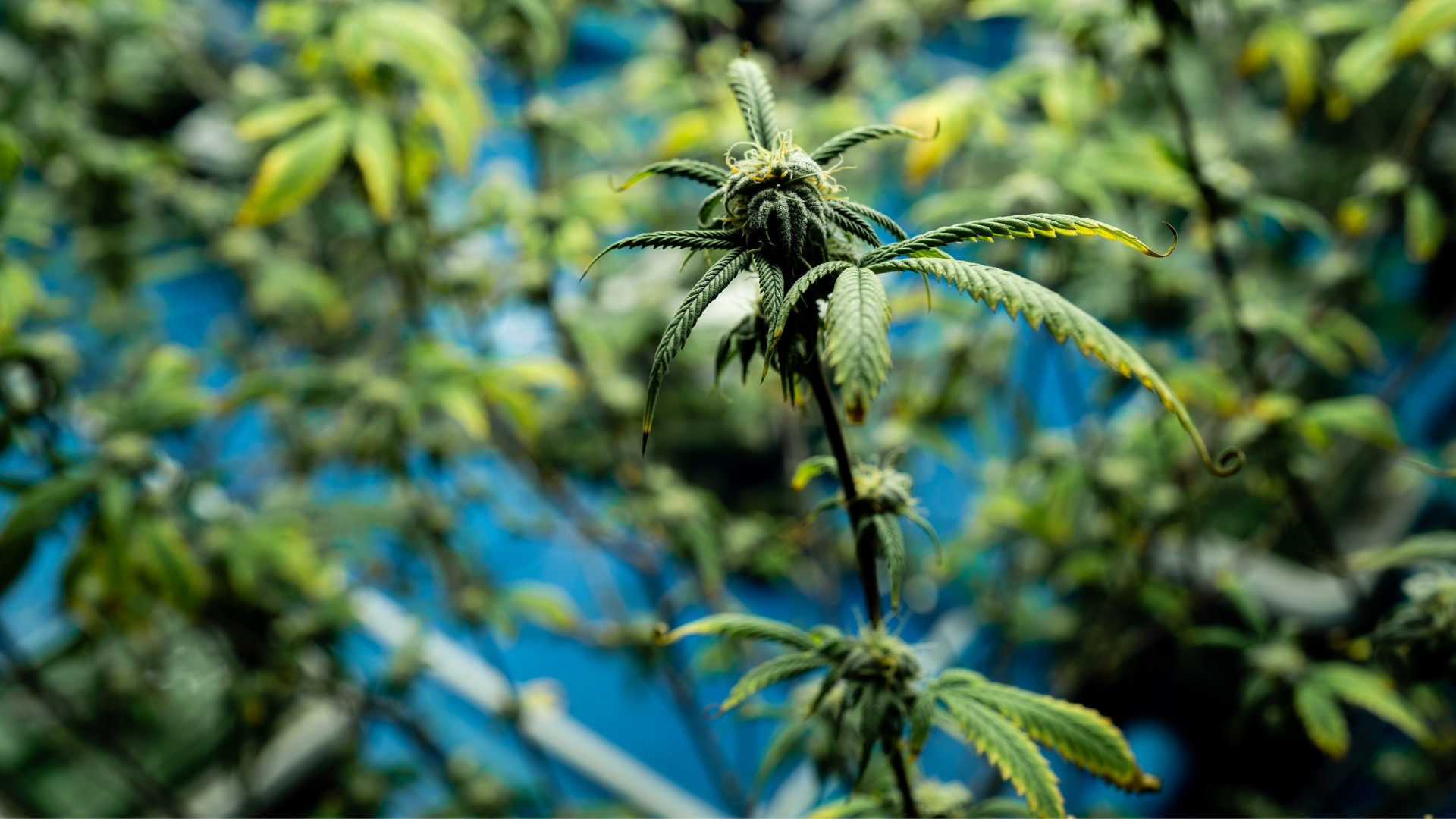
Nutrient deficiencies do not present the same way throughout the cannabis life cycle. Plant demand, nutrient mobility, and stress tolerance change as cannabis moves from vegetative growth into flowering.
Table showing non-nutrient deficiencies as per the growth stage:
Applying the same correction at different stages can produce very different outcomes. Preventing deficiencies requires controlling inputs and execution across the entire cycle. This is explained in the next section.
Suggested Read: The biggest business killer in commercial cannabis cultivations, and how to avoid it
Prevent Deficiencies With Process Control
Preventing nutrient deficiencies depends on execution discipline, not corrective speed. When processes are controlled and repeatable, nutrient issues are identified early or avoided entirely.
Deficiencies are best prevented by:
- Standardizing Nutrient Inputs: Maintain consistent formulations, mixing procedures, and delivery rates to reduce variability at the source.
- Controlling Root-Zone Conditions: Keep pH, EC, and moisture within defined ranges to protect nutrient availability and uptake.
- Timing Checks to Plant Development: Align inspections and adjustments with growth-stage transitions rather than fixed calendar dates.
- Recording Changes and Outcomes: Document adjustments and plant response to establish patterns and guide future decisions.
- Limiting Reactive Adjustments: Use measured, incremental changes to avoid compounding stress and nutrient lockout.
Process control requires visibility and timing that are difficult to maintain manually. This is where technology becomes essential for embedding prevention into daily cultivation work.
Suggested Read: The top four skills you need to manage your cultivation
Managing Nutrient Deficiencies at Scale With PlanaCan

PlanaCan is a cultivation management platform built to help commercial growers prevent, detect, and manage nutrient deficiencies through structured execution. It connects planning, inspections, and corrective actions to real plant development across strains and rooms.
PlanaCan supports deficiency management at scale by enabling you to:
- Automate Growth-Stage Workflows: Trigger nutrient checks, pH reviews, and inspections automatically as plants enter veg, transition to flower, or approach peak demand.
- Use an Interactive Calendar for Visibility: See all feeding reviews, inspections, and adjustments on a single calendar, and shift tasks easily when timelines change.
- Standardize Responses With Templates: Apply proven corrective actions consistently while allowing strain-specific adjustments where needed.
- Capture Observations in Real Time: Log symptoms, measurements, and actions from the floor to create a reliable record of what happened and why.
- Analyze Trends With Reporting: Review outcomes by strain, room, and cycle to identify recurring issues and prevent repeat deficiencies.
At scale, deficiencies are a process problem, not a nutrient problem. PlanaCan gives you the structure and visibility needed to turn nutrient management into a repeatable, preventive system across your entire operation.
Conclusion
Deficiencies, when misdiagnosed or addressed too late, can quietly reduce growth, compromise quality, and limit yield long before harvest. For commercial growers, the real risk is not a single deficiency, but repeated variability caused by inconsistent execution and reactive corrections.
PlanaCan helps you shift from reacting to symptoms to controlling the process behind them. By tying inspections, nutrient checks, and corrective actions to growth stages, you gain visibility and consistency across strains, rooms, and cycles. Deficiency management becomes structured, traceable, and repeatable.
If nutrient issues are costing you time or yield, it is time to change how they are managed. See how growth-based planning fits your operation. Schedule a free call today.
Frequently Asked Questions
1. Can multiple nutrient deficiencies occur at the same time?
Yes. Deficiencies often overlap, especially when pH imbalance or root stress limits overall uptake. This is why correcting one nutrient without addressing root-zone conditions can worsen symptoms.
2. Should I correct deficiencies immediately once symptoms appear?
Not always. First, confirm pH, EC, environment, and root health. Rapid corrections without diagnosis often lead to lockout or secondary deficiencies.
3. Why do deficiencies show up even when feed charts are followed?
Feed charts assume ideal conditions. Variations in strain behavior, environment, water quality, and media can all affect nutrient availability despite correct inputs.
4. Are deficiency symptoms reversible?
Some are, especially in early stages. However, damaged tissue does not recover. The goal is to stop progression and protect new growth rather than fix existing damage.
5. How long should I wait to see improvement after a correction?
Visible improvement typically appears in new growth within 5 to 10 days. A lack of improvement usually indicates an uptake or environmental issue rather than a nutrient deficiency.